How to Make Vietnamese Coffee
Make real Vietnamese iced coffee at home: 20 g of dark-roast coffee in a phin, a 5-minute drip over condensed milk, then ice. Plus the right beans, grind fixes, egg and salt coffee, and a brew timer.

Ratios and timings follow established specialty-coffee recipes, credited in the brew widget. How we test · Editorial policy
Vietnamese coffee is strong, dark-roasted coffee dripped slowly through a small metal filter called a phin, usually onto a spoonful of sweetened condensed milk. Poured over ice, that’s cà phê sữa đá: bold, bittersweet, creamy and very refreshing. It takes about five minutes, costs almost nothing in equipment, and is one of the easiest great coffees you can make at home.
- Coffee: 20 g (about 4 level tablespoons) of dark-roast coffee, ideally robusta or a robusta blend.
- Grind: medium-fine, a little coarser than espresso.
- Water: about 100 ml, just off the boil.
- Method: bloom with a splash of water for 30 seconds, then fill the phin and let it drip for 4–5 minutes.
- Milk: 1½–2 tablespoons of sweetened condensed milk in the glass first. Stir, then pour over ice.
The brew timer at the top of this page times the bloom and the drip for you. Choose Cà phê sữa đá for the classic iced coffee with condensed milk, or Cà phê đen for black.
What you need
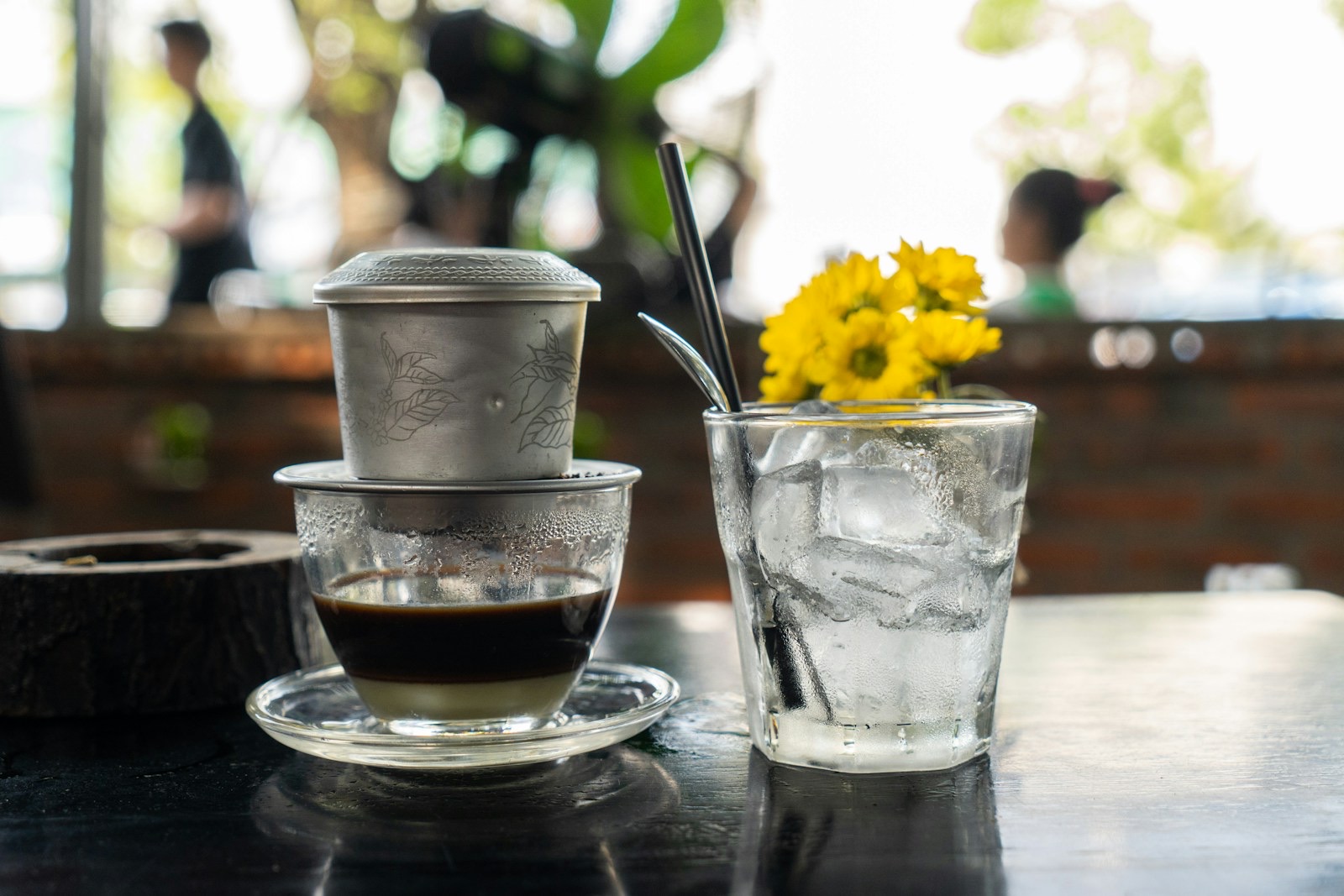
- A phin filter. It has four parts: a small brewing chamber with a perforated base, a plate that sits on your cup, a press (or “tamper”) that rests on the coffee, and a lid. An 8 oz phin is the usual single-serving size.
- Dark-roast coffee, ideally a Vietnamese robusta or robusta–arabica blend (more on this below).
- Sweetened condensed milk, if you want it the classic way.
- A heatproof glass, a kettle and plenty of ice.
What coffee to use
Vietnam is the world’s second-largest coffee producer, and almost all of it is robusta. The USDA forecasts Vietnam’s 2026/27 crop at 32.5 million 60 kg bags, of which 31.4 million are robusta. Robusta is what gives Vietnamese coffee its character: heavy, chocolatey and bitter, with a lot more caffeine than arabica. One study in Planta found that mature robusta beans contain about 50% more caffeine than arabica beans.
- Most authentic: a Vietnamese dark-roast robusta, or a robusta–arabica blend from a Vietnamese roaster.
- Good substitute: any dark roast, such as a French or Italian roast. It will be a bit less intense.
- The New Orleans way: many Vietnamese families in the US use a coffee-and-chicory blend, which gives a similar dark, slightly bitter cup.
Light, fruity specialty roasts are delicious in a phin brewed black, but they get lost under condensed milk.
Ratio and grind
A phin brews a short, very strong coffee: about 1 part coffee to 5 parts water, so 20 g of coffee and 100 ml of water. That’s about three times stronger than drip coffee, which is why it stands up to sweet milk and melting ice.
| Drink | Coffee and water | Add |
|---|---|---|
| Cà phê sữa đá (iced, milk) | 20 g · 100 ml | 1½–2 tbsp condensed milk, ice |
| Cà phê sữa nóng (hot, milk) | 20 g · 100 ml | 1½–2 tbsp condensed milk |
| Cà phê đen đá (iced, black) | 15–20 g · 110 ml | Sugar to taste, ice |
| Bạc xỉu (mostly milk) | 10–15 g · 60 ml | 1 tbsp condensed milk, 100 ml milk, ice |
Grind medium-fine, a little coarser than espresso. Too fine, and the coffee slips through the holes and clogs the drip; too coarse, and the water runs straight through. Your drip time is the guide: 4–5 minutes is right. If it’s done in 2–3 minutes, grind finer or press the coffee a little firmer. If it’s still dripping after 6 minutes, grind coarser or loosen the press.
How to make Vietnamese iced coffee, step by step
This makes one cà phê sữa đá: 20 g of coffee and about 100 ml of water, dripped over condensed milk and poured onto ice. It’s the Cà phê sữa đá recipe in our timer.
1. Add the condensed milk
Bring the water to a boil. Spoon 1½–2 tablespoons of sweetened condensed milk into a heatproof glass. Use less if you like it less sweet; you can always add more later.
2. Add the coffee and the press
Put the phin’s plate and chamber on the glass and add 20 g of coffee. Give it a gentle shake to level it, then set the press on top. If your press screws down, turn it until it just touches the coffee, then back it off a little. Pressing hard slows the drip.
3. Bloom (0:00–0:30)
Pour in about 20 ml of hot water, just enough to wet the grounds, and wait 30 seconds. The coffee swells and releases gas, so the rest of the water soaks through evenly instead of running straight past.
4. Fill and let it drip (0:30–5:00)
Fill the chamber to the top with hot water and put the lid on to keep the heat in. The coffee should start dripping within a minute, at about one or two drops a second, and finish in 4–5 minutes. Slow is the point here, so resist the urge to press down.
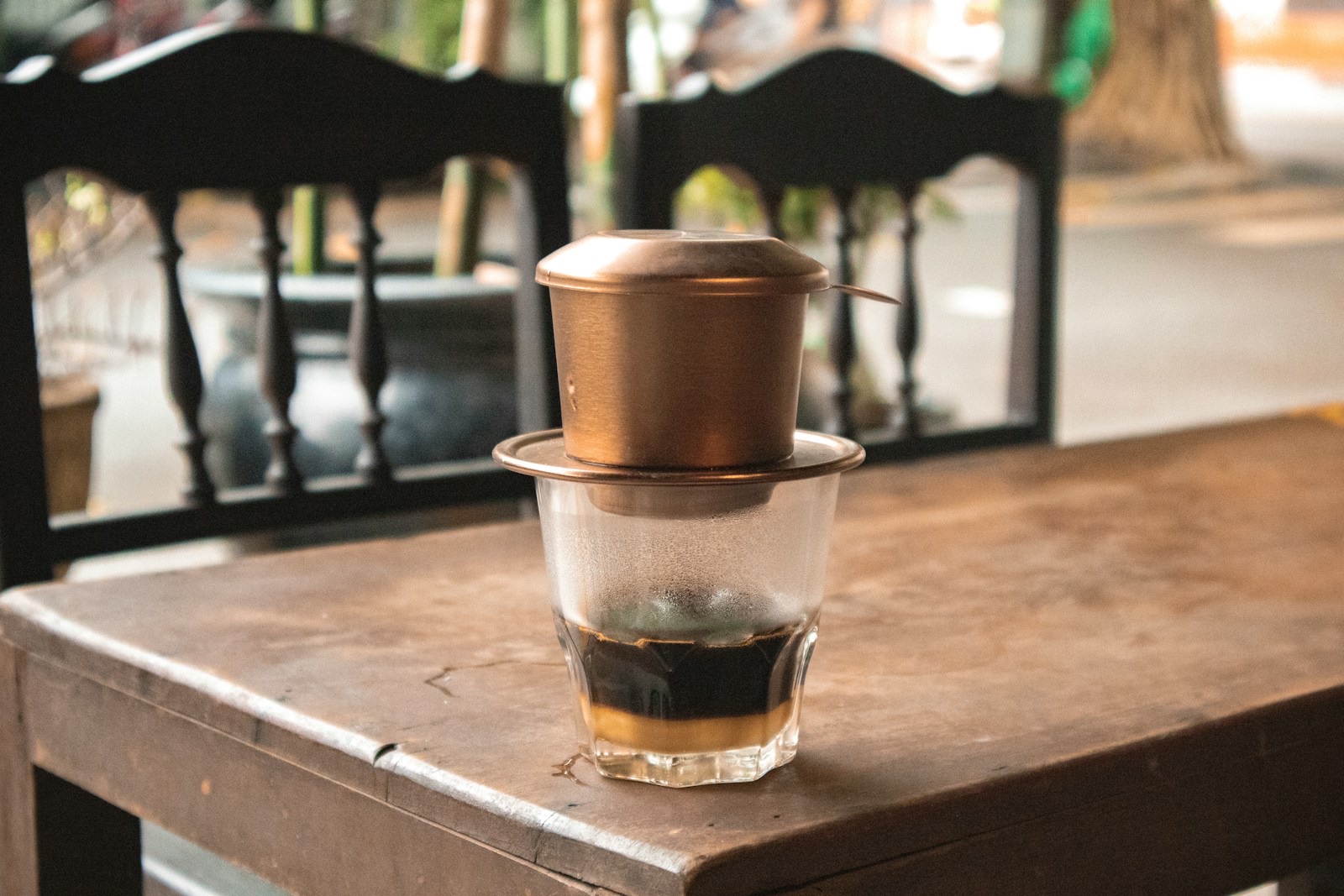
Pro tip: the phin’s lid doubles as a drip tray. When the coffee is done, turn the lid upside down on the table and stand the phin on it, so the last drops don’t end up on your table.
5. Stir and pour over ice
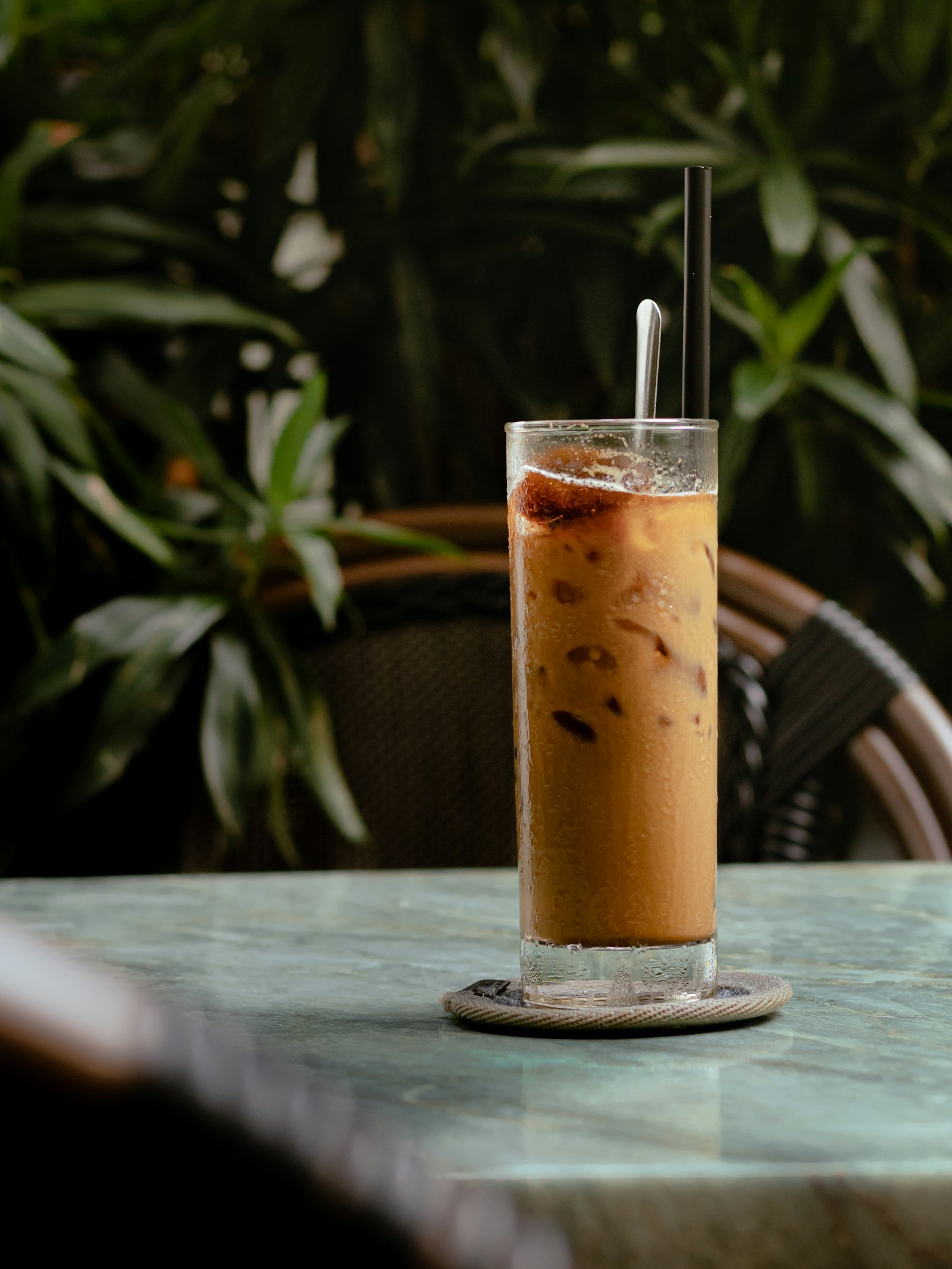
Stir until the coffee and condensed milk are completely mixed. Then fill a tall glass with ice and pour the coffee over it, stirring once more. In Vietnam it often comes the other way round: the hot coffee and milk with a separate glass of ice, so you can pour it yourself.
Morgan Eckroth, the 2022 US Barista Champion, explains what makes Vietnamese coffee different and how it’s made.

Troubleshooting
| What happened | Likely cause | Try this |
|---|---|---|
| Runs through in 1–2 minutes, weak | Grind too coarse, or press too loose | Grind finer. Press the coffee down a little more. |
| Barely drips or stops | Grind too fine, or pressed too hard | Grind coarser. Loosen the press. Don’t tamp it. |
| Grounds in the glass | Grind too fine for the holes | Grind a step coarser. Shake the chamber before adding the press. |
| Too bitter | Very dark roast, or water at a full boil | Let the kettle rest 30 seconds. Add a little more milk or ice. |
| Too sweet | Too much condensed milk | Start with 1 tablespoon and add more to taste. |
| Watery once iced | Coffee too weak for the ice | Use the full 20 g. Pour over ice right before drinking. |
Other Vietnamese coffee drinks to try
Cà phê đen đá: black coffee over ice, often with sugar. Strong, clean and very refreshing. Use the Cà phê đen recipe in our timer.
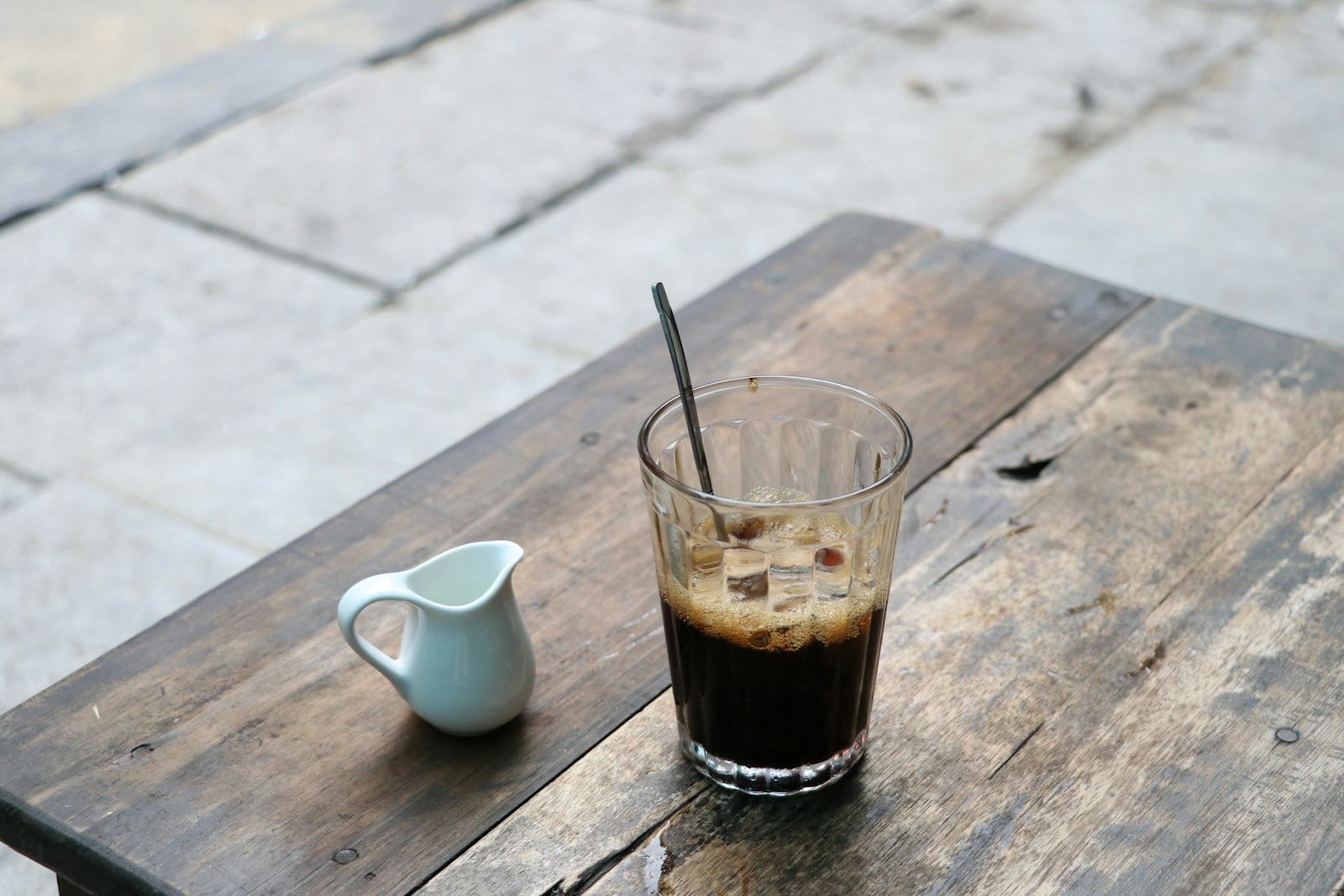
Bạc xỉu: a Saigon favourite that’s mostly milk, with a small shot of phin coffee on top. A good place to start if you find cà phê sữa đá too strong.
Cà phê trứng (egg coffee): created in Hanoi in 1946 by Nguyễn Văn Giảng, a bartender at the Metropole Hotel, when fresh milk was scarce during the war against the French. Egg yolks are whisked with condensed milk and a little sugar into a thick, sweet cream, which is spooned over strong phin coffee. It tastes a bit like a coffee tiramisu. His family still serves it at Café Giảng in Hanoi.
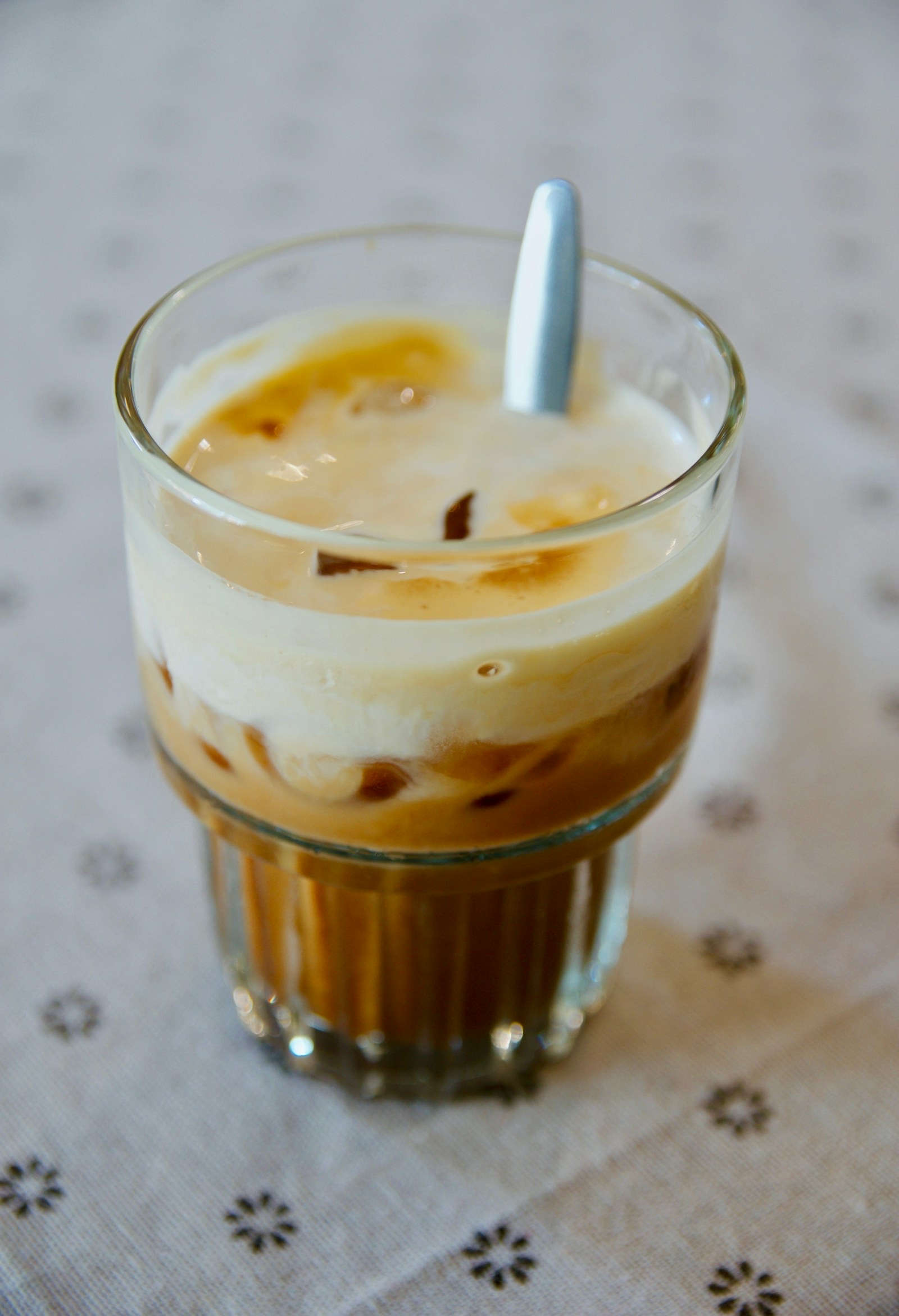
Cà phê muối (salt coffee): from Huế, in central Vietnam. Coffee with condensed milk is topped with a lightly salted cream. The salt softens the bitterness and makes the coffee taste sweeter.
Cà phê cốt dừa (coconut coffee): phin coffee blended with coconut cream, condensed milk and ice into a slushy, dairy-free treat.
No phin? How to make it anyway
You need a small amount of very strong coffee, about 100 ml at 1:5. A moka pot gets you closest. An AeroPress works well with 20 g of coffee and 100 ml of water, steeped for 2 minutes. You can also make a strong French press at about 1:8. Then stir in the condensed milk and pour over ice as usual. A phin costs only a few dollars, though, and it’s worth having for the slow drip alone.
Coffee in Vietnam: a short history
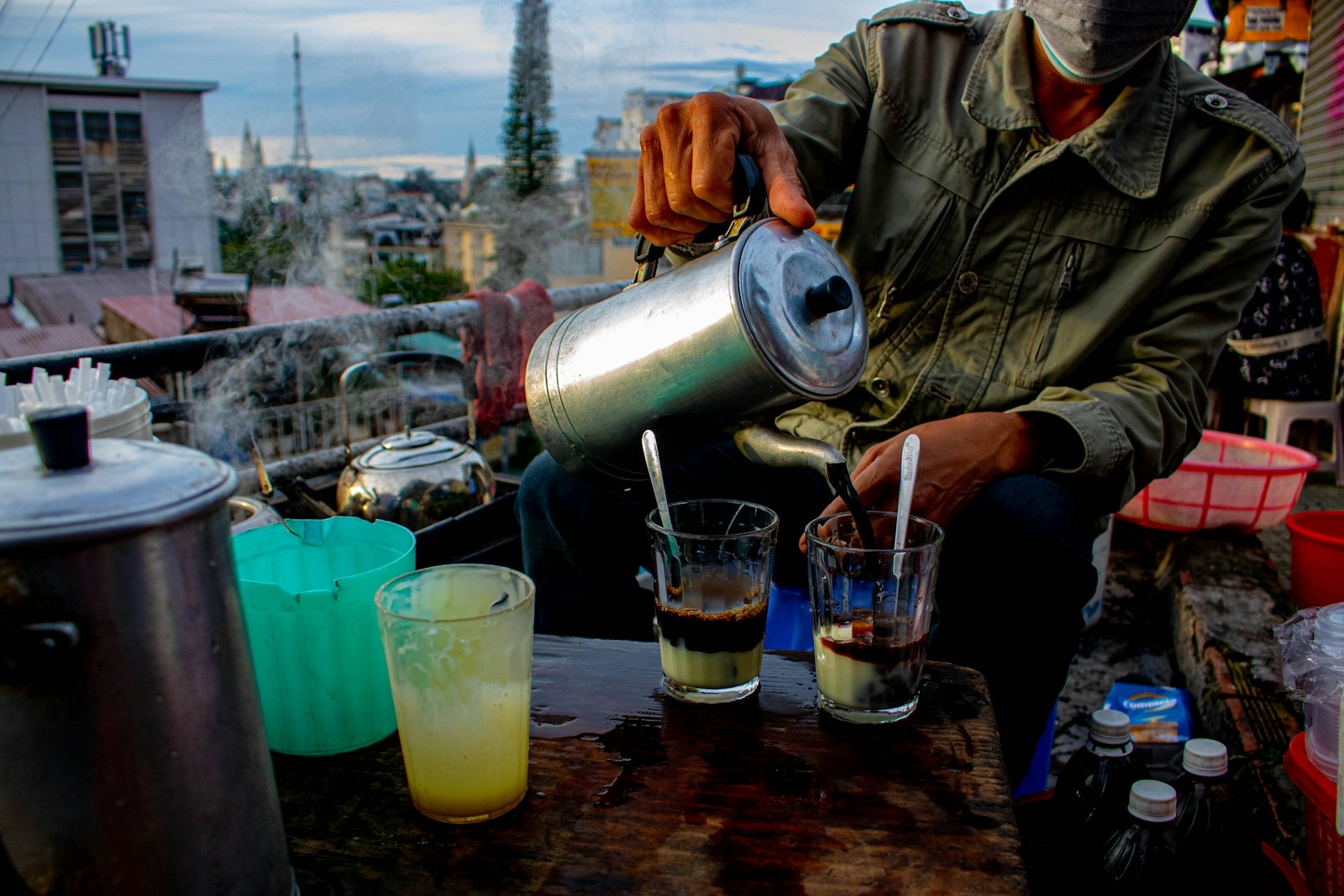
French missionaries brought the first coffee plants to Vietnam in 1857. Arabica struggled in the humid north, but robusta thrived in the volcanic soil of the Central Highlands, around cities like Buôn Ma Thuột and Đà Lạt. That’s still the heart of Vietnamese coffee today. Fresh milk was scarce and hard to keep in the tropical heat, so sweetened condensed milk, which keeps for months without a fridge, became the milk of choice.
Vietnamese people drink a lot of their own coffee too: the USDA estimates domestic consumption at around 5 million bags a year. Much of it is drunk on low plastic stools at street-side cafés, often slowly, over a long conversation.
Cleaning the phin
Let it cool, knock the grounds into the compost and rinse every part under hot water. Coffee oils build up in the tiny holes over time, so once a week wash it in warm, soapy water and scrub the holes with a soft brush. Stainless-steel phins can go in the dishwasher; aluminium ones should be washed by hand, since the dishwasher can discolour them.
Vietnamese coffee FAQ
Strong, dark-roasted coffee, usually robusta, brewed slowly through a small metal drip filter called a phin. The best-known version is cà phê sữa đá: the coffee drips onto sweetened condensed milk and is then poured over ice.
Fresh milk was scarce and hard to keep in Vietnam’s tropical heat. Sweetened condensed milk keeps for months without a fridge, and its thick sweetness balances the bitterness of dark-roast robusta. It became the standard and stayed that way.
More than most coffees. Robusta beans contain much more caffeine than arabica (one study found about 50% more in mature beans), and a phin uses about 20 g of coffee for a small, strong cup. A glass of cà phê sữa đá can easily contain as much caffeine as a large mug of drip coffee, or more.
Yes. Any dark roast works, ground medium-fine. It will taste a little smoother and less intense than with Vietnamese robusta. A coffee-and-chicory blend is a popular choice in the US and gives a similar dark, slightly bitter flavour.
It’s the grind or the press. If it’s done in 1–2 minutes, grind finer or press the coffee down a little more. If it barely drips after 6 minutes, grind coarser and loosen the press. About 4–5 minutes is right.
Cà phê sữa đá is mostly coffee with some condensed milk, over ice. Bạc xỉu is mostly milk (condensed and fresh) with a small amount of coffee, so it’s much milder and sweeter.
Yes. Brew about 100 ml of very strong coffee with a moka pot, an AeroPress (20 g of coffee and 100 ml of water) or a French press at about 1:8, then stir in condensed milk and pour over ice.
Sources
- USDA Foreign Agricultural Service, Vietnam: Coffee Annual 2026 (production, robusta share and domestic consumption), as summarised by Daily Coffee News.
- Perrois et al., Differential regulation of caffeine metabolism in Coffea arabica (Arabica) and Coffea canephora (Robusta), Planta, 2015.
- National Geographic, How to explore Vietnam’s rich coffee culture (history, egg, salt and coconut coffee).
- CNN Travel, The story behind Hanoi’s beloved egg coffee.
- Morgan Eckroth, The Uniqueness of Vietnamese Coffee.
How we work: how we test · editorial policy · research & sources.
Published