How to Make AeroPress Coffee
Two proven AeroPress recipes with a built-in brew timer, the right grind and water temperature, the inverted method, iced AeroPress, and fixes for sour or bitter coffee.

Ratios and timings follow established specialty-coffee recipes, credited in the brew widget. How we test · Editorial policy
The AeroPress is the most forgiving coffee maker you can buy: a plastic tube, a paper filter and a plunger that make a clean, sweet, full-flavoured cup in about two minutes. It’s hard to make a bad cup with one, and with a few simple tweaks it makes a great one. Here’s how to brew it, the two recipes worth knowing, and how to fix your cup when something tastes off.
- Everyday cup: 11 g of coffee, 200 g of water at 95 °C (1:18), steep 2 minutes, swirl, then press gently.
- Official quick recipe: 17 g (one heaping scoop), water to the (4) mark at 85 °C, stir, wait 30 seconds, press.
- Grind: medium-fine, like table salt.
- Press slowly (20–30 seconds) and stop when you hear a hiss.
- Sour? Grind finer or use hotter water. Bitter? Grind coarser or use cooler water.
The brew timer at the top of this page has both recipes. Pick one, press Start brewing, and it calls out every step with the exact amounts.
What makes the AeroPress different
Alan Adler, a Stanford engineering lecturer best known for the Aerobie flying ring, launched the AeroPress in 2005. He wanted a better single cup than his drip machine made. The result combines two brewing styles:
- Immersion, like a French press: all the coffee steeps in all the water, so it extracts evenly and is easy to repeat.
- A paper filter, like pour over: the cup is clean and bright, with almost no sediment and none of the oily sludge of a French press.
Plunging pushes the coffee through the filter quickly, so short brews are possible. It’s also nearly unbreakable and light, which is why it’s the travel brewer of choice for so many baristas. Since 2008 it has even had its own world championship, which started with three competitors in Oslo and now runs national heats in dozens of countries.
What you need
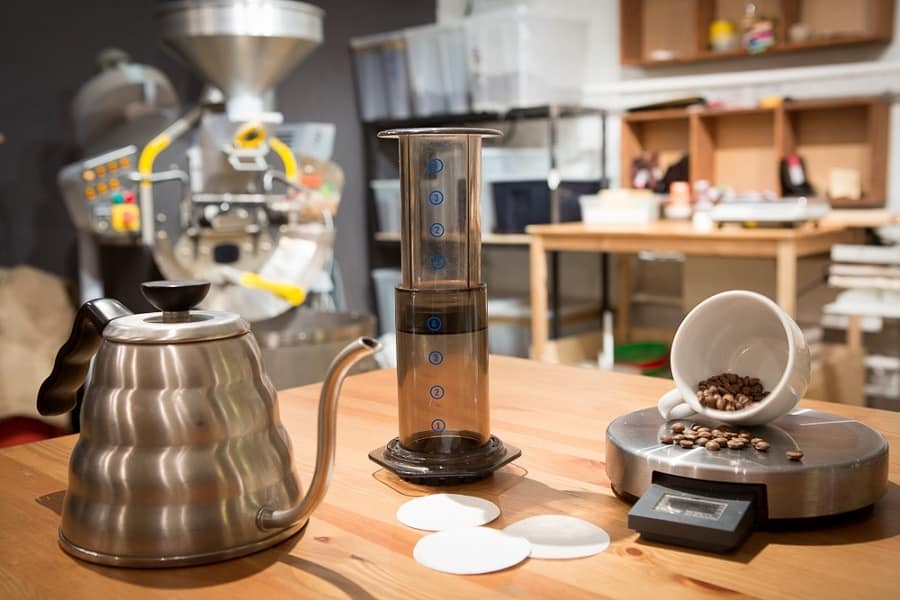
- An AeroPress (Original, Clear, Go or XL) and its paper filters.
- Fresh coffee and a burr grinder. See our grinder guide. Hand grinders are a great match for a travel AeroPress.
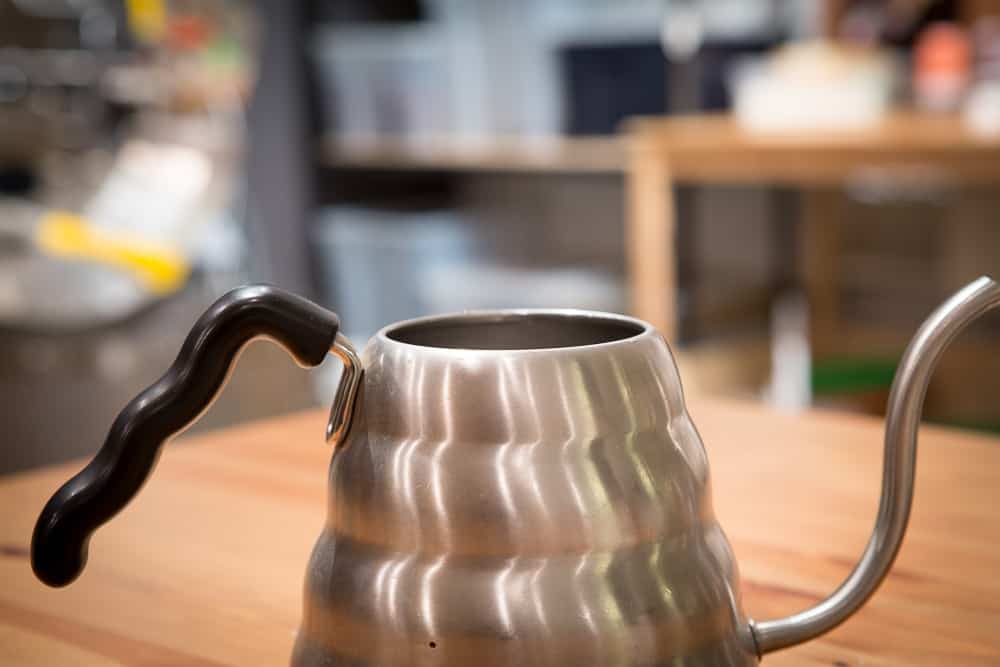
- A kettle, ideally with temperature control, though a regular kettle works fine.
- A scale. AeroPress doses are small, so a couple of grams make a real difference.
- A sturdy mug with a wide, strong rim. You’ll be pressing down on it.
How to make AeroPress coffee, step by step
This is our everyday recipe, the Clean cup in the timer above. It’s based on James Hoffmann’s AeroPress technique: 11 g of coffee and 200 g of water (1:18) at about 95 °C. It brews the right way up, with no flipping, and makes a sweet, clear mug. The photos are from one of our brews.
1. Heat the water and grind the coffee
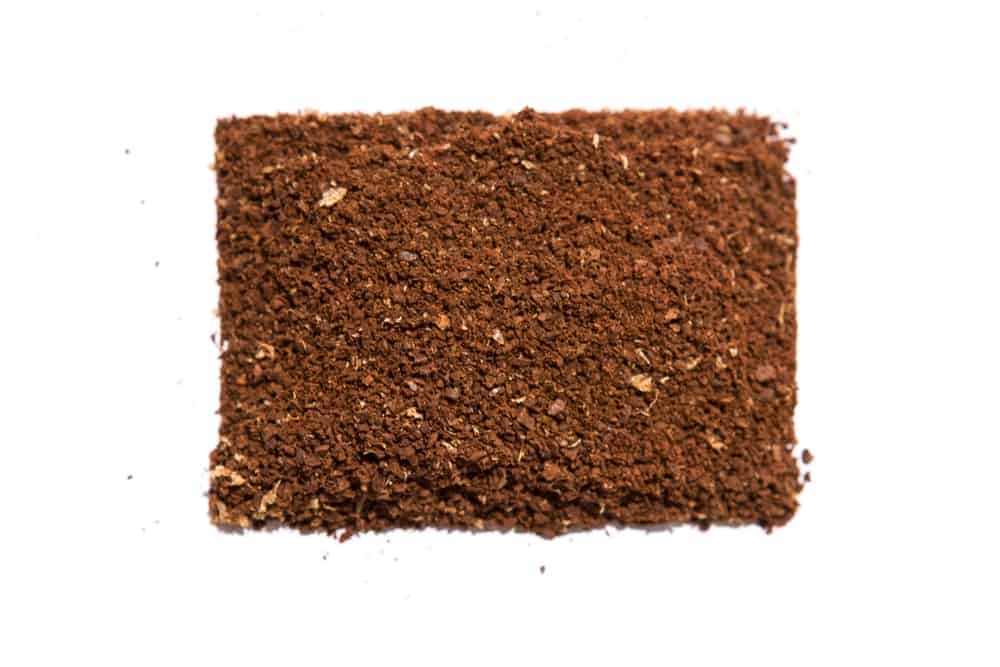
Bring the water to a boil. For light roasts, use it straight off the boil. For medium and dark roasts, let it cool to 85–90 °C. Grind 11 g of coffee medium-fine, about like table salt.
2. Fit the filter and add the coffee
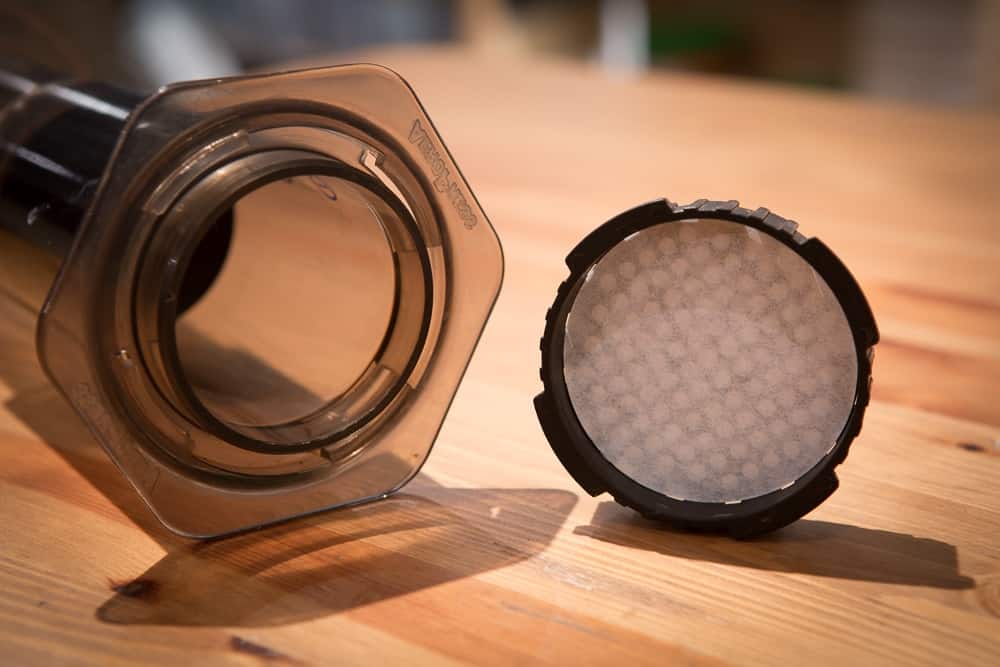
Put a paper filter in the cap and twist the cap onto the chamber. Rinsing the filter with hot water is optional: AeroPress filters are thin and taste of very little. Stand the AeroPress on your mug, add the coffee, shake to level it, and put everything on the scale and tare it.
3. Pour all the water and seal
Start a timer and pour 200 g of water quickly, wetting all the coffee. Straight away, put the plunger in about 1 cm (½ inch) and pull it back slightly. This makes a vacuum that stops coffee dripping through while it steeps, so you don’t need the inverted method.
4. Steep for 2 minutes, then swirl
Leave it for 2 minutes. Then pick up the whole AeroPress and mug together, holding the plunger in place, and give it a gentle swirl to knock the grounds off the walls. Wait another 30 seconds for the grounds to settle.
5. Press gently
Press the plunger down slowly and steadily, taking about 30 seconds. If it’s hard to push, don’t force it. Ease off and let it go at its own pace, and next time grind a little coarser. Hoffmann presses all the way through the hiss. We prefer to stop as soon as you hear the hiss, so the last bitter drips stay in the chamber. Taste both and decide.
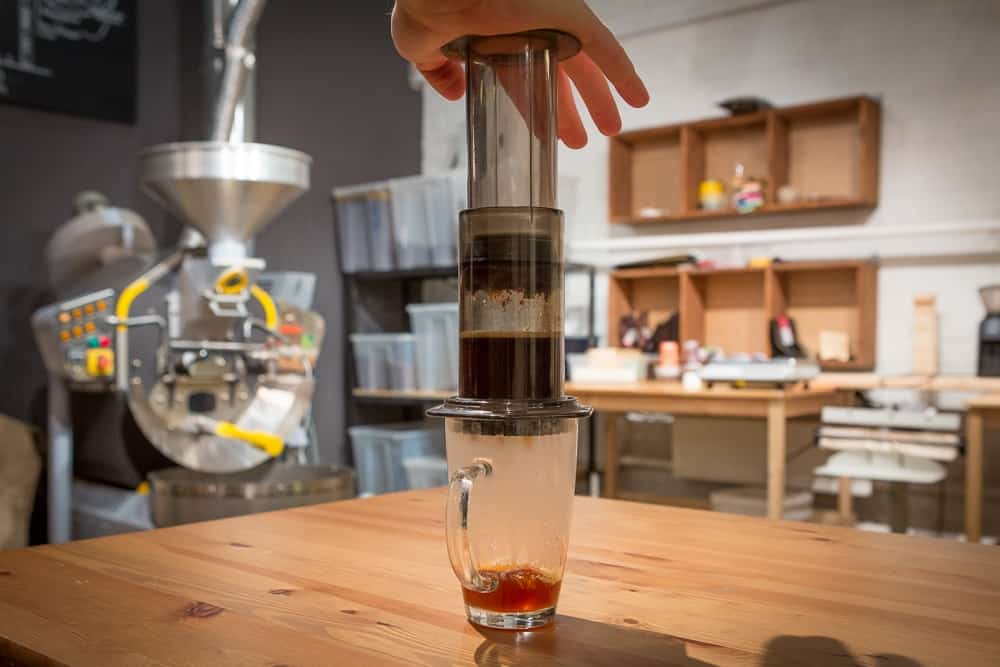
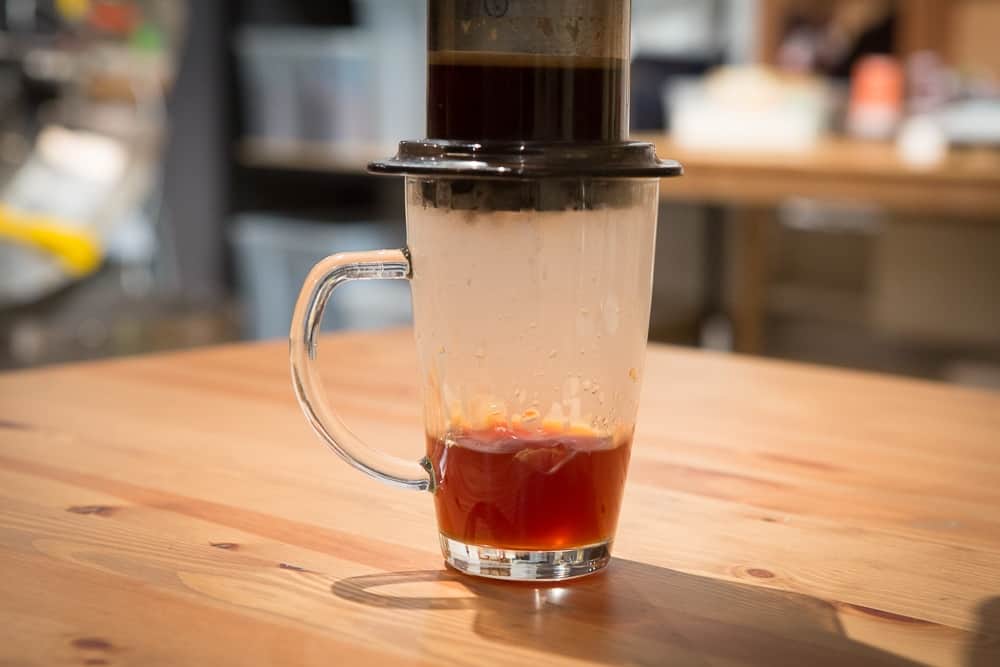
6. Pop the puck and rinse
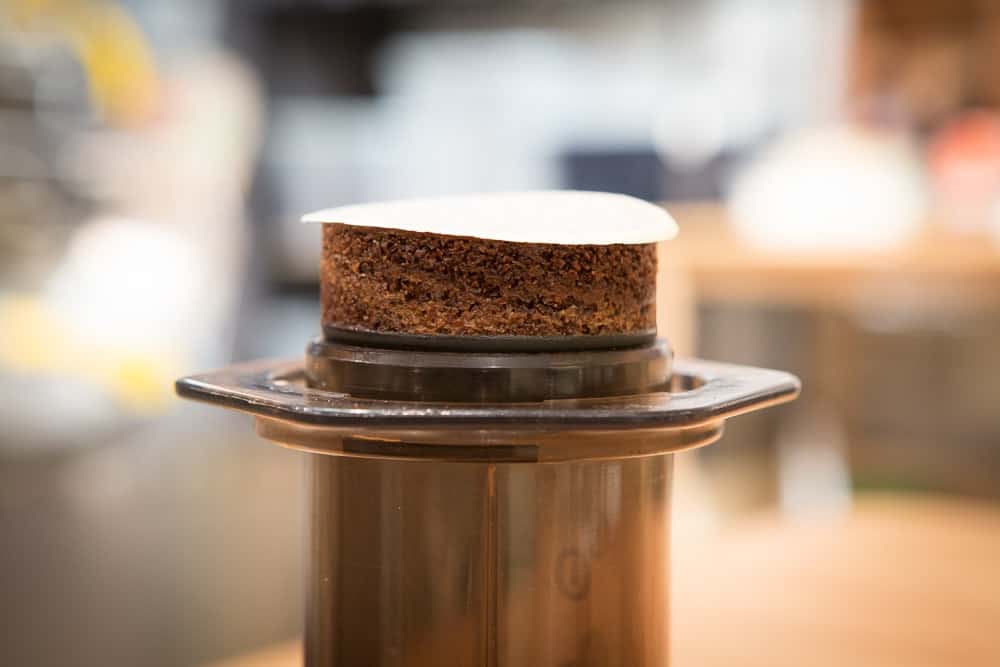
Take off the cap, hold the AeroPress over the bin or compost, and push the plunger the last bit to pop out a dry puck of grounds. Rinse the rubber seal and you’re done. It’s the easiest cleanup of any brewer.

The official AeroPress recipe
The maker’s own recipe is quicker and stronger, and is ready in about a minute:
- Heat water to 85 °C (185 °F).
- Add one heaping AeroPress scoop (16–18 g) of medium-fine coffee and level it.
- Pour water up to the (4) mark, about 220 g, and stir gently for 3 seconds.
- Insert the plunger, pull it up slightly to stop the drip, and wait 30 seconds.
- Press gently until you hear the hiss. Drink it as it is, or top it up with hot water or milk.
The lower temperature and short steep keep it smooth and low in bitterness, even with darker, supermarket-style coffee. It’s the second recipe in our timer.
The inverted method
Many baristas brew the AeroPress upside down. They put the plunger in first, stand the brewer on it, add the coffee and water, then screw on the cap and flip it onto the cup to press. It stops coffee dripping through early, which makes long steeps easier, and many championship recipes use it.
The downside: an upside-down tube of hot water can tip over or come apart when you flip it. The “insert the plunger and pull back” trick in our recipe does the same job the right way up. If you do brew inverted, push the plunger well in, flip quickly but carefully, and keep children out of the way.
AeroPress recipes compared
The AeroPress makes everything from a light, filter-style cup to a short, strong concentrate. These are reliable starting points:
| Recipe | Coffee : water | Temp · time | Tastes like |
|---|---|---|---|
| Clean cup (Hoffmann) | 11 g : 200 g (1:18) | 95 °C · ~3½ min | Clear, sweet, filter-style |
| Official (AeroPress) | 17 g : 220 g (1:13) | 85 °C · ~1 min | Smooth, rich, low bitterness |
| Inverted (Counter Culture) | 18 g : 210 g (1:12) | 96 °C · ~2 min | Full-bodied and bold |
| Concentrate | 18 g : 90 g (1:5), top up after | 85 °C · ~1 min | Strong base for milk drinks or an Americano |
For more ideas, the World AeroPress Championship publishes every year’s winning recipes. They usually use light roasts, lower temperatures (80–90 °C) and some extra water added at the end. For the maths behind other ratios, see our coffee-to-water ratio guide.
Grind size and water temperature
Grind: start at medium-fine, between pour over and espresso, like table salt. Shorter recipes need a finer grind and longer ones a coarser grind. If the plunger is very hard to push, you’ve gone too fine. See our coffee grind chart.
Temperature is the AeroPress’s secret weapon, because the steep is short and controlled:
- Light roasts: 93–100 °C, so they don’t taste sour.
- Medium roasts: 88–93 °C.
- Dark roasts: 80–85 °C, for a smooth cup without the harsh, ashy edge.
Iced AeroPress coffee
Put 100 g of ice in a sturdy glass. Brew 15 g of coffee with 120 g of hot water, one step finer than usual, and steep for 1½ minutes. Press straight onto the ice and stir. The ice melts into the drink, so it ends up at the right strength, and it’s ready in three minutes. For a smoother, overnight version, see our cold brew guide.
Troubleshooting: fix your AeroPress
| Problem | Likely cause | Try this |
|---|---|---|
| Sour, thin | Under-extracted: grind too coarse, water too cool, or steep too short | Grind finer, use hotter water, or steep 30–60 seconds longer. |
| Bitter, harsh | Over-extracted: grind too fine, or water too hot for the roast | Grind coarser or use cooler water. Stop pressing at the hiss. |
| Weak | Not enough coffee for the water | Add 1–2 g of coffee, or use less water. |
| Very hard to press | Grind too fine, or too much coffee | Grind coarser. Press slowly and never force it. |
| Drips through before pressing | No seal | Insert the plunger and pull it back slightly right after pouring. |
| Leaks around the cap | Cap not fully twisted on, or filter folded | Seat the filter flat and twist the cap until it locks. |
| Gritty or cloudy | Metal filter, or a lot of fines | Use paper filters. Let the grounds settle before pressing. |
Which AeroPress should you get?
- Original: the classic. It brews up to about 250 ml at a time, and all the recipes above are written for it.
- Clear: the same size in shatter-resistant, see-through plastic, so you can watch the brew.
- Go: a smaller travel version that packs inside its own mug. Ideal for camping and hotels.
- XL: double the capacity, with a carafe, for brewing two cups at once.
Paper or metal filter?
The standard paper filters give the AeroPress its clean, bright cup, and they trap most of the coffee oils, including cafestol, which can raise LDL cholesterol. We explain this in our French press guide. Reusable metal disc filters let the oils and some fines through, for a heavier, French-press-style body. Paper filters can be rinsed and reused a few times, and a pack lasts a long time.
Cleaning and care
Rinse the seal and chamber after each brew. Once in a while, wash everything in warm, soapy water or on the top rack of the dishwasher. Store it with the plunger pushed all the way through, or taken out. Leaving the rubber seal squashed inside the chamber wears it out faster.
AeroPress FAQ
No. Pressing the plunger creates well under 1 bar of pressure, while an espresso machine uses about 9 bar. That’s what produces crema and espresso’s syrupy body. An AeroPress concentrate (for example 18 g of coffee to 90 g of water) is a strong, tasty base for milk drinks or an Americano, but it isn’t true espresso.
They’re different. Both steep the coffee in water, but the AeroPress pushes it through a paper filter. The result is a cleaner, brighter cup with almost no sediment, made in a couple of minutes. A French press makes a heavier, oilier cup and brews four or more servings at once. For one person, most baristas prefer the AeroPress.
The Original holds about 250 ml, so it’s a one-mug brewer. To serve two, brew a strong concentrate (about 30 g of coffee to 200 g of water) and split it between two mugs topped up with hot water. Or get the AeroPress XL, which has double the capacity.
You don’t need to. Inserting the plunger about 1 cm right after pouring and pulling it back slightly stops the drip-through, which is the main reason people brew inverted. Inverted is useful for very long steeps or championship-style recipes, but flip it carefully: it can tip over.
Yes. Rinse the filter after brewing and it can be used several times, until it tears or starts to taste stale. A new filter costs very little, though, so many people use a fresh one each time for the cleanest taste.
It depends on how much coffee you use, not on the brewer. A cup made with 11–17 g of coffee has roughly as much caffeine as a regular mug of filter coffee made with the same amount. A concentrate topped up with water has the caffeine of all the coffee you put in.
Alan Adler, an engineer and Stanford lecturer who also invented the Aerobie flying ring. He developed the AeroPress in 2004 and launched it in November 2005. The World AeroPress Championship began in Oslo in 2008 with just three competitors.
Sources
- AeroPress, Getting Started With The AeroPress (the official recipe).
- James Hoffmann, The Ultimate AeroPress Technique.
- Counter Culture Coffee, Guide To The AeroPress (the inverted recipe).
- World AeroPress Championship, Winning recipes and history.
- Specialty Coffee Association, Coffee Standards.
How we work: how we test · editorial policy · research & sources.
Published