How to Use a Coffee Maker (Drip Coffee Guide)
How much coffee per cup (and why machine “cups” are small), the right grind, step-by-step photos, a coffee calculator, cleaning and descaling, and fixes for weak or bitter drip coffee.

Ratios and timings follow established specialty-coffee recipes, credited in the brew widget. How we test · Editorial policy
A drip coffee maker can make genuinely good coffee. The machine handles the temperature and timing, so the cup depends on the choices you make: how much coffee you use, how it’s ground, the water, and what you do once it’s brewed. Get those right, and the humble coffee pot will surprise you.
- Ratio: 55–60 g of coffee per liter of water (about 1:17). That’s 2 level tablespoons per 6 oz of water.
- Grind: medium, like sand or kosher salt.
- Water: cold and filtered, straight into the reservoir.
- After brewing: stir the pot, and get it off the hot plate within about 20 minutes, or use a thermal carafe.
- Maintenance: descale every 1–3 months. Scale makes the coffee cooler and weaker.
The calculator at the top of this page works out the coffee for any number of mugs and walks you through the brew.
How much coffee to use in a coffee maker
The Specialty Coffee Association’s “golden cup” standard is 55 g of coffee per liter of water, about 1:18. Most people prefer drip coffee a touch stronger, at 1:16–1:17. Start at 1:17 and adjust to taste.
A coffee-maker “cup” is not a mug. The marks on most carafes are 5–6 fl oz (about 150 ml) each. A “12-cup” pot holds about 60 oz (1.8 liters): only six or seven real mugs. That’s why “1 scoop per cup” so often comes out weak. Go by the water, not the cup marks:
| Cup marks | Water | Coffee (1:17) | Stronger (1:16) |
|---|---|---|---|
| 4 cups | 600 ml (20 oz) | 35 g · 7 tbsp | 38 g · 7½ tbsp |
| 6 cups | 900 ml (30 oz) | 53 g · 10½ tbsp | 56 g · 11 tbsp |
| 8 cups | 1.2 liters (40 oz) | 71 g · 14 tbsp | 75 g · 15 tbsp |
| 10 cups | 1.5 liters (50 oz) | 88 g · 17½ tbsp | 94 g · 19 tbsp |
| 12 cups | 1.8 liters (60 oz) | 106 g · 21 tbsp | 113 g · 22½ tbsp |
Check your own carafe: fill it to the “4” line, then measure the water in a jug or on a scale. For any other amount, use our coffee-to-water ratio calculator.
Grind size for drip coffee
Use a medium grind, like sand or kosher salt. Pre-ground coffee labelled “for drip” or “filter” is already about right. Grinding your own beans just before brewing is the biggest flavour upgrade you can make. Ground coffee loses most of its aroma within days, and a burr grinder gives an even grind that brews evenly.
Two small adjustments: cone-shaped baskets like a slightly finer grind than flat-bottom baskets, and for small batches (2–4 cups) go one step finer, because less coffee means the water runs through faster. See the coffee grind chart.
How to use a coffee maker, step by step
This example makes a liter of coffee, about 7 cups on most pots, or four mugs: 1,000 ml of water and 59 g of coffee (about 12 level tablespoons). The photos are from one of our brews.
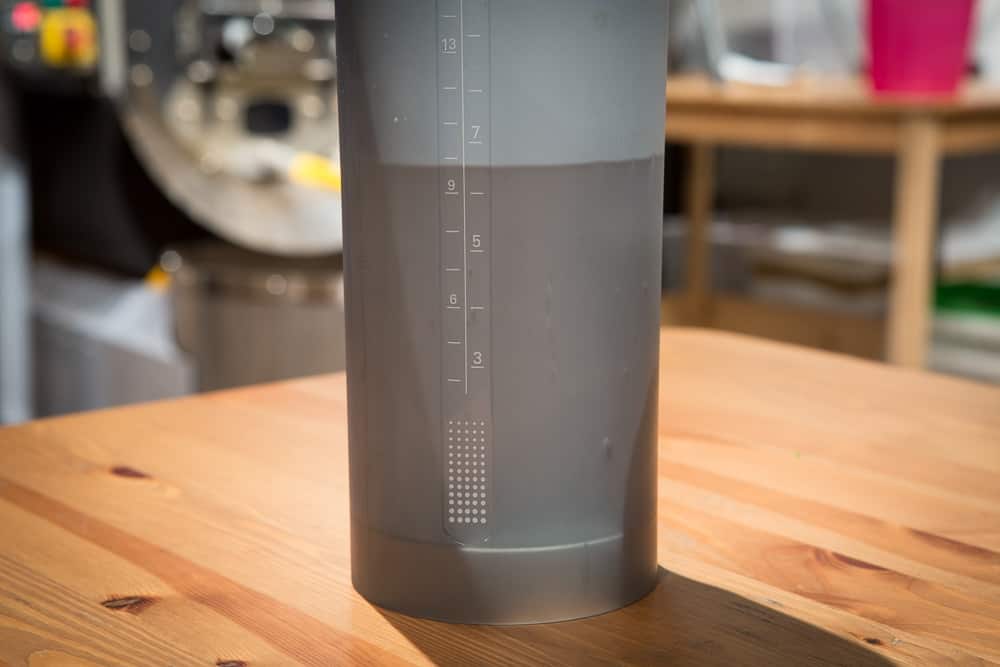
1. Fill the reservoir with cold, filtered water
Pour fresh, cold water into the reservoir up to the line you want. Use filtered water if your tap water tastes of chlorine or is hard. Coffee is more than 98% water, and hard water also scales up the heater. Don’t use hot water: the machine is designed to heat cold water. Never put anything but plain water in the reservoir.
2. Put in a paper filter (and rinse it)
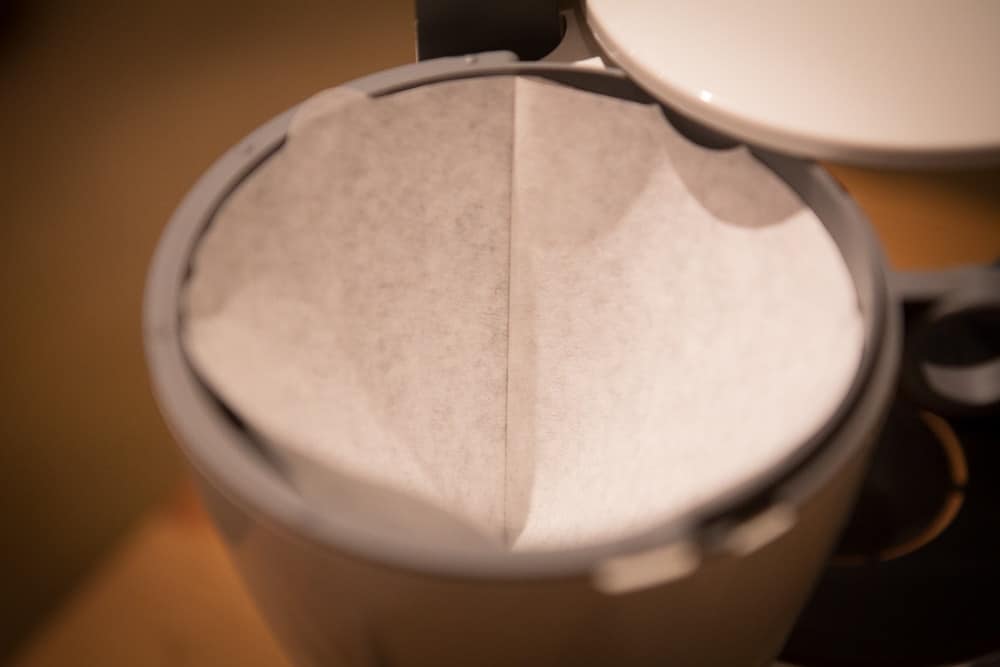
Use the right size and shape for your basket: a #2 or #4 cone, or a flat-bottom basket filter. For a cone filter, fold the seams along the side and bottom first so it sits flat against the basket. Rinse it with hot water from the kettle to wash out the papery taste, and pour that water away.
3. Add the coffee and level it
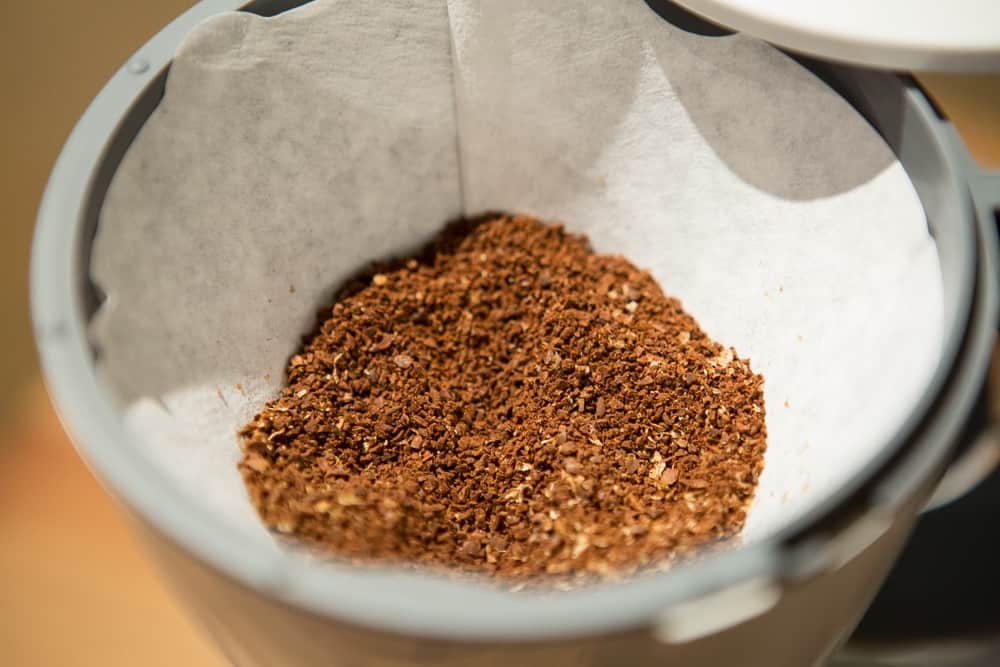
Weigh 59 g of medium-ground coffee into the filter, or use 12 level tablespoons. Give the basket a gentle shake so the bed is flat. A flat bed means the water flows evenly through all the coffee instead of channelling through one side.
4. Brew
Check that the carafe is in place, close the lid and switch on. If your machine has a bloom or pre-infusion setting, use it. If it has a small-batch (1–4 cup) setting, use that for small amounts. A full pot usually takes 5–8 minutes. Don’t pull the carafe out mid-brew. The “pause and serve” valve stops the drips, but the first coffee out is much stronger than the last.
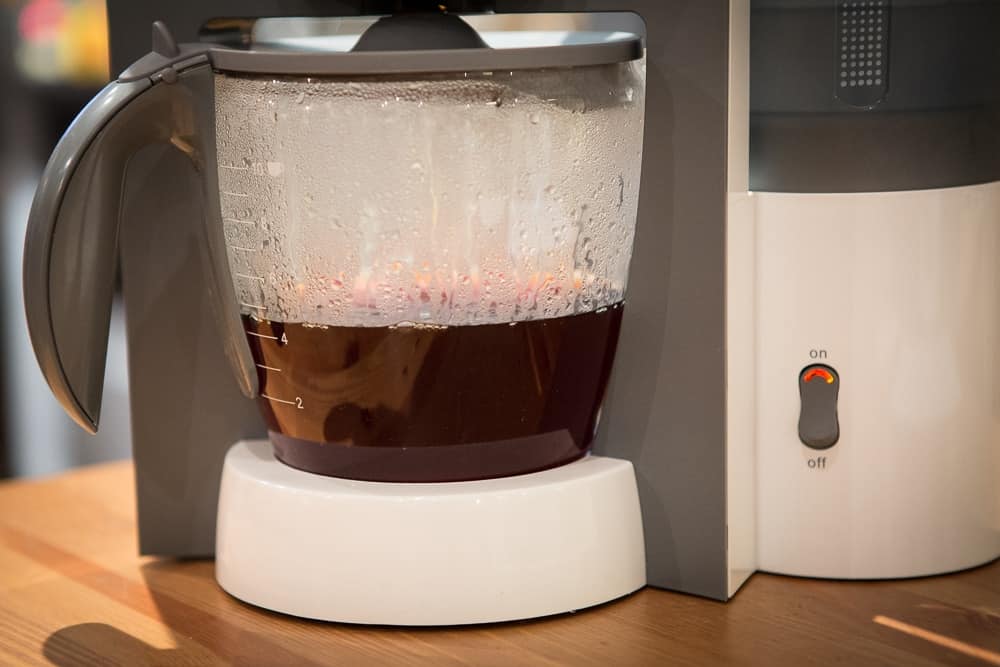
5. Stir, serve, and switch off the hot plate
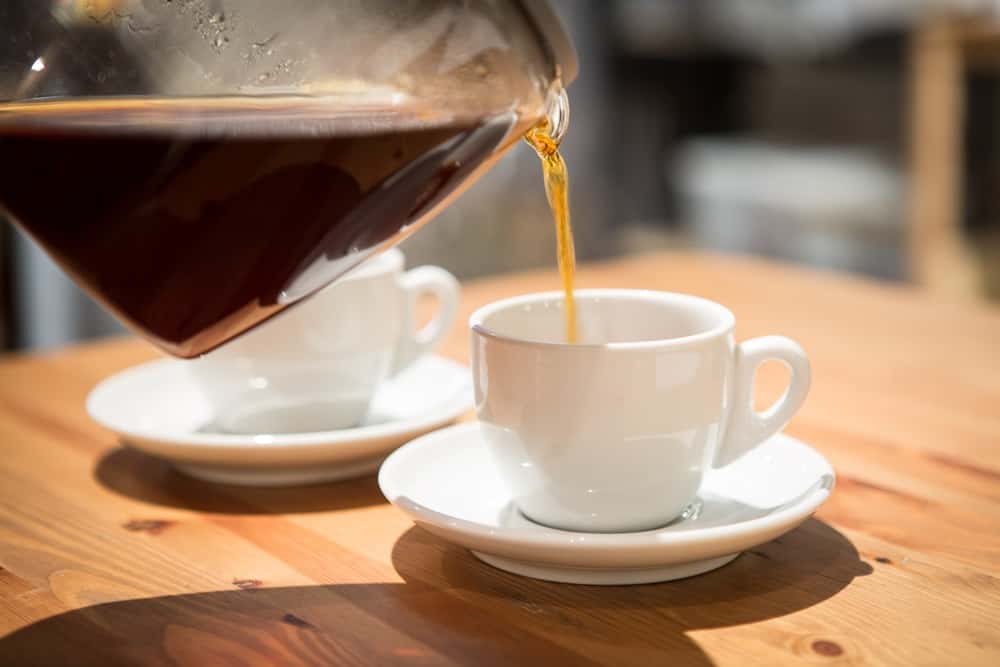
Give the carafe a stir or swirl, so the strong first drips and the weak last drips mix, then pour. Throw the grounds and filter onto the compost. If you’re not drinking it all now, pour the rest into a thermos. A hot plate keeps cooking the coffee, and after about 20–30 minutes it starts to taste flat and burnt.
7 ways to make drip coffee taste better
- Buy fresh whole beans and grind just before brewing. Look for a roast date on the bag and use it within about a month.
- Weigh, don’t scoop. A kitchen scale makes the same good pot every morning, and scoops vary a lot.
- Run a water-only cycle first on a cheap or old machine. It preheats the heater, the lines and the carafe, so your real brew starts hotter.
- Brew at least half the machine’s capacity, or use the small-batch setting. Two cups in a 12-cup basket make a thin coffee bed that the water rushes through.
- Stir halfway through. If your basket swings out, give the wet grounds a quick stir about a minute in, so no dry pockets are left. Optional, but it helps.
- Skip the hot plate. Decant into a preheated thermos, or choose a machine with a thermal carafe.
- Keep it clean. Old coffee oils go rancid, and scale lowers the brewing temperature. Both make coffee bitter and flat. See the cleaning routine below.
What makes a good drip coffee maker?
Most cheap machines don’t fall short on features. They fall short on heat and even water flow. The SCA’s Certified Home Brewer program sets the bar: the water must reach 92 °C (198 °F) within the first minute, stay between 92 and 96 °C for the rest of the brew, and the brew must take 4 to 8 minutes. Certified brewers are also tested for an even spray over the coffee and the right strength in the cup.
Interestingly, research from the UC Davis Coffee Center found that brew temperature alone, between 87 and 93 °C, changes the taste less than you might think, as long as the strength and extraction stay the same. In practice, a machine that runs too cool still makes weaker, sourer coffee. So when buying, look for:
- SCA certification, or reviews that measure the brewing temperature.
- A wide shower head that wets the whole bed, not a single stream.
- A thermal carafe instead of a hot plate.
- A bloom or pre-infusion setting, and a small-batch mode if you often brew for one or two.
Troubleshooting: fix your drip coffee
| Problem | Likely cause | Try this |
|---|---|---|
| Weak or watery | Not enough coffee (the “cup” marks are small), or the grind is too coarse | Weigh the coffee: 55–60 g per liter. Grind a little finer. |
| Sour or thin | Under-extracted: grind too coarse, the water too cool, or a tiny batch | Grind finer. Preheat with a water cycle. Brew more, or use the small-batch setting. |
| Bitter or harsh | Grind too fine, too much coffee, or a dirty machine | Grind coarser. Clean the basket and carafe. |
| Burnt, stale taste | Coffee sat on the hot plate | Decant into a thermos as soon as it’s brewed. |
| Basket overflows | Grind too fine, too much coffee, or the filter is folded over | Grind coarser. Check the filter sits flat and the drip-stop valve isn’t stuck. |
| Grounds in the cup | Filter collapsed, or a torn or wrong-size filter | Fold the seams and use the right size. Rinse the filter so it sticks to the basket. |
| Slow, noisy brew; coffee not hot | Scale build-up | Descale the machine (see below). |
How to clean and descale a coffee maker
After every brew: throw away the grounds, rinse the basket and carafe, and leave the lid open so the machine can dry. Once a week: wash the basket and carafe in warm soapy water. Coffee oils build up and turn rancid.
Every 1–3 months, descale. Do it monthly if you have hard water or brew every day, and whenever the brew gets slow or noisy:
- Fill the reservoir with a descaling solution. Use your manufacturer’s descaler, or about 2 tablespoons of citric acid per liter of warm water, or equal parts white vinegar and water.
- Run half a brew cycle, switch off and let it sit for 30 minutes, then finish the cycle.
- Run 2–3 full cycles of plain water to rinse it out.
Check your manual first: some manufacturers advise against vinegar. Citric acid works faster and doesn’t leave a smell.
What coffee works best in a drip machine?
Almost anything, which is the beauty of drip. Medium roasts are the sweet spot: chocolate, caramel and nuts, with enough brightness to stay interesting. Think Colombia, Brazil, Guatemala, or a good house blend. Light roasts work best in a machine that runs properly hot, with a slightly finer grind. Dark roasts are forgiving, but they turn bitter fastest on a hot plate.
Paper or permanent filter?
A paper filter makes a cleaner, brighter cup. It traps fine particles and most of the coffee oils, including cafestol, a natural compound that can raise LDL cholesterol. A reusable mesh (“gold tone”) filter saves paper and makes a fuller, heavier cup with a little sediment, closer to a French press. If you drink several cups a day, paper is the healthier habit. If you prefer the hands-on version of the same brew, try pour over.
Coffee maker FAQ
A 12-cup coffee maker holds about 60 oz (1.8 liters) of water, so you need about 106 g of coffee for a balanced pot. That’s roughly 10–11 standard scoops (2 tablespoons each) or 21 level tablespoons. Use 12 scoops for a stronger pot. Machine “cups” are only 5–6 oz each, which is why one scoop per cup usually tastes weak.
A full pot should take 4–8 minutes. That’s the window the Specialty Coffee Association requires for certified home brewers. Much faster usually means a weak, under-extracted pot. Much slower usually means scale build-up, so it’s time to descale.
Cold. Coffee makers are designed to heat cold water to brewing temperature, and starting with hot water doesn’t make the coffee better. It can also leave the reservoir lukewarm, which is less hygienic. Use fresh, cold, filtered water each time.
Yes. Most pre-ground coffee is ground for drip machines, so the grind size is right. It just loses aroma quickly once the bag is open. Keep it airtight, and use it within a week or two. Grinding fresh beans just before brewing tastes noticeably better.
Yes, that’s what the timer is for. Add cold water and coffee in the evening and set the auto-start. The ground coffee loses some aroma overnight, but it’s a good trade for coffee ready when you wake up. Keep the lid closed, and put the basket in only if your kitchen is cool.
For cholesterol, yes. A paper filter traps most of the cafestol and kahweol, natural coffee oils that can raise LDL cholesterol. Unfiltered methods like French press and Turkish coffee let them through. Harvard researchers suggest keeping unfiltered coffee to about four cups a day.
Melitta Bentz invented the paper coffee filter in Dresden in 1908. One of the first electric drip machines was the German Wigomat, patented by Gottlob Widmann in 1954. In America, Mr. Coffee, created by Vincent Marotta and Samuel Glazer, launched in 1972 and replaced the percolator in millions of kitchens within a decade.
Sources
- Specialty Coffee Association, Coffee Standards (the golden cup ratio and brewing temperature).
- Specialty Coffee Association, Certified Home Brewer program requirements (temperature and brew time).
- National Coffee Association, Drip coffee (grind, ratio and descaling).
- Batali M.E. et al., Brew temperature, at fixed brew strength and extraction, has little impact on the sensory profile of drip brew coffee, Scientific Reports (2020).
- Harvard Health Publishing, Pressed coffee is going mainstream — but should you drink it? (filtered and unfiltered coffee).
- German Patent and Trade Mark Office, 110 years of the coffee filter.
How we work: how we test · editorial policy · research & sources.
Published · Last updated