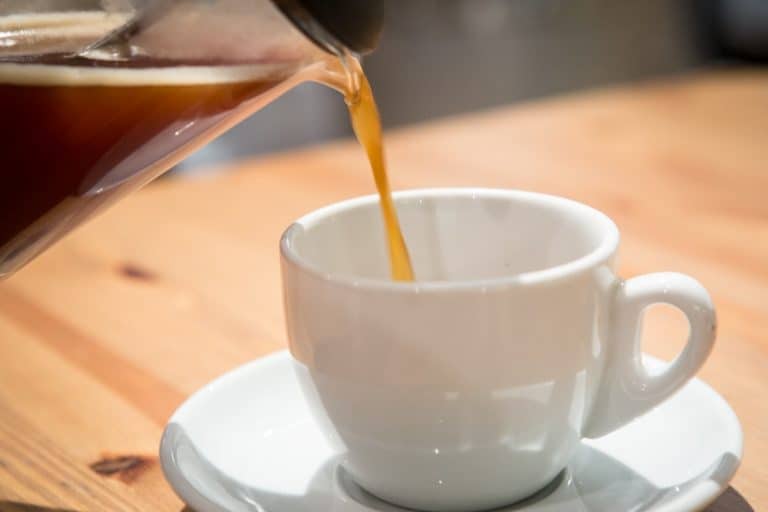
How to Use a Siphon Coffee Maker
Brew siphon (vacuum pot) coffee at home: the 1:15 ratio, medium-fine grind and 70-second steep, how the vacuum works, burner and filter tips, and a step-by-step brew timer.

Ratios and timings follow established specialty-coffee recipes, credited in the brew widget. How we test · Editorial policy
A siphon coffee maker (also called a vacuum pot or syphon) looks like something from a chemistry lab, and it works like one. You heat water in the bottom bowl, vapour pressure pushes it up into the top, the coffee brews there, and when you take the heat away a vacuum pulls the finished coffee back down through a filter. It’s great fun to watch. It also makes a remarkably clean, aromatic cup with more body than pour over, because the coffee brews at a steady temperature from start to finish.
- Ratio: about 1:15. 17 g of coffee to 250 g of water makes one large cup.
- Grind: medium-fine, a little finer than for a drip machine.
- Temperature: the water in the top settles at about 90–94 °C. Keep the flame low once it has risen.
- Steep: 60–90 seconds, with a few gentle stirs.
- Drawdown: turn off the heat, stir, and the coffee drains in about a minute.
- Time: about 2 minutes once the water has risen.
The brew timer at the top of this page walks you through it. Press Start brewing, tap Next when the water has risen, and it times the steep, the stirs and the drawdown.
How a siphon coffee maker works
Despite the name, a siphon doesn’t really siphon. It runs on vapour pressure:
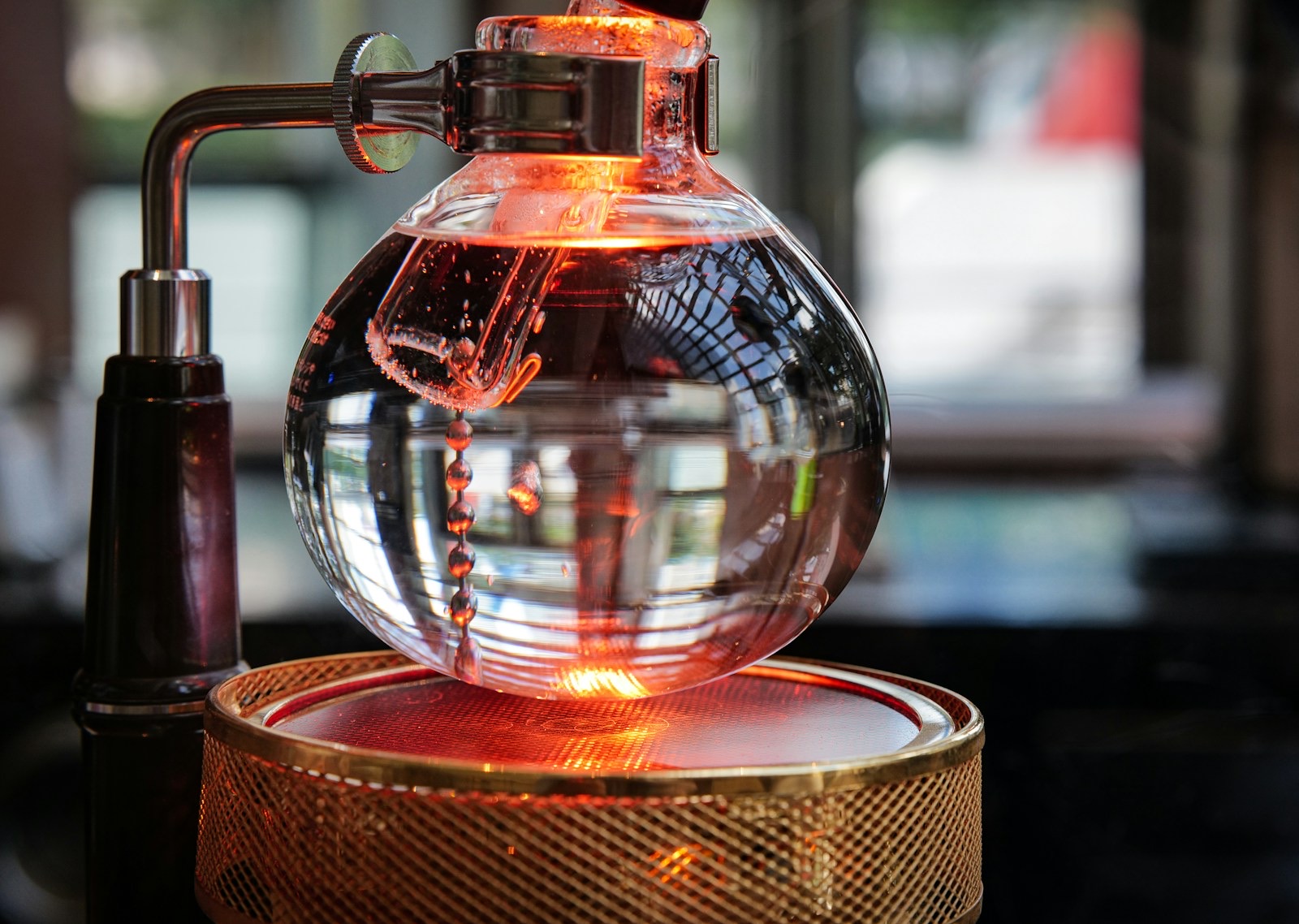
- Up. As the water in the sealed lower bowl gets hot, water vapour builds up above it and pushes the water up the tube into the top chamber. A little water always stays behind in the bottom, which is normal.
- Brew. The coffee steeps in the top like a French press, while the heat underneath keeps the temperature steady. The water up there sits a few degrees below boiling, right in the ideal brewing range.
- Down. When you turn off the heat, the vapour in the lower bowl cools and condenses. That leaves a partial vacuum, and the air pressure above the top chamber pushes the coffee down through the filter.
That combination is what makes siphon special: full immersion like a French press, a fine filter like a pour over, and a brewing temperature that doesn’t drop as it steeps.
What you need
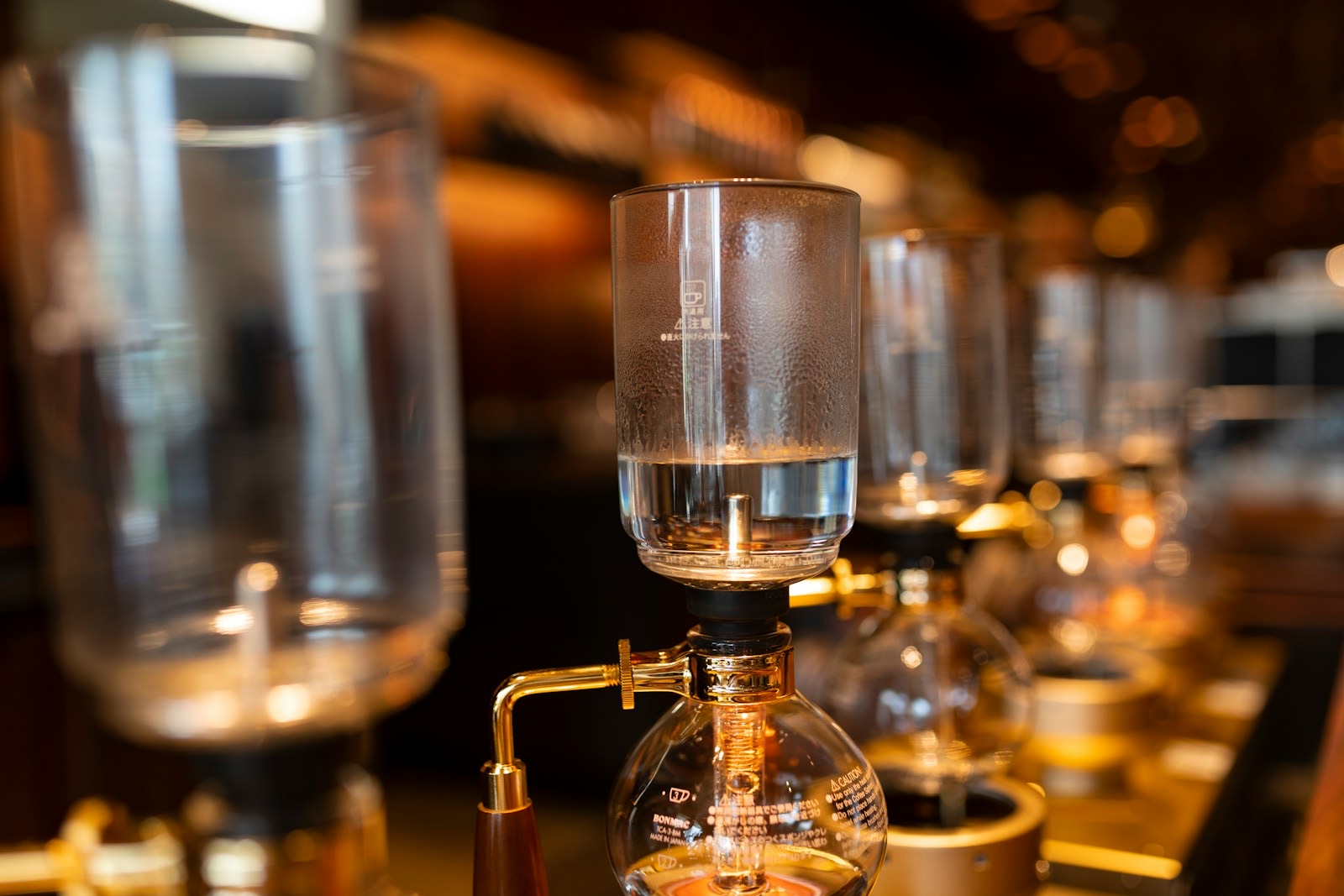
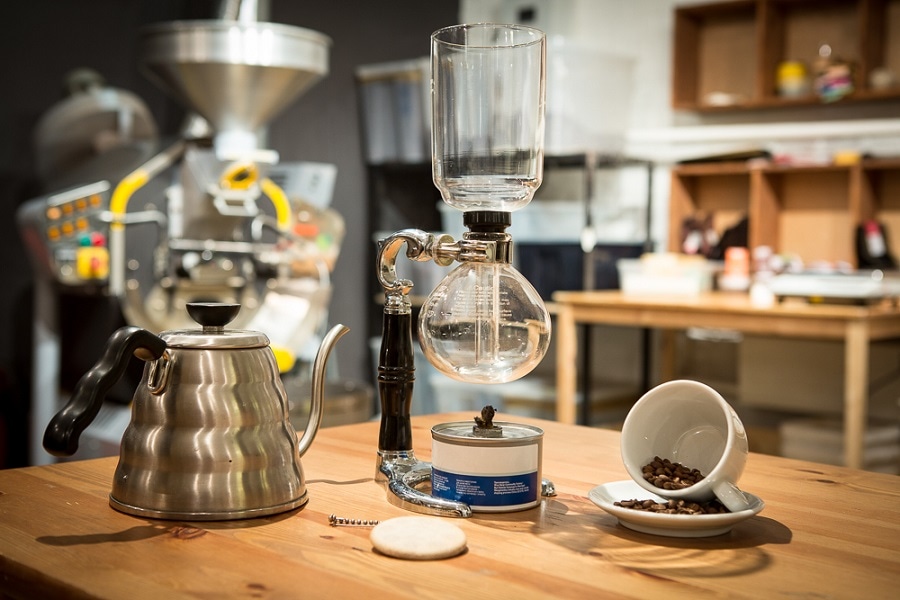
- A siphon coffee maker with a filter. Most come with a cloth filter; paper and metal ones are available too (see below).
- A heat source: the alcohol burner that usually comes in the box, a butane burner or a halogen “beam” heater. More on these below.
- A burr grinder and a scale. See our coffee grinder guide.
- A bamboo paddle or a wooden spoon for stirring. Metal can scratch or crack the glass.
- A kettle, to preheat the water. It saves you several minutes over a small burner.
Siphon ratio: how much coffee to use
Start at 1:15: 1 gram of coffee for every 15 grams of water. Hario’s own recipe is 17 g to 250 g, which is about 1:14.7. If you like a lighter cup, go to 1:16 with a slightly coarser grind and a longer steep (that’s the Longer steep recipe in our timer).
Siphon sizes are in small “cups” of about 120 ml, so a 3-cup siphon holds about 360 ml. Don’t fill it to the brim: leave room for the coffee and the stirring in the top.
| Brew size | Coffee | Water |
|---|---|---|
| 1 cup (2-cup siphon) | 15 g · 3 tbsp | 220 g (7½ oz) |
| 1 large cup (3-cup siphon) | 20 g · 4 tbsp | 300 g (10 oz) |
| 2 cups (5-cup siphon) | 33 g · 6½ tbsp | 500 g (17 oz) |
For other amounts, use our coffee-to-water ratio calculator.
Grind size for siphon coffee
Use a medium-fine grind, a little finer than for a drip machine and about like table salt. The steep is short, so the coffee needs a fairly fine grind to extract fully. Go much finer and the fines clog the cloth, and the drawdown slows to a crawl. If you steep longer (2 minutes), grind a little coarser. Our coffee grind chart shows the sizes side by side.
Heat sources: alcohol, butane or halogen
| Heat source | Good | Not so good |
|---|---|---|
| Alcohol burner | Comes in the box, quiet, cheap | Slow, hard to adjust, can leave soot on the glass |
| Butane burner | Fast, easy to turn down, steady | One more thing to buy; refill cartridges |
| Halogen beam heater | Precise, clean, looks spectacular | Expensive, needs a compatible siphon |
If you plan to brew often, a small butane burner is the best upgrade you can make. Being able to turn the flame right down once the water has risen is what keeps the brew at a steady temperature.
How to use a siphon coffee maker, step by step
This recipe makes one large cup: 17 g of coffee and 250 g of water, based on Hario’s own brew guide. It’s the Hario classic recipe in our timer.
1. Prepare the filter
Soak a cloth filter in warm water for a few minutes (or rinse a paper one). Drop it into the upper chamber, pull the chain down through the tube and hook it onto the bottom so the filter sits flat and centred. An off-centre filter lets grounds through and can make the drawdown uneven.
2. Fill the lower bowl with hot water
Pour 250 g of freshly boiled water from the kettle into the lower bowl. Starting with hot water saves several minutes. Dry the outside of the glass before it goes over the flame: drops of water on hot glass can crack it. Light the burner and set the bowl over it. Rest the upper chamber in at an angle, without sealing it, so steam can escape while the water heats.
3. Seat the top and let the water rise
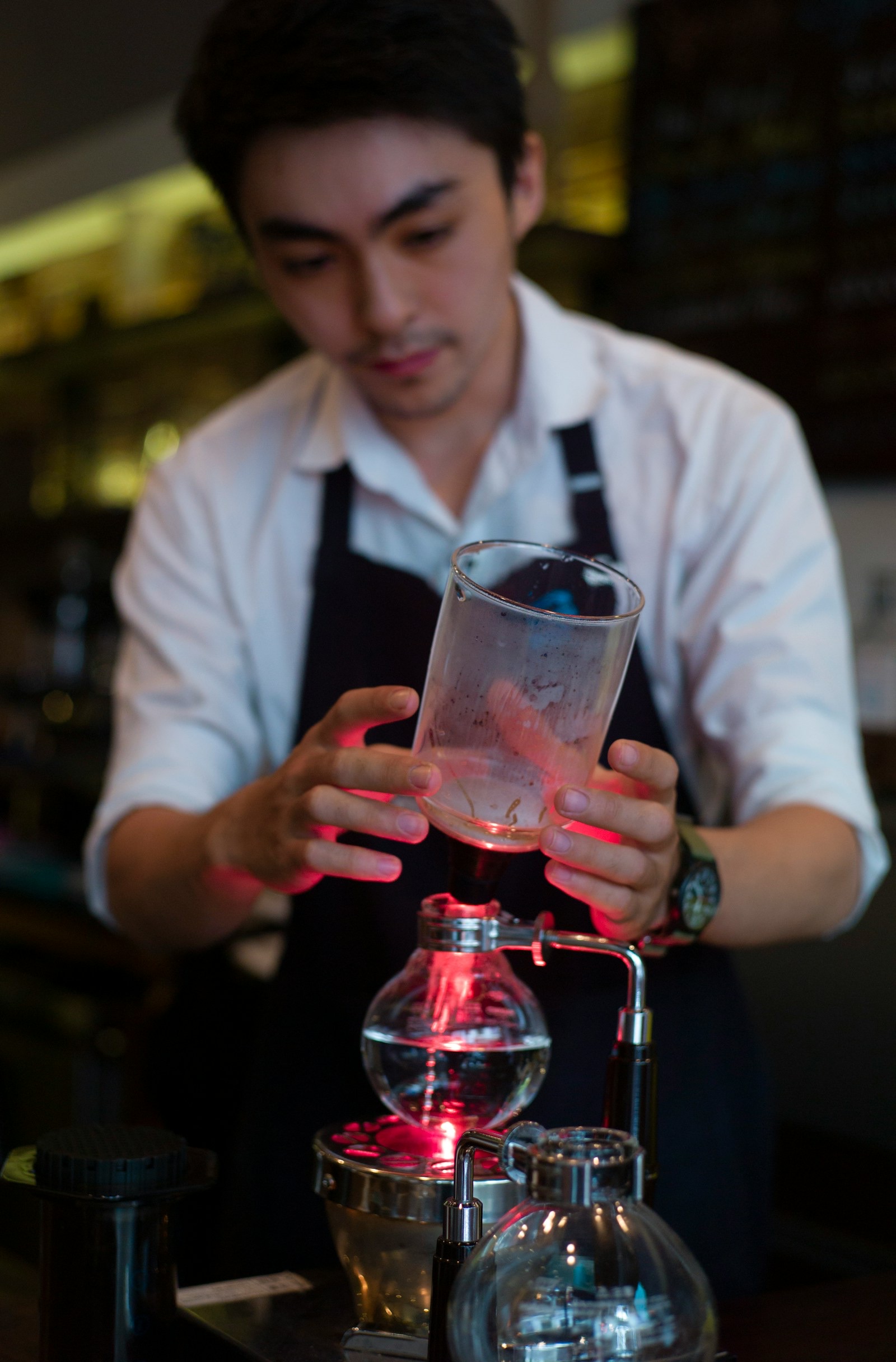
When the water is close to boiling, push the upper chamber straight down so the rubber seal grips the neck of the bowl. Within a few seconds the water starts to climb into the top. Once most of it has risen, turn the heat down low. You want just enough heat to keep the water up there, not a rolling boil.
4. Add the coffee, stir and steep (0:00–1:10)
Add 17 g of medium-fine coffee and start the timer. Stir 3–5 times, just until all the grounds are wet; they’ll form a crust on top. Then leave it to brew. You’ll see three layers: foam on top, coffee in the middle and a few bubbles rising from the bottom.
5. Heat off, stir, drawdown (1:10–2:10)
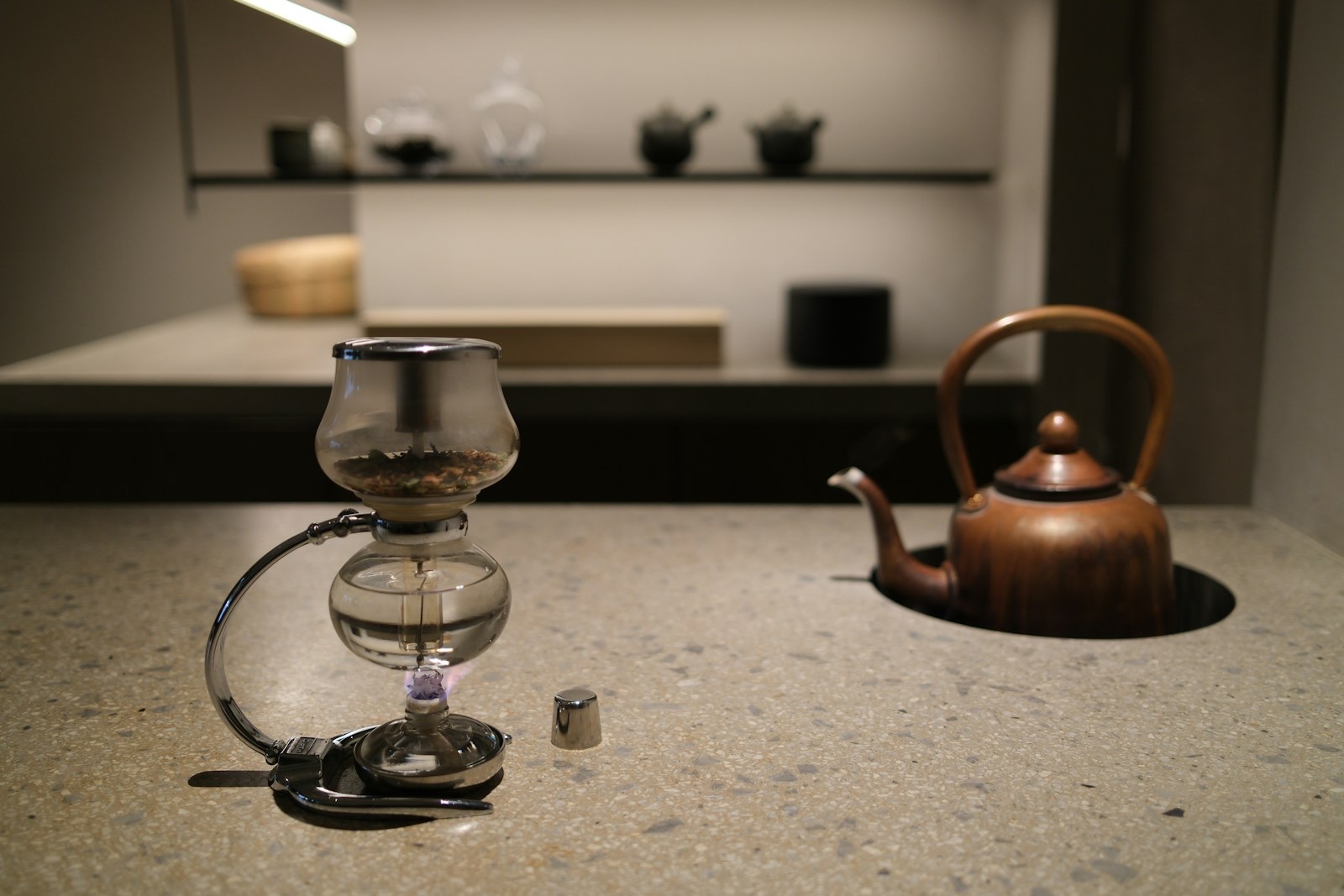
At 1:10, turn off the heat (or move the burner away) and give the coffee 3 good stirs. The coffee starts to drain within seconds, pulled down through the filter with a gurgle at the end. It should take 45–60 seconds.
Pro tip: look at the grounds when it’s done. A neat, domed mound in the middle of the filter means the coffee was stirred and drained evenly. A flat or lopsided bed, or grounds stuck high on the glass, means you stirred too hard or too unevenly, or the filter was off-centre.
6. Serve
Rock the upper chamber gently from side to side to break the seal, lift it out, and rest it in its stand. Pour from the lower bowl, which doubles as a serving jug. Siphon coffee comes out very hot. Give it a couple of minutes: the sweetness and fruit come through as it cools.
Blue Bottle’s short video shows the whole process from start to finish.

Safety: treat it like lab glass
- Never heat an empty lower bowl, and always dry the outside of the glass before it goes over the flame.
- Don’t seal the top before the water is hot if you’re starting with cold water. Rest it at an angle until the water is nearly boiling.
- Use a wooden or bamboo paddle, not a metal spoon.
- Let the glass cool before you wash it, and never put hot glass on a cold or wet surface.
- Keep alcohol and butane burners away from anything flammable, and fill alcohol burners only when they’re out and cold.
Troubleshooting: fix your siphon coffee
| What happened | Likely cause | Try this |
|---|---|---|
| Sour, thin | Under-extracted: grind too coarse or steep too short | Grind finer, or steep 15–20 seconds longer. |
| Bitter, harsh | Over-extracted, or the water boiling in the top | Grind coarser. Turn the flame down once the water rises. |
| Drawdown stalls | Grind too fine, or a clogged cloth filter | Grind coarser. Clean or replace the cloth. |
| Water won’t rise | Top not sealed, or heat too low | Push the top down firmly and turn the heat up. |
| Coffee won’t go down after the heat is off | Lower bowl still too hot | Move the burner away completely. Be patient. |
| Grounds in the cup | Filter off-centre, or the chain not hooked | Centre the filter and check the chain. |
| Stale, musty taste | Dirty cloth filter | Rinse it well after every brew and store it in water in the fridge. |
Cloth, paper or metal filter?
Cloth is the classic. It holds back almost all the grounds but lets a little of the coffee oils through, so the cup is clean but still has body. The catch is care: rinse it well after each brew, keep it in a covered container of water in the fridge, and never let it dry out with coffee in it, or it will taste stale. Replace it when the drawdown slows down or it starts to smell.
Paper filters (with an adapter) give the cleanest, brightest cup and there’s nothing to look after, so they’re the easy choice if you brew only now and then. Metal filters let more oil and fines through, for a heavier cup closer to a French press. If you want to go deeper, James Hoffmann’s video on cloth filters (linked in the sources) is a good place to start.
Siphon vs French press and pour over
| Body | Clarity | Effort | |
|---|---|---|---|
| Siphon | Medium to full | High | High |
| French press | Full | Low | Low |
| Pour over | Light to medium | High | Medium |
Siphon sits between the two: as rich as an immersion brew, almost as clean as a filter. It’s the best way we know to show off a fruity, floral light roast, such as a washed Ethiopian or a Panama Geisha, to friends.
A short history of the vacuum pot
Vacuum brewers are older than most people think. According to William Ukers’ classic All About Coffee (1922), James Vardy and Moritz Platow were granted an English patent for a vacuum coffee urn with a glass upper vessel in 1839. In 1842, Madame Vassieux of Lyon received the first French patent for an all-glass version: two glass “balloons” in a stand. Ukers calls these the forerunners of the double glass balloons that became fashionable in the United States in the early 20th century.
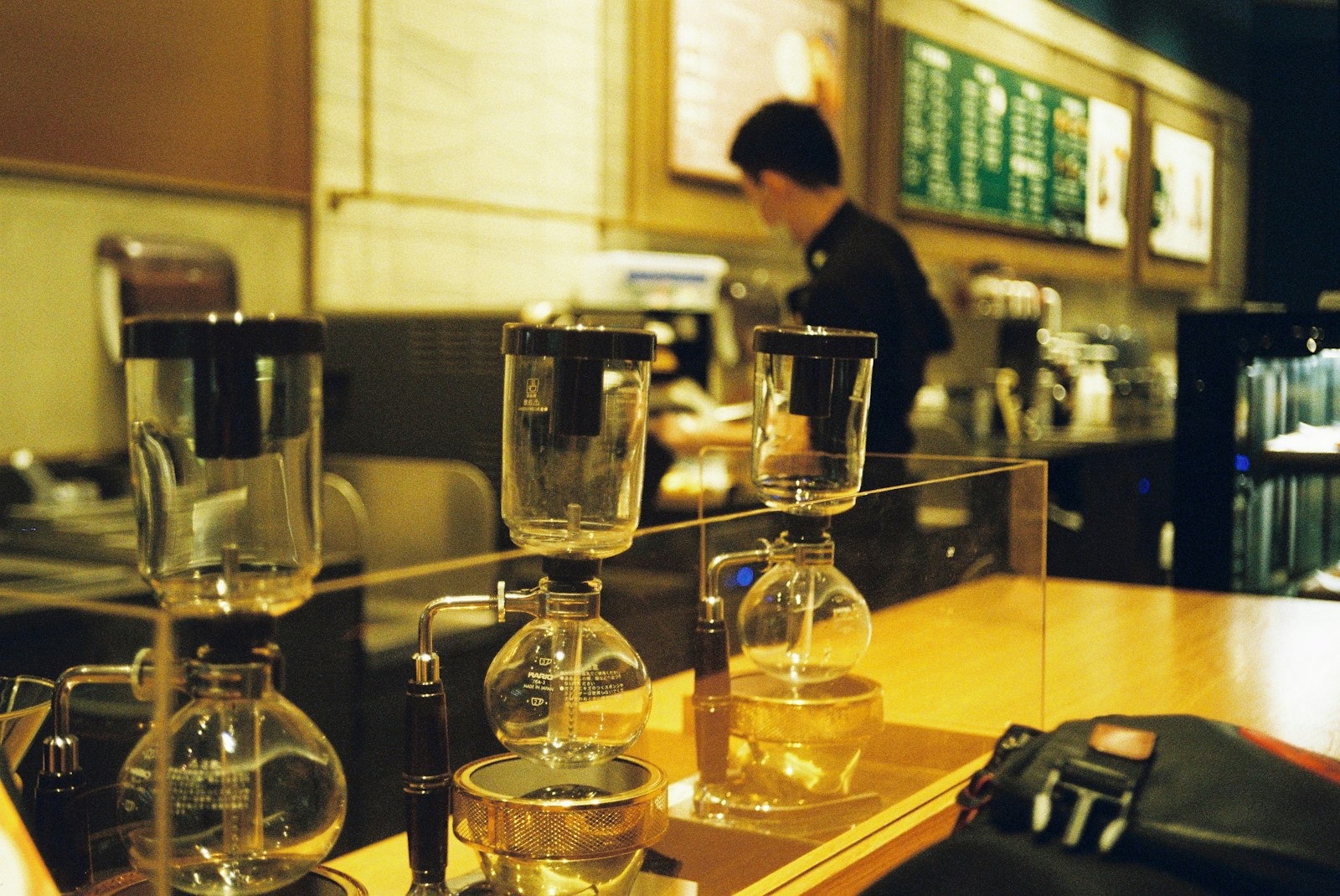
Drip machines pushed the vacuum pot out of most American kitchens, but Japanese glassmakers such as Hario and Yama kept making them, and siphon bars stayed popular in Japan and Taiwan. In the 2000s, specialty cafés around the world brought them back as a showpiece.
Cleaning
Let everything cool first. Tip the grounds out of the upper chamber into the compost, unhook the filter and rinse it under hot water until it runs clear. Wash both glass parts with warm, soapy water and a soft bottle brush, and rinse well. If coffee stains build up, soak the glass in warm water with a little coffee-cleaning powder or white vinegar. Every few weeks, boil a cloth filter in water (no soap) for a few minutes to refresh it.
Siphon coffee FAQ
Start at about 1:15: 17 g of coffee to 250 g of water for one large cup, or 20 g to 300 g in a 3-cup siphon. For a lighter cup, use 1:16 with a slightly coarser grind and a 2-minute steep.
Medium-fine, a little finer than for a drip machine and roughly like table salt. Too fine and the fines clog the filter and stall the drawdown; too coarse and the short steep leaves the coffee sour.
60–90 seconds from when you add the coffee. Hario’s recipe turns off the heat at 70 seconds. Longer steeps (up to about 2 minutes) work with a coarser grind. The drawdown adds another 45–60 seconds.
That’s normal. The tube from the top chamber doesn’t reach the very bottom of the lower bowl, and the vapour that pushes the water up needs a little water left to boil. It’s usually a small amount, and it mixes back in with the coffee at the end.
Cloth is traditional and gives a clean cup with a little more body, but you have to rinse it well and store it in water in the fridge. Paper gives the cleanest cup and needs no care, which makes it the easier choice if you only brew now and then.
Not by itself. Strength depends on the ratio, and at 1:15 a siphon is in the same range as drip or pour over. Siphon coffee often tastes richer because it’s a full immersion brew. A 250 ml cup made with 17 g of coffee typically has roughly 100–150 mg of caffeine.
Yes, if you treat it like lab glass. Never heat the lower bowl empty, dry the outside before it goes over the flame, use a wooden paddle rather than metal, and let the glass cool before washing it. Keep burners away from anything flammable.
Sources
- Hario, Syphon brew guide (the recipe in our timer).
- Sprudge, How to brew with a siphon coffee maker (the longer-steep recipe).
- Texas Coffee School, Guide to brewing coffee with a vacuum siphon pot (brewing temperature and cloth filter care).
- William H. Ukers, All About Coffee (1922), Project Gutenberg (history of the vacuum brewer).
- Specialty Coffee Association, Coffee Standards (brewing temperature).
- James Hoffmann, Cloth Filters for Coffee.
How we work: how we test · editorial policy · research & sources.
Published