Coffee Grind Size Chart: The Right Grind for Every Brew Method
Find the right grind in one tap: fine for espresso, medium-fine for pour over, coarse for French press and cold brew. Real photos, micron sizes, grinder settings and fixes for sour or bitter coffee.

Grind sizes match the recipes in our brew guides; particle ranges are credited in the chart. How we test · Editorial policy
Grind size at a glance
| Method | Grind | Particles | Brew time |
|---|---|---|---|
| Turkish | Extra fine | 40–220 µm | 2–3 min |
| Espresso | Fine | 180–380 µm | 25–30 s |
| Moka pot | Fine | 360–660 µm | 4–5 min |
| AeroPress | Medium-fine | 320–960 µm | 2–3½ min |
| Pour over | Medium-fine | 400–700 µm | 3–3½ min |
| Siphon | Medium-fine | 375–800 µm | About 2 min |
| Vietnamese | Medium-fine | — | 4–5 min |
| Clever | Medium-fine | 450–825 µm | 3–4 min |
| Drip machine | Medium | 300–900 µm | 4–6 min |
| Chemex | Medium-coarse | 410–930 µm | About 4 min |
| French press | Coarse | 690–1,300 µm | 4–9 min |
| Cold brew | Coarse | 800–1,400 µm | 12–24 h |
Typical particle sizes in microns (µm; 1,000 µm = 1 mm). The longer the coffee meets the water, the coarser the grind.
Grind size chart
How fine should I grind?
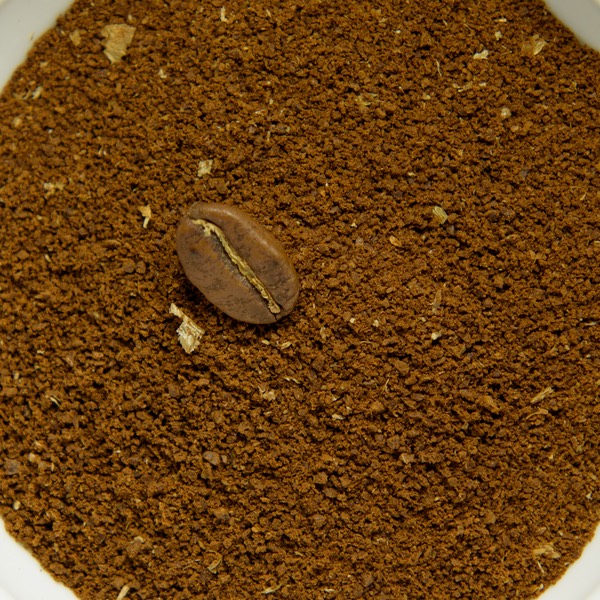
Pour over
Medium-fine
- Particles
- 400–700 µm
- Looks like
- silica beach sand
- Feels
- gritty
- Brew time
- 3–3½ min
Use the drawdown as your guide: grind finer if the water runs through too fast, coarser if it stalls.
Closest photo: medium. Medium-fine is a step finer, like beach sand.
Brew guide: Pour overA starting point: every grinder and coffee is different. Sour or weak? Grind finer. Bitter or harsh? Grind coarser. Photos: Alorin, CC BY 4.0. Particle ranges: Honest Coffee Guide.
The right grind size depends on how long the coffee and water spend together. Espresso, which brews in under 30 seconds, needs a fine grind. Pour over, at around 3 minutes, needs medium-fine. A French press, steeping for 4 minutes or more, needs coarse. Pick your brew method in the grind chart at the top of this page to see the size, what it looks like and a photo. The rest of this guide explains how to dial it in on your own grinder.
- The rule: the shorter the brew, the finer the grind. The longer the brew, the coarser.
- Fine: espresso and moka pot. Extra fine, almost a powder, for Turkish coffee.
- Medium-fine to medium: pour over, AeroPress, siphon, Clever Dripper and drip machines.
- Medium-coarse to coarse: Chemex, French press and cold brew.
- Taste tells you the rest: sour or weak means grind finer. Bitter or harsh means grind coarser.
- A burr grinder makes the biggest difference, because it makes even particles. Grind just before you brew.
The 7 coffee grind sizes
Grind sizes have no official standard, but baristas and grinder makers use the same seven names. The best way to learn them is to look at and feel the grounds. Here’s what each size looks and feels like, and what it’s for.
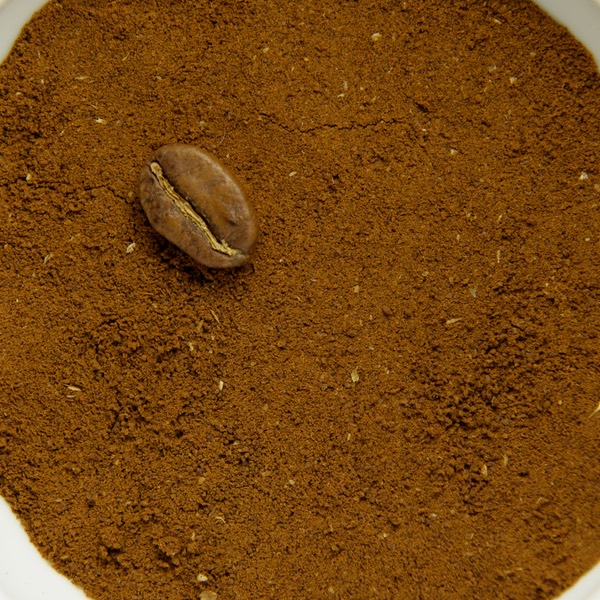
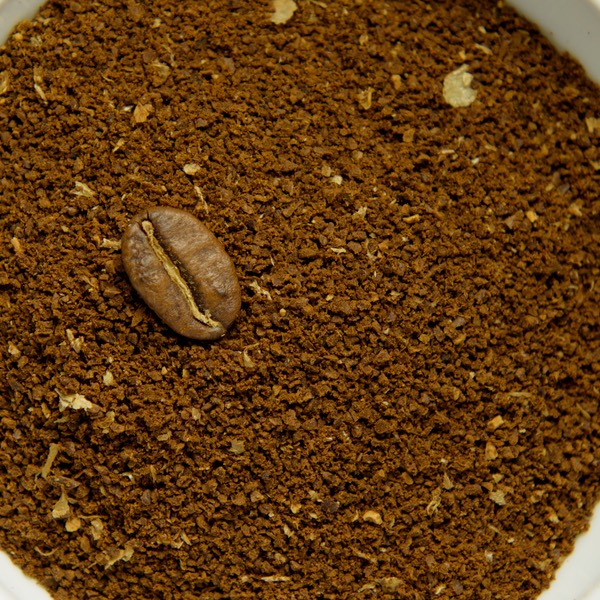
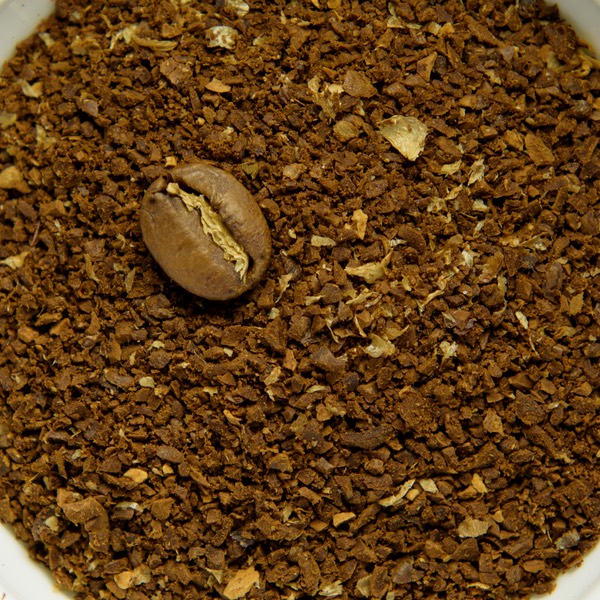
The same beans at four settings, with a whole bean for scale. Photos: Alorin, CC BY 4.0, via Wikimedia Commons.
Extra fine: Turkish coffee
Looks like confectioner’s sugar or flour and feels powdery and light. This is the finest setting there is. It’s used only for Turkish coffee, where the grounds are boiled with the water and settle in the cup. Many home burr grinders can’t go this fine. A Turkish hand mill, or a grinder built for espresso, can.
Fine: espresso and moka pot
Looks like finely milled salt and feels soft. It sticks together when you pinch it. Espresso needs this because the water passes through in 25–30 seconds under pressure. A fine grind slows the water down and gives it enough surface to extract from. A moka pot works a touch coarser than espresso. Go too fine and the pot sputters and the coffee turns bitter.
Medium-fine: pour over, AeroPress, siphon
Looks like silica beach sand and feels gritty. This is the everyday filter grind for cone brewers such as the V60, which take around 3 minutes. It’s also right for pour over, AeroPress, siphon, a Vietnamese phin and the Clever Dripper.
Medium: drip coffee makers
Looks like regular sand (the original guide called it peat moss) and feels crumbly. It’s the classic grind for drip coffee makers, and the size most pre-ground supermarket coffee is sold at. Flat-bottomed baskets work well at medium. Cone-shaped baskets often do better a step finer.
Medium-coarse: Chemex
Looks and feels like rocky sand. The Chemex uses a thick paper filter that drains slowly, so it needs a coarser grind than a V60 to finish in about 4 minutes. It also suits longer, finer-ground French press recipes, such as the one in our French press guide.
Coarse: French press and cold brew
Looks like flaky sea salt. The pieces are chunky and easy to tell apart. Coarse is the classic French press grind for a 4-minute steep, because big pieces are easy to filter with a metal mesh. It’s also the usual grind for cold brew steeped for 12–18 hours. Shopping for pre-ground? See our pick of the best coarse ground coffee.
Extra coarse: long cold brew
Looks like ground peppercorns and feels like broken shells. It’s for cold brew steeped for a full day, and for cold drip towers. Few recipes need it, and many home grinders top out just short of it.

Why grind size matters
Roughly 30% of a roasted coffee bean can dissolve in water, and a balanced cup takes only about 18–22% of the bean, the range on the Specialty Coffee Association’s brewing control chart (our extraction calculator shows where your cup lands). Grinding exposes the inside of the bean. The finer you grind, the more surface the water can reach and the faster flavour comes out. Grind size changes two things at once:
- How fast the coffee extracts. Small particles give up their flavour quickly, big ones slowly. That’s why a 25-second espresso needs a fine grind and a 12-hour cold brew a coarse one.
- How fast the water flows. In espresso, pour over and the phin, finer grounds hold the water back and make the brew longer. Grinding finer therefore adds extraction twice over: more surface, and more time.
Get the balance right and the cup is sweet and full. Too coarse, and the water leaves before it has taken the sugars, giving a sour, thin, salty cup with a short finish (under-extracted). Too fine, and it keeps going into the harsh compounds, giving a bitter, dry, hollow cup (over-extracted). That’s why the same beans can taste completely different from one grinder setting to the next.
How to dial in your grind
A chart gets you close. Your grinder, your beans and your recipe decide the last step. Start at the size for your brew method, brew, taste, then change only the grind and brew again. Keep the dose, water and ratio the same (our coffee ratio calculator helps).
| What you notice | What it means | What to do |
|---|---|---|
| Sour, sharp, thin or salty | Under-extracted | Grind finer |
| Bitter, dry, harsh or hollow | Over-extracted | Grind coarser |
| Sour and bitter at once | Uneven grind or flow | Check the grinder; pour more evenly |
| Espresso runs in under 20 s | Too coarse | Grind finer |
| Espresso drips or takes over 35 s | Too fine | Grind coarser |
| Pour over drains too fast | Too coarse | Grind finer |
| Pour over stalls or the bed clogs | Too fine, or too many fines | Grind coarser |
| French press is hard to plunge or silty | Too fine | Grind coarser |
| Moka pot sputters or tastes burnt | Too fine | Grind coarser; use less heat |
Grind settings for popular grinders
Each grinder numbers its dial differently, so “setting 15” on one has nothing to do with “15” on another. These are the starting points the makers themselves publish.
| Brew method | Comandante C40 (clicks) | Baratza Encore (setting) |
|---|---|---|
| Turkish (ibrik) | 3–8 | — |
| Espresso | 7–13 | — |
| Moka pot | 14–20 | — |
| AeroPress | depends on recipe | 12 |
| V60 and pour over | 18–35 | 23 |
| Chemex | 18–35 | 25 |
| French press | 25–35 | — |
Find your zero first. On a hand grinder, tighten the burrs slowly until they just stop turning (empty the grinder first). That’s zero, and you count clicks open from there. Two grinders of the same model can still differ by a click or two, so treat any number as a place to start tasting.
Using a different grinder? Use the micron ranges in the chart above. If your grinder’s maker lists how far each click moves the burrs (often 20–90 µm), divide the target size by that to find a starting click.
Burr vs blade grinders
The grinder matters more than any chart. Even with the right water temperature and timing, an uneven grind gives an uneven cup. Small pieces over-extract while big pieces under-extract, and you taste both.

- Burr grinders crush the beans between two burrs set a fixed distance apart. Coffee can only leave once it’s small enough, so the grind is even and repeatable. Conical burrs are common in hand grinders and home machines. Flat burrs are common in café grinders. Both work well; the quality of the burrs and how well they’re aligned matter more than the shape.
- Blade grinders spin a blade that chops the beans for as long as you hold the button, so you get dust and chunks in the same batch. They’re fine for drip coffee and French press. They can’t make a consistent espresso grind.
If you have a blade grinder, you can still make good coffee. Freshly ground beans from a blade grinder beat stale pre-ground coffee. Grind small batches so the chamber isn’t crowded. Use short pulses of a few seconds, and shake the grinder between pulses. Stop when most of the grounds look like the size you want. Ready to upgrade? Compare our best coffee grinders and best manual grinders. A good hand grinder costs less than an electric burr grinder of the same quality.
Fines and boulders: why “even” beats “exact”
No grinder produces just one size. Every grind is a mix: tiny particles called fines, oversized ones called boulders, and most of the coffee in between. Fines extract fast and can clog filters. Boulders barely extract at all. A better grinder doesn’t make a different “size”. It makes a narrower spread around the size you chose.
Uneven flow matters as well. A 2020 study of espresso in the journal Matter found that grinding very fine made shots less consistent, and sometimes extracted less, because water forced its way through channels in the puck instead of through all the coffee. The researchers got more repeatable shots by grinding a little coarser and using slightly less coffee. Finer isn’t automatically stronger or better.
What else changes the right grind
- Roast level. Dark roasts are more brittle and extract more easily, so they often need a slightly coarser grind. Dense light roasts usually need finer.
- Batch size. Brewing more coffee in the same brewer makes a deeper bed that drains more slowly. Grind a little coarser for a big batch and a little finer for a single cup.
- Bean temperature. Colder beans grind finer and more evenly. A 2016 study in Scientific Reports found that beans ground cold gave a smaller average particle size and a narrower spread. Keep your beans at a steady temperature and your setting will stay put.
- Filter and brewer. Thick papers (Chemex) and flat-bottom drippers run slower than thin papers and cones, and metal filters let fines through. Each needs its own setting.
Grind just before you brew
Whole beans keep their aroma for weeks; ground coffee loses it in minutes. The Specialty Coffee Association puts it simply: the CO₂ that whole beans lose over weeks is lost within minutes of grinding, so ground coffee is at its best for about an hour. The aroma goes with the CO₂. That’s why grinding fresh is the cheapest upgrade most home brewers can make.
If you buy pre-ground coffee, buy the grind that matches your brewer (most is medium, for drip machines). Buy small bags and keep them sealed, away from heat and light.
How we made this chart
Each grind size in the chart matches the recipe in our brew guide for that method, so the chart and the guides always agree. The particle ranges in microns (µm; 1,000 µm is 1 mm) come from Honest Coffee Guide’s grind size chart. It’s built from published recipes and how people brew in practice, and it’s a typical range, not a rule. As a fixed reference point, the Specialty Coffee Association’s cupping protocol asks for a grind where 70–75% of the coffee passes through a US No. 20 sieve, which has openings of about 850 µm. That’s slightly coarser than typical drip coffee. The photos show the same beans in the same bowl at four settings, with a whole bean for scale.
Coffee grind size FAQ
Coarse, like flaky sea salt, for the classic 4-minute brew. Big pieces are easy to filter with the metal mesh and keep the cup from getting silty. For longer French press recipes of 8–9 minutes, go a step finer, to medium-coarse.
Medium-fine, like beach sand, for a cone brewer such as a V60, so the brew finishes in about 3 minutes. A Chemex, with its thick filter, needs medium-coarse. If the water drains too fast, grind finer; if it stalls, grind coarser.
Fine, like finely milled salt, so that a double shot takes about 25–30 seconds. Espresso is the most sensitive brew method to grind size, so adjust in very small steps and judge by the shot time and taste.
Coarse for a 12–18 hour steep, or extra coarse if you steep for a full day. A coarse grind is easier to filter and keeps the cold brew from tasting muddy or bitter.
Up to a point. A finer grind extracts more from the same coffee, which makes the cup taste stronger and more bitter. Strength mostly comes from the coffee-to-water ratio, though. To make coffee stronger without bitterness, use more coffee rather than grinding much finer.
Taste it. If the coffee tastes sour, thin or weak, grind finer. If it tastes bitter, dry or harsh, grind coarser. Brew time helps too: espresso should take about 25–30 seconds and a V60 about 3 minutes. Change only the grind between brews so you can tell what made the difference.
Ground coffee is at its best for about an hour after grinding, according to the Specialty Coffee Association, because it loses its CO₂ and aroma within minutes. Whole beans stay fresh for a few weeks after roasting. Grind just before you brew for the best flavour.
Sources
- Honest Coffee Guide, Coffee grind size chart (micron ranges by brew method).
- Specialty Coffee Association, Cupping protocols (grind: 70–75% through a US No. 20 sieve).
- Specialty Coffee Association, Coffee Decoded: What is “freshly roasted” coffee? (CO₂ loss after grinding).
- Cameron et al., Systematically Improving Espresso: Insights from Mathematical Modeling and Experiment, Matter, 2020.
- Uman et al., The effect of bean origin and temperature on grinding roasted coffee, Scientific Reports, 2016.
- Comandante, FAQ: grind settings and click zero.
- Baratza brew guides: AeroPress, Hario V60, Chemex.
How we work: how we test · editorial policy · research & sources.
Published · Last updated