Tbilisi Coffee Festival 2024: What I Saw Under the Ferris Wheel
The 2024 Tbilisi Coffee Festival under the Ferris wheel on Mtatsminda: Coffee Lab, Shavi and Mamuli, La Marzocco, free tastings, and where it moved next.

Written from hands-on coffee experience and checked against our editorial standards. Editorial policy · Research sources
The Tbilisi Coffee Festival is Georgia’s main coffee industry event: roasters, equipment brands, tastings and barista championships in one place. In 2024 it ran on September 20–22 at the Underwheel Club in Mtatsminda Park, on top of the mountain above the city, right under the Ferris wheel. The best part was the Roasters Village, where Georgian specialty roasters such as Coffee Lab, Shavi and Mamuli had their own stands. Since 2025 the festival has moved to Expo Georgia, so the mountain-top setting is now history.
- When and where (2024): September 20–22, 2024, Underwheel Club, Mtatsminda Park, Tbilisi.
- Tickets (2024): 15 lari (GEL) for a day, 25 lari for all three days.
- Worth going for: the Roasters Village, with Georgian specialty roasters Coffee Lab, Shavi Coffee Roasters and Mamuli Roasters.
- Also there: La Marzocco, a championship stage, Tully Irish Coffee from Tullamore D.E.W., and big brands such as illy.
- Since then: Expo Georgia on October 11–12, 2025, and September 26–27, 2026. Check our coffee events calendar for the next one.
Some festivals you go to for the program. This one you go to for the road: to get to the coffee, you first have to climb above all of Tbilisi. I can’t think of a better start to a coffee day.
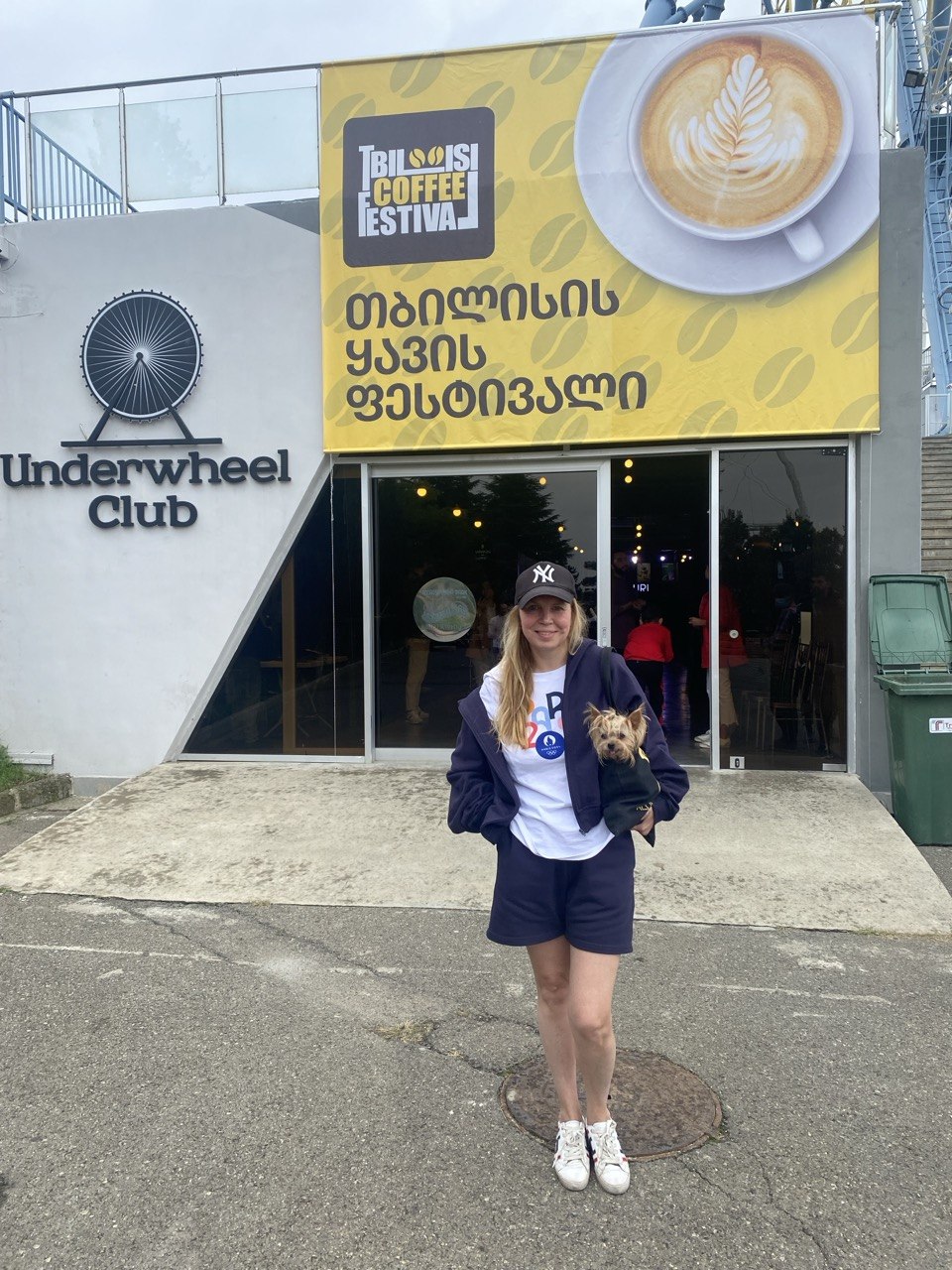
I went with Olfried, my brother’s family’s mini Yorkie. Everything below is what I saw at the stands myself, and I took all the photos in this piece.
Tbilisi Coffee Festival 2024 at a glance
2024 was the festival’s second edition, judging by the count Georgia Today gives: it called the 2026 festival the fourth. Georgia Starts Here listed it for September 20, 21 and 22 at the Underwheel Club on Mtatsminda, with an exhibition of coffee companies, tastings, cupping, a latte art championship, a coffee and alcohol championship, workshops and a DJ on the terrace. A day ticket was 15 lari and a pass for all three days 25 lari.
The organizers describe the festival as a meeting point for Georgia’s coffee business. In practice it felt smaller and friendlier than that sounds, more on that below.
What I saw at the festival
The entrance and the photo frame
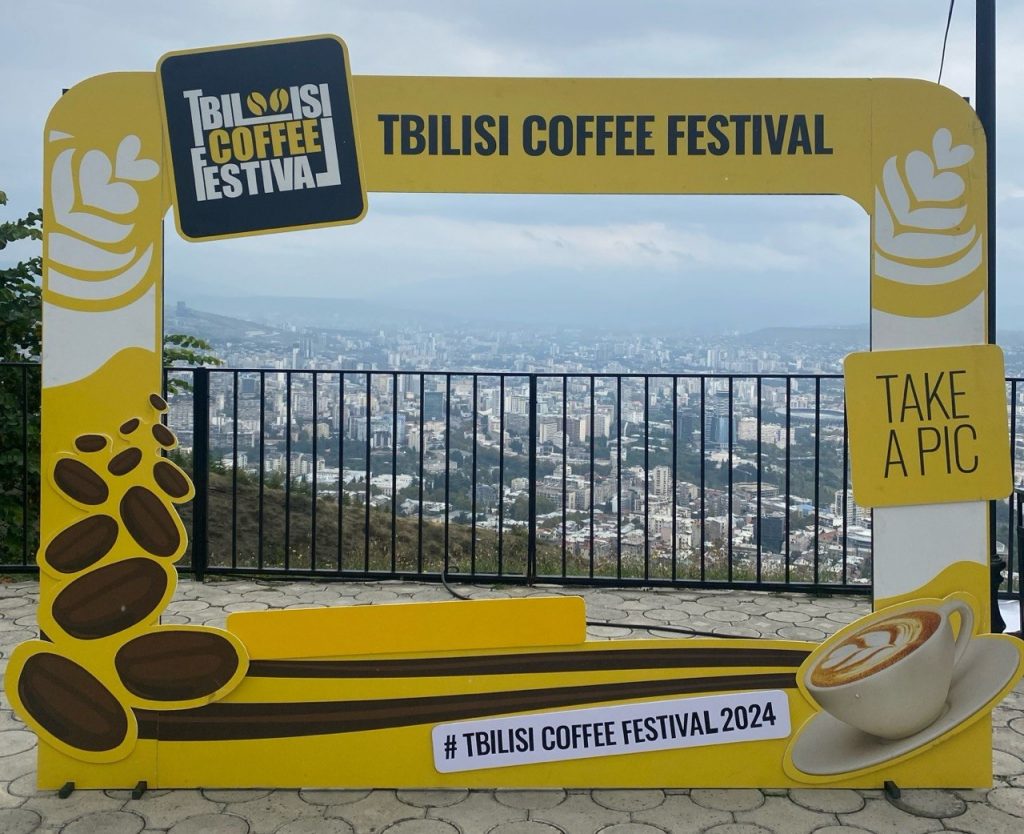
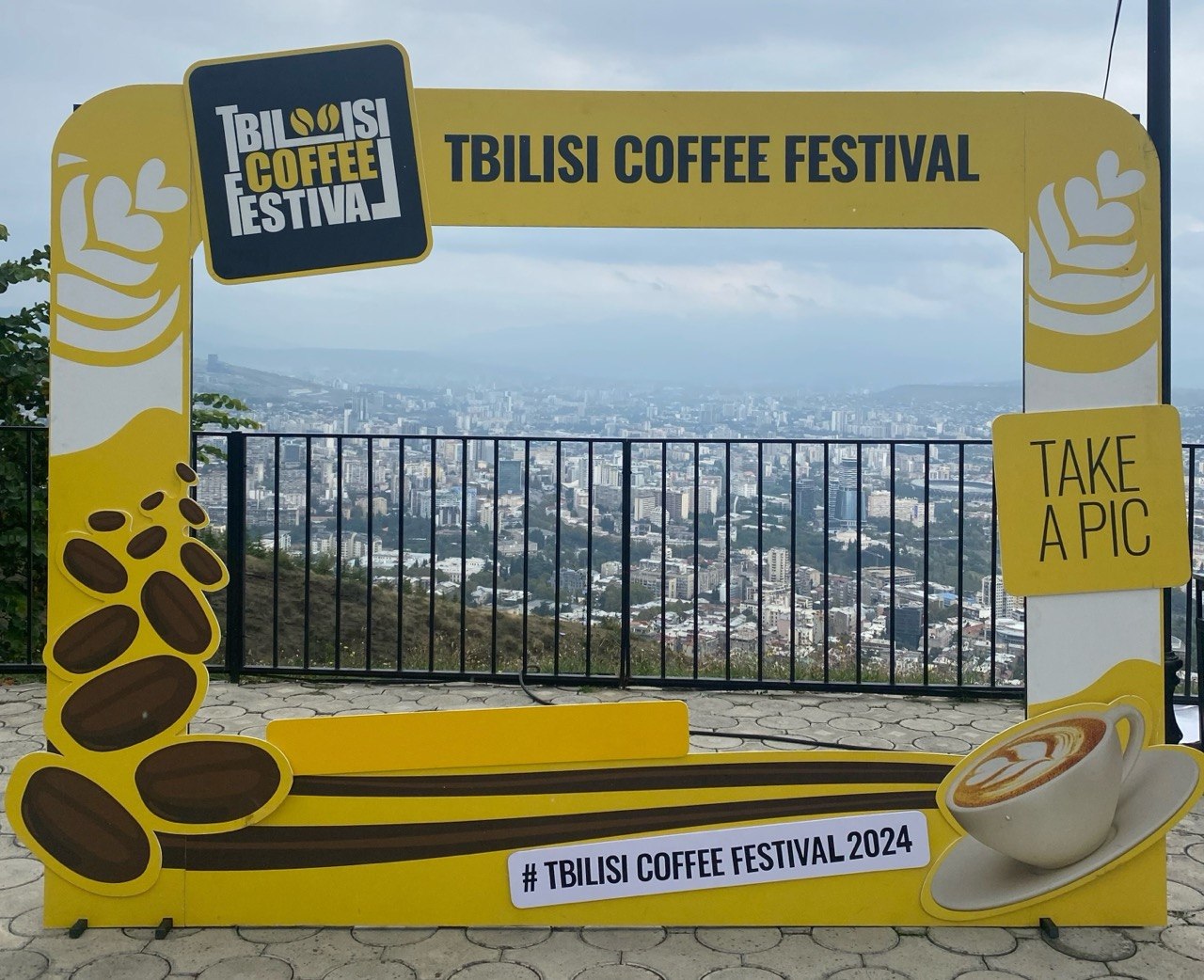
A huge yellow banner hung over the entrance, with a cappuccino and the festival’s name in Georgian: თბილისის ყავის ფესტივალი, Tbilisi Coffee Festival. Next to the viewing platform stood a yellow “Take a pic” photo frame with the hashtag #TBILISI COFFEE FESTIVAL 2024. All of Tbilisi fits in the shot, so the line for it made sense.
The Roasters Village
For me this was the heart of the festival: a separate area for roasters under a yellow “The Roasters Village” sign. Georgia’s specialty roasters were all here. Specialty coffee means coffee graded and roasted for its own flavor rather than for a standard dark taste. If you want to understand where Tbilisi’s coffee scene is now, start here.
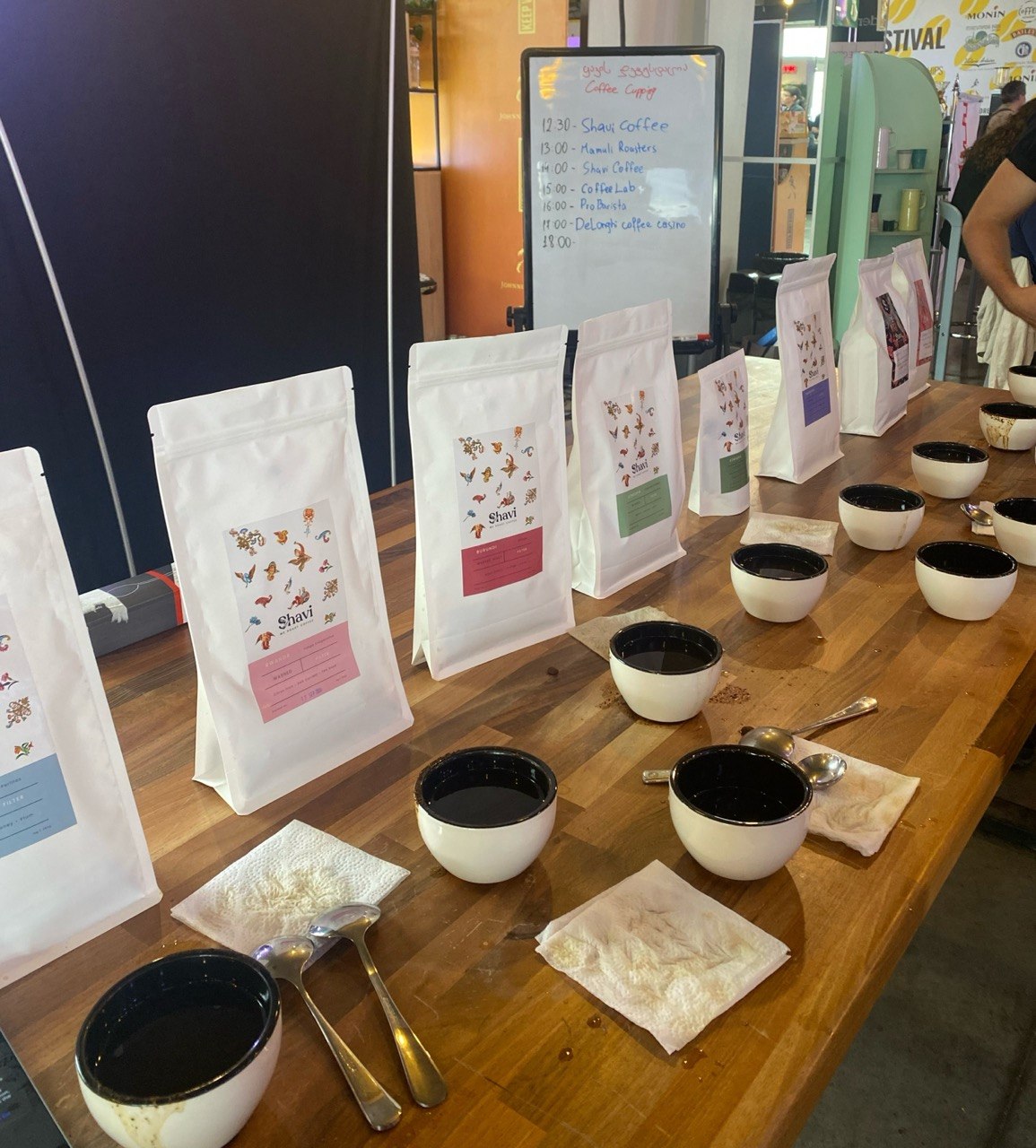
The day had a cupping schedule, written on a whiteboard by the long tasting table. Cupping is the industry’s standard tasting: coffee steeped in bowls, then slurped from a spoon. On the day I photographed it, the board read Shavi Coffee at 12:30, Mamuli Roasters at 13:00, Shavi again at 14:00, Coffee Lab at 15:00, Pro Barista at 16:00 and DeLonghi Coffee Casino at 17:00.
Coffee Lab
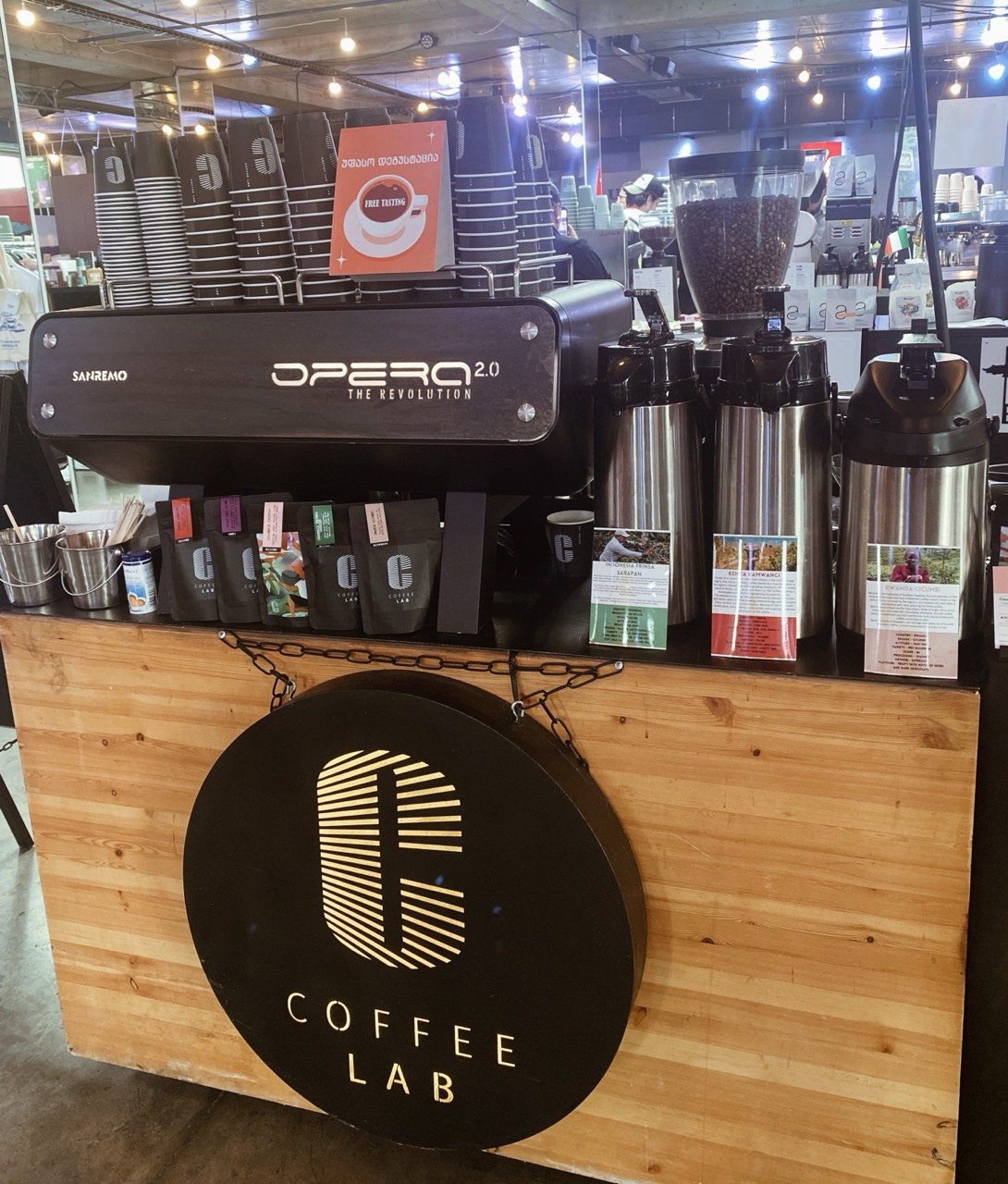
One of the big names in Georgian specialty coffee. The stand had a large chalkboard with the company’s story, an espresso machine, grinders and a whole display of bags and brewing gear. Filter coffees from Indonesia, Kenya and Rwanda waited in airpots for free tasting, next to a Sanremo Opera 2.0 espresso machine. The coffee I carried around the festival in a black-and-white Coffee Lab cup came from here.
Shavi Coffee Roasters
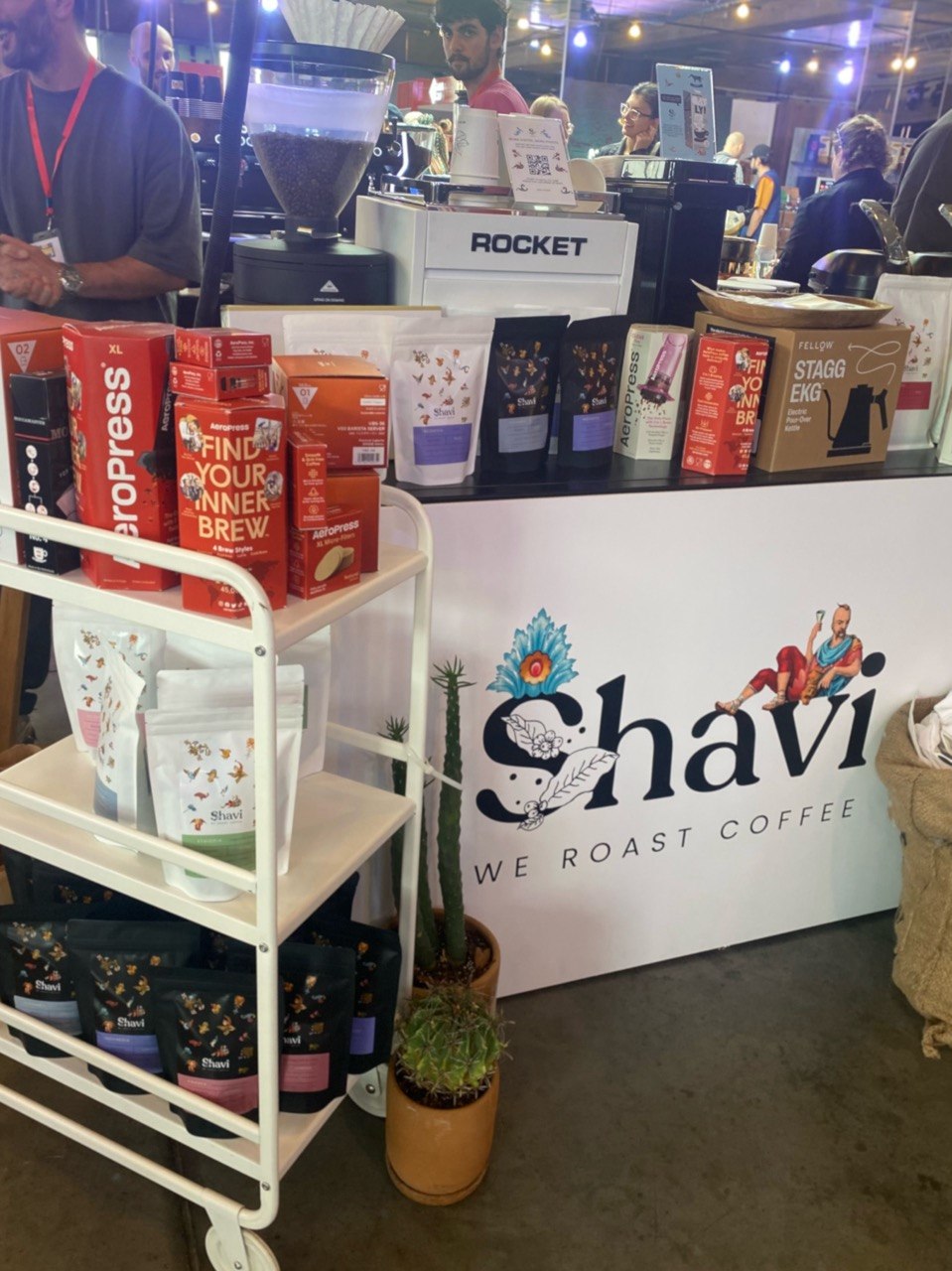
A Tbilisi roaster with a strong visual style: the counter carried their logo, “We roast coffee”, and an illustration with a Georgian feel. A Rocket espresso machine was working on the stand, and next to it they sold AeroPress brewers in several versions and Fellow Stagg EKG kettles. The coffee bags with flower illustrations looked like small gifts.
Mamuli Roasters
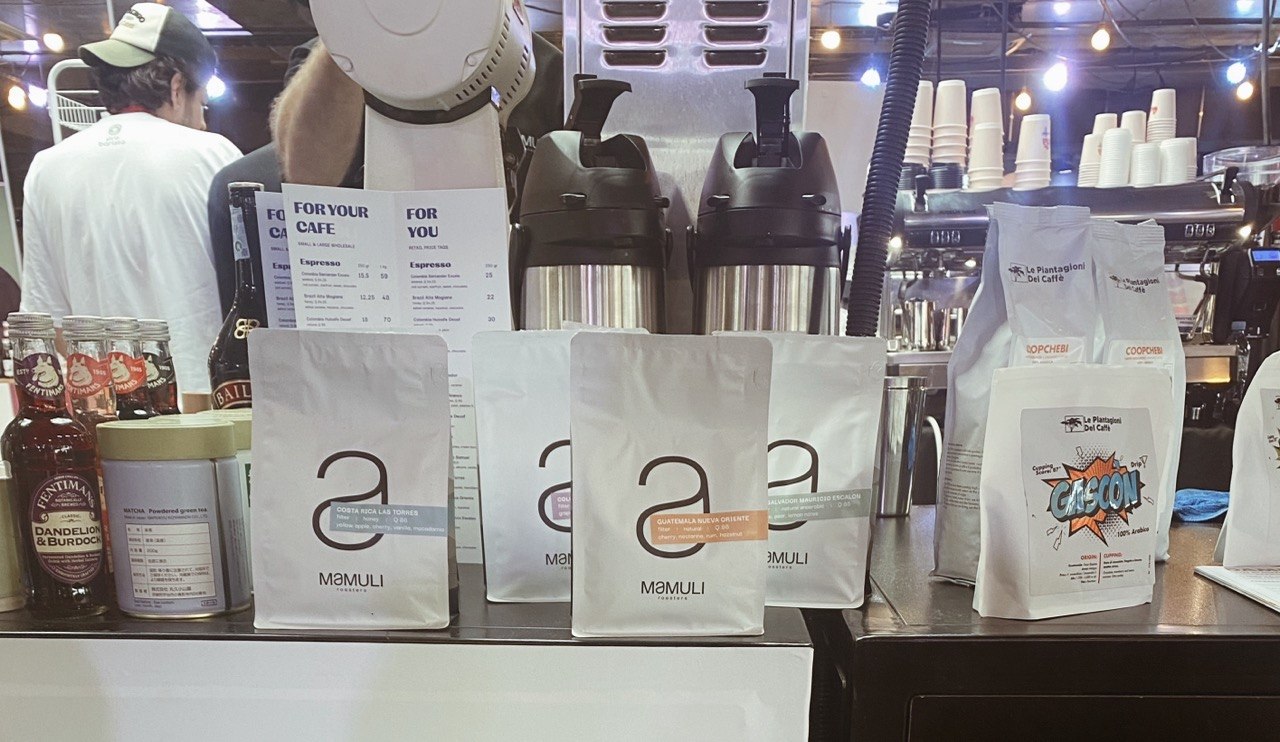
Another Tbilisi roaster, and one whose merch was as good as its coffee. Tote bags reading “Your Guilty Pleasure” in blue and orange, white and black T-shirts, socks saying “coffee culture” and “Tbilisi Coffee Club”. On the counter: minimalist white bags marked with one large letter. Among the coffees I noticed two from Colombia, Monteblanco and El Mirador. The menu was split in two, “For your cafe” and “For you”: one side for coffee shops, the other for home buyers. I like that. It tells you who each coffee is for before you ask.
Le Piantagioni del Caffè: hello from Italy
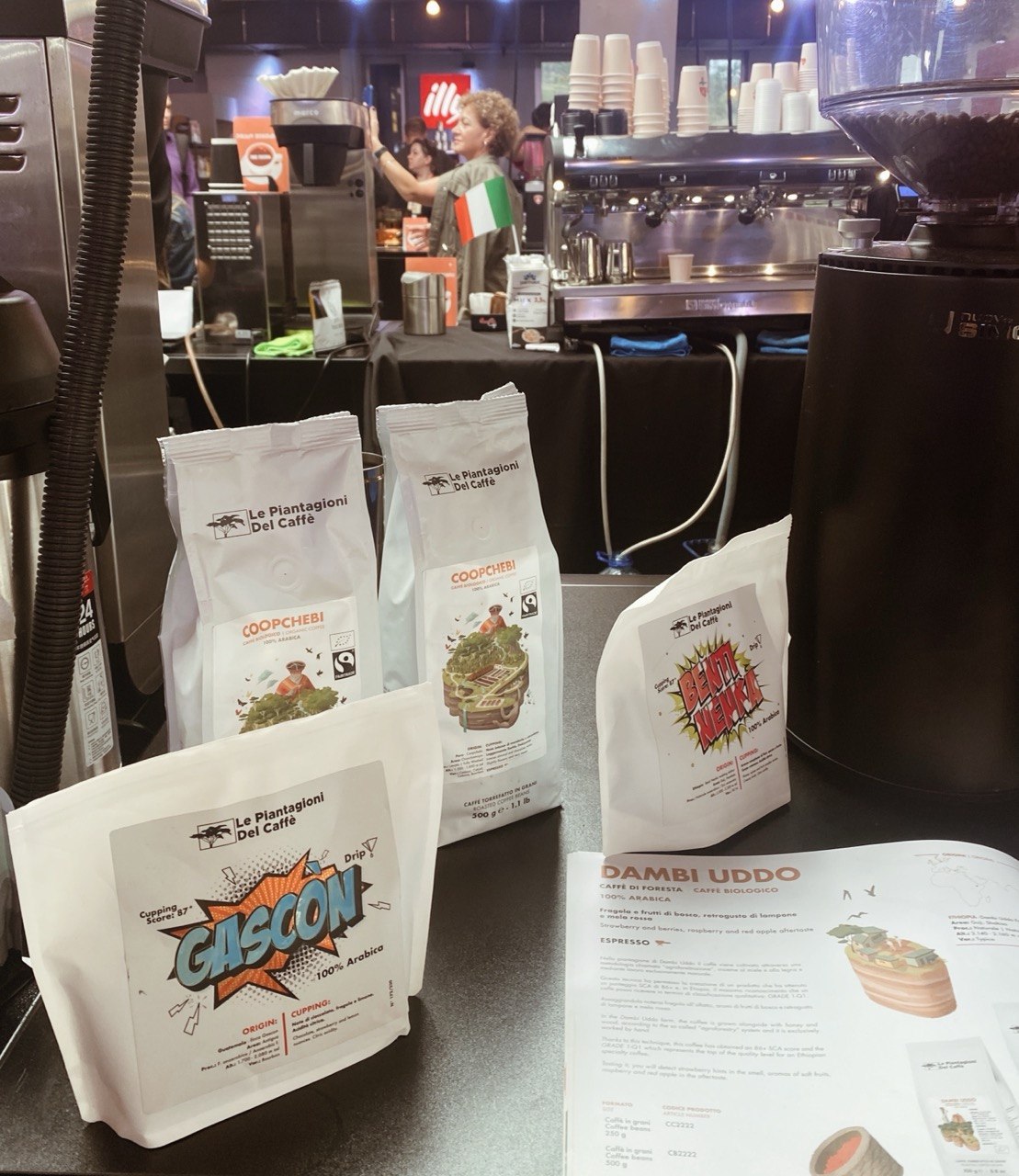
I live in Rome, so this stand made me smile: an Italian flag among the Georgian roasters. Le Piantagioni del Caffè brought bags with bright, comic-style labels, among them Gascón and Coopchebi, the latter marked Fairtrade. Their catalog lay open at a spread about Dambi Uddo, described as an organic-certified forest coffee.
Free tastings at almost every stand
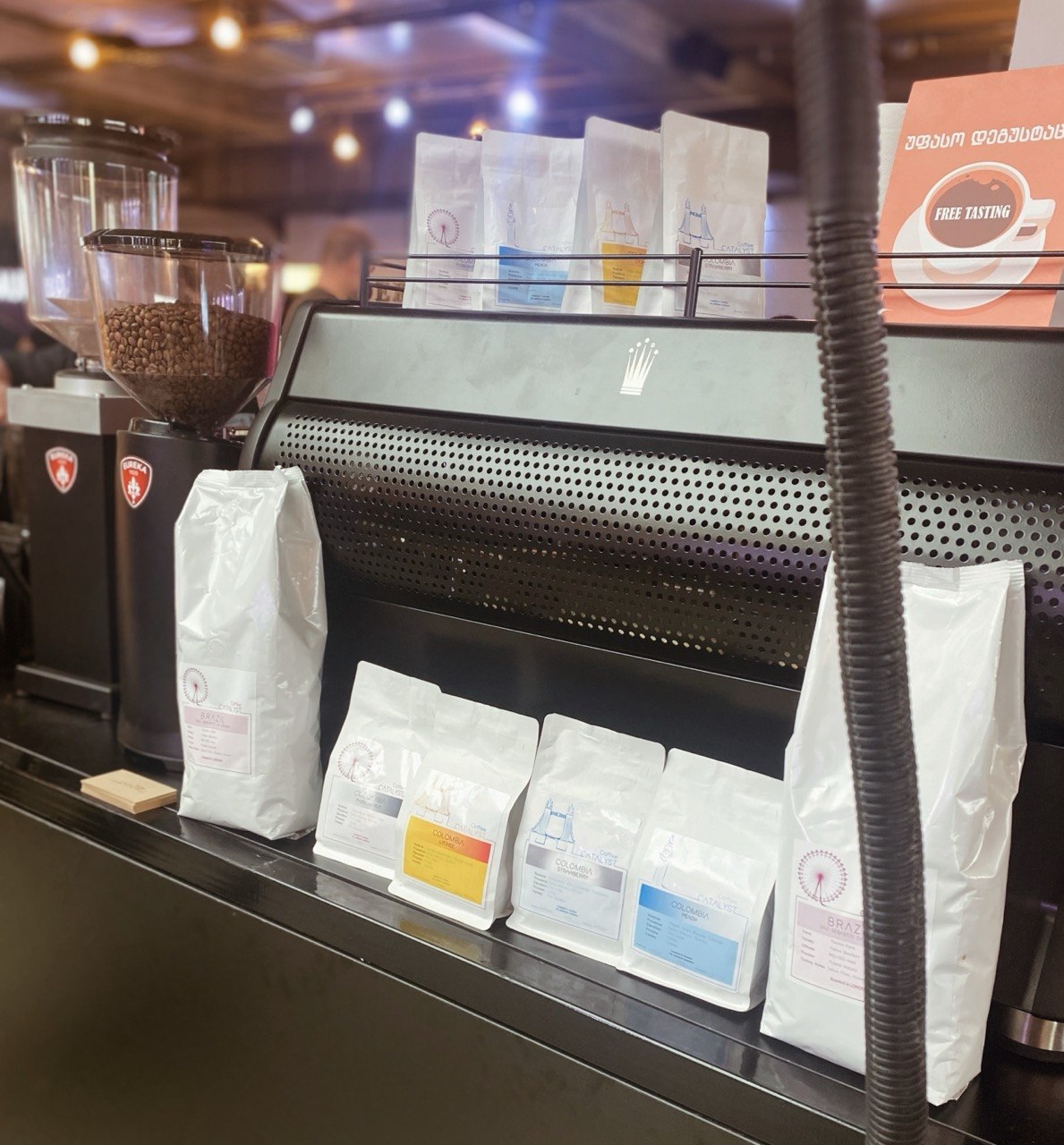
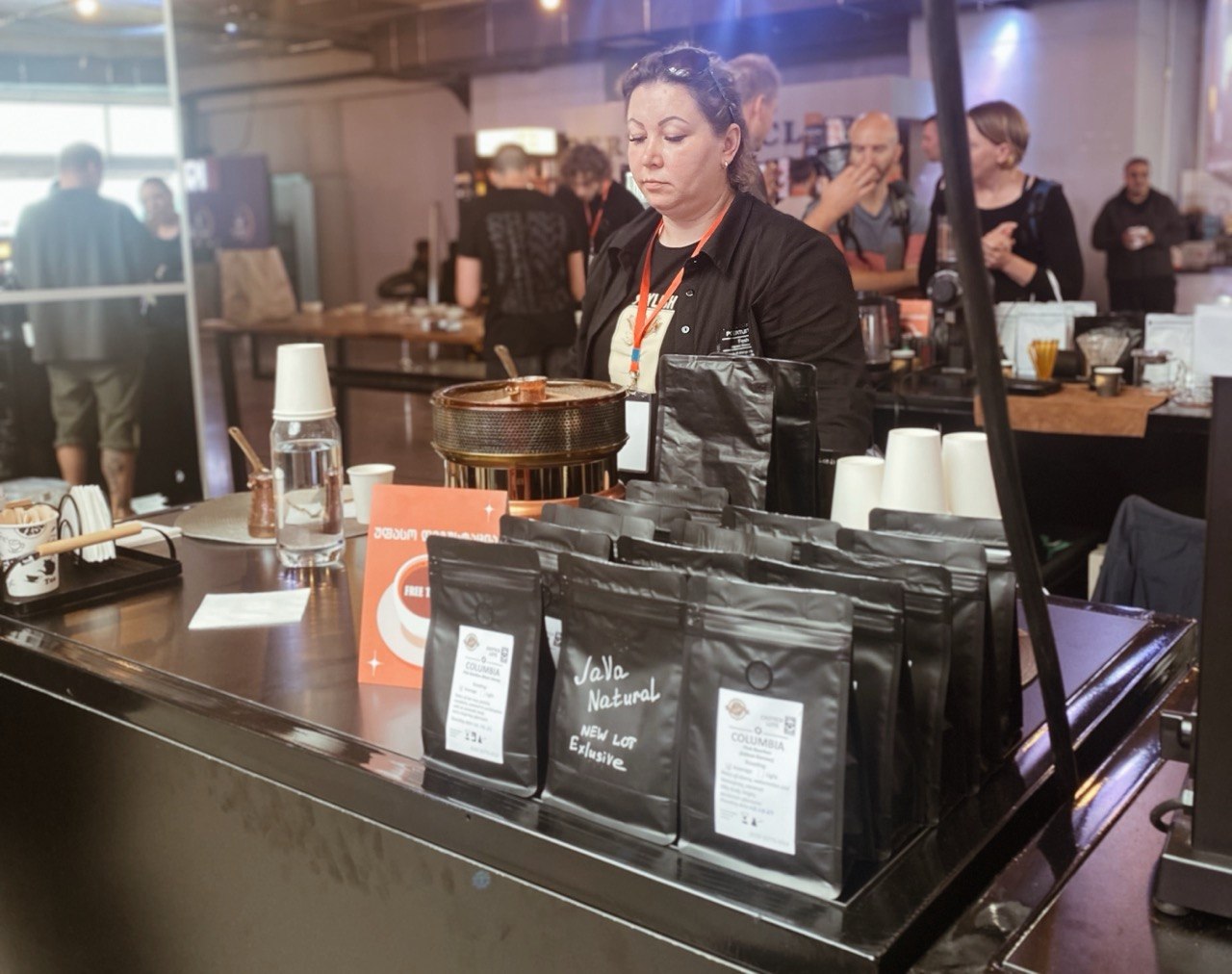
Orange “Free tasting” signs, in Georgian and English, stood on counter after counter. Coffee Catalyst poured Colombian and Brazilian coffees from bags with a Ferris wheel drawn on the label, a fitting choice for this venue. Another stand brewed coffee in a copper cezve set in hot sand, next to black bags with a new Java natural lot written on one in chalk pen.
La Marzocco
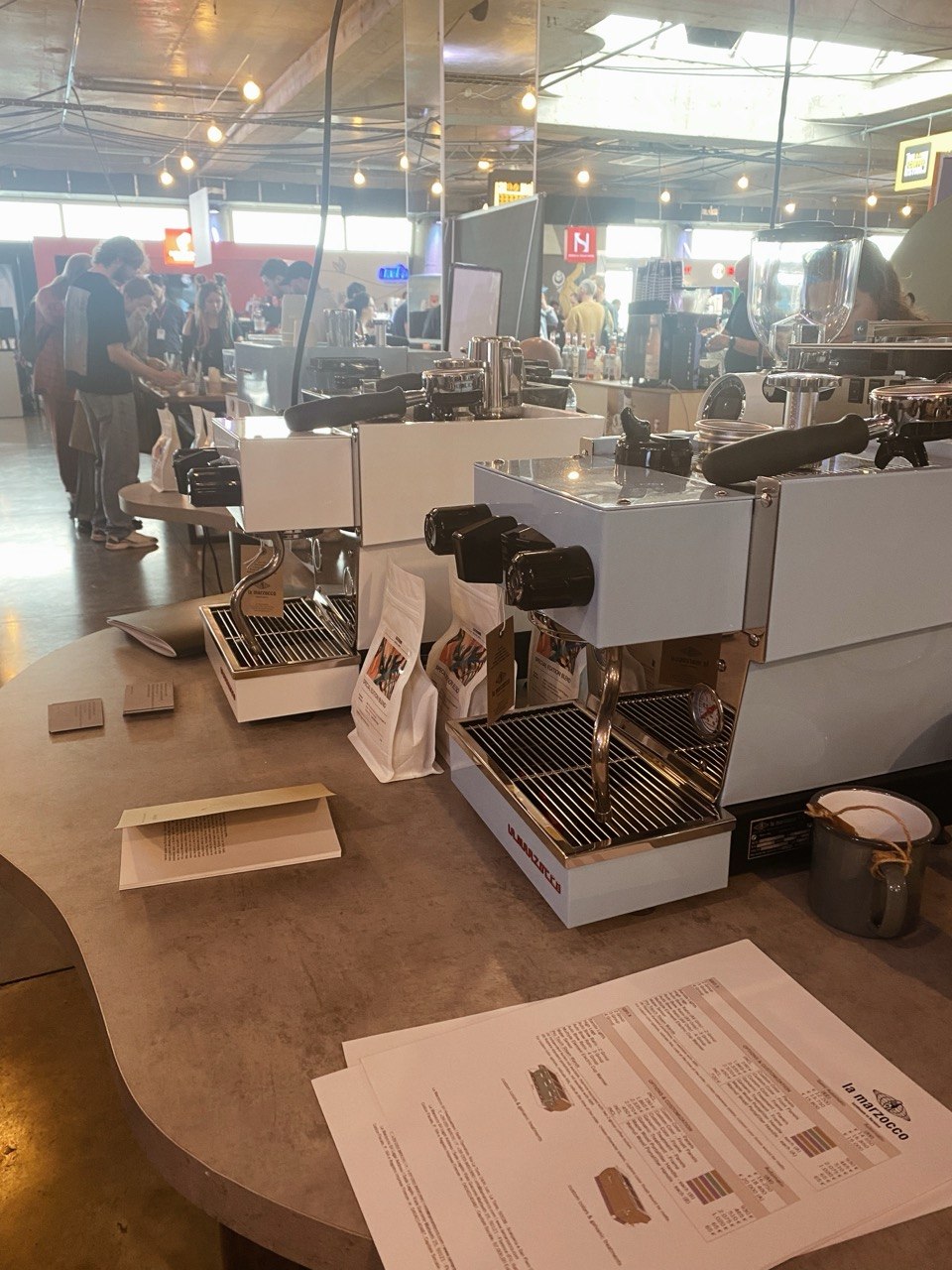
A proper showroom. Several Linea Mini machines stood side by side in white, pale blue and polished steel, with La Marzocco price lists on the counter, bags of Special Edition Blend and Moccamaster brochures. If you’re thinking about a home machine at this level, this was a rare chance to see the colors in person and compare.
The brew bar
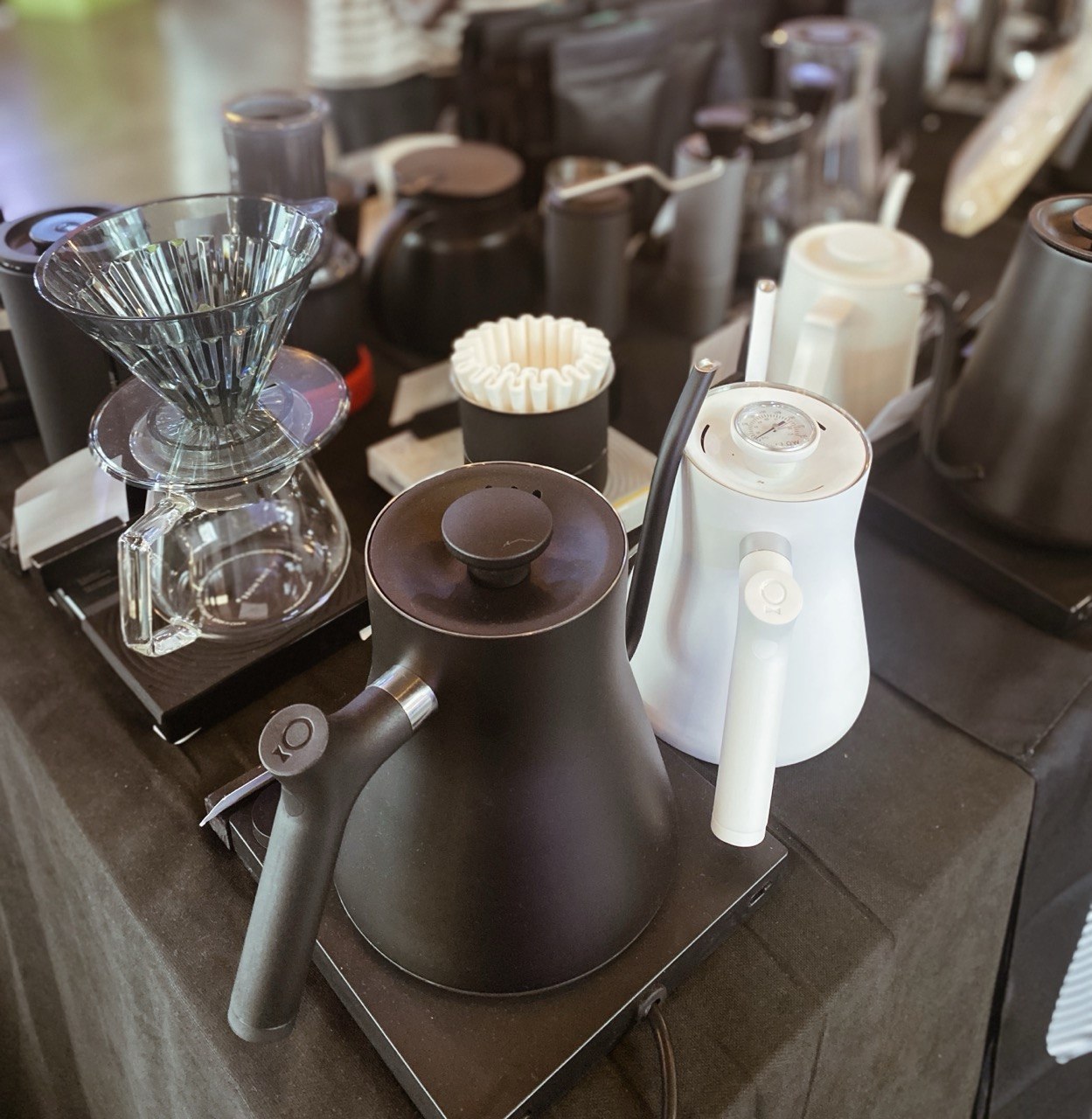
At one stand a barista was demonstrating pour over: a green gooseneck kettle, glass drippers, scales and an electric grinder. People crowded around asking questions, and he calmly explained every step. For me, moments like this do more for coffee than any advertising. If you want to try it at home, our pour over guide has the recipe.
The championship stage
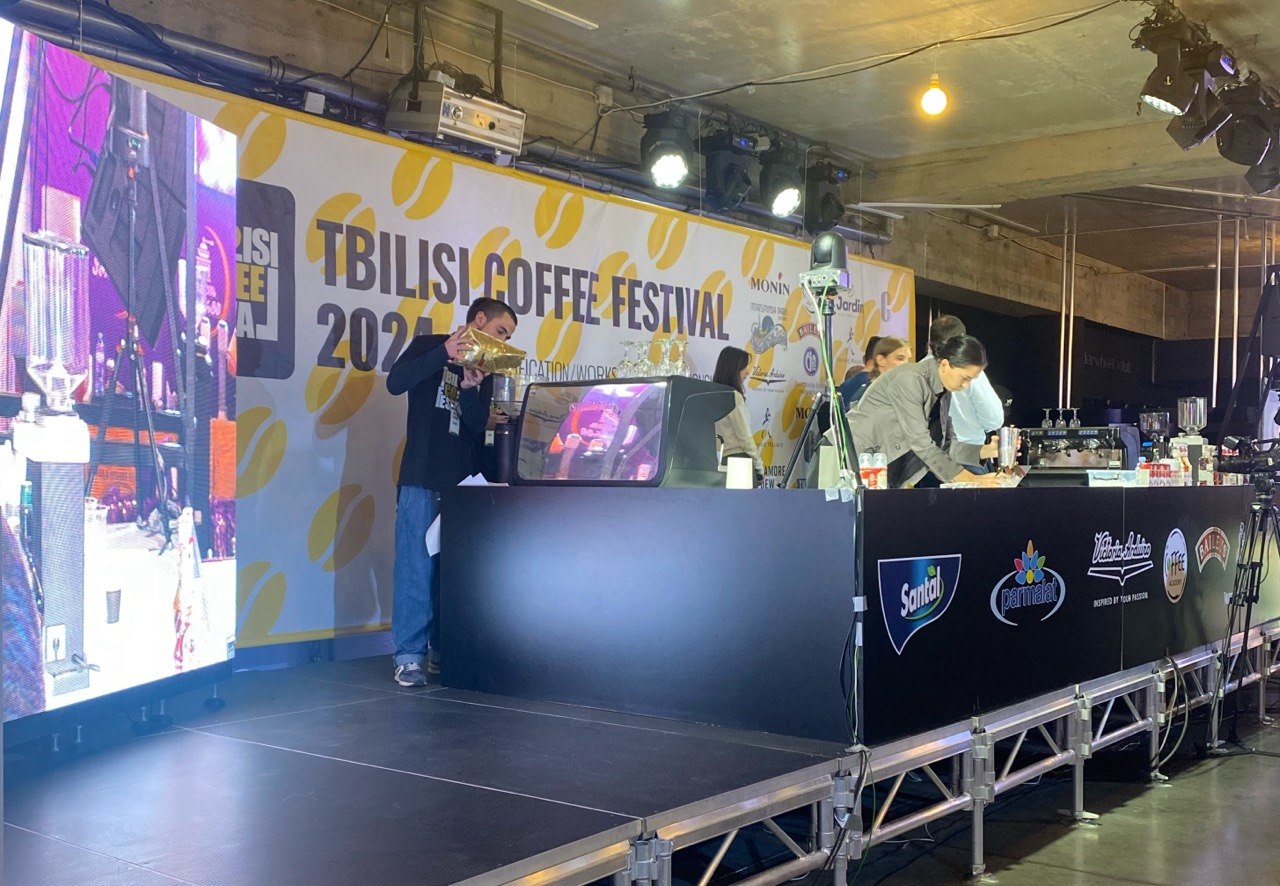
A separate, large stage with a screen for the championships. Among the partners on the banners and the counter I spotted Monin, Santal and Parmalat. Even between rounds it was interesting to watch competitors set up their stations.
Tully Irish Coffee from Tullamore D.E.W.
The stand with the most atmosphere: a green brick wall, a neon “Tully Irish Coffee” sign and a bar counter built like a Tullamore D.E.W. barrel. On the counter were bottles of syrup, an espresso machine and a Brasilia grinder. Coffee with whiskey at a coffee festival makes sense, especially toward evening.
Sisauri and Colombini
The Sisauri Grinders stand, which, going by the stand itself, represents the Italian grinder maker Colombini in Georgia and nearby countries. Next to it was a shelf of purple bags of Sisauri coffee on sale at 10 lari instead of 12.50. This is the mass market, not specialty, and I liked that the festival showed both worlds.
The big brands
illy and Bosch kept turning up in the background of my photos. The festival wasn’t only about small roasters: large international companies were there too.
What I thought of it
The 2024 festival was small, warm and very Georgian. It didn’t feel like a huge trade fair where you get lost between halls. Everything was close together, you could talk to the roasters without hurrying, and the baristas were happy to tell you about their coffees.
My main takeaway was how strong the local specialty scene is. Coffee Lab, Shavi and Mamuli look like mature brands, each with its own style, merch and a clear idea of what it does. If you’re in Georgia beyond Tbilisi, our guide to coffee in Batumi covers the scene on the coast.
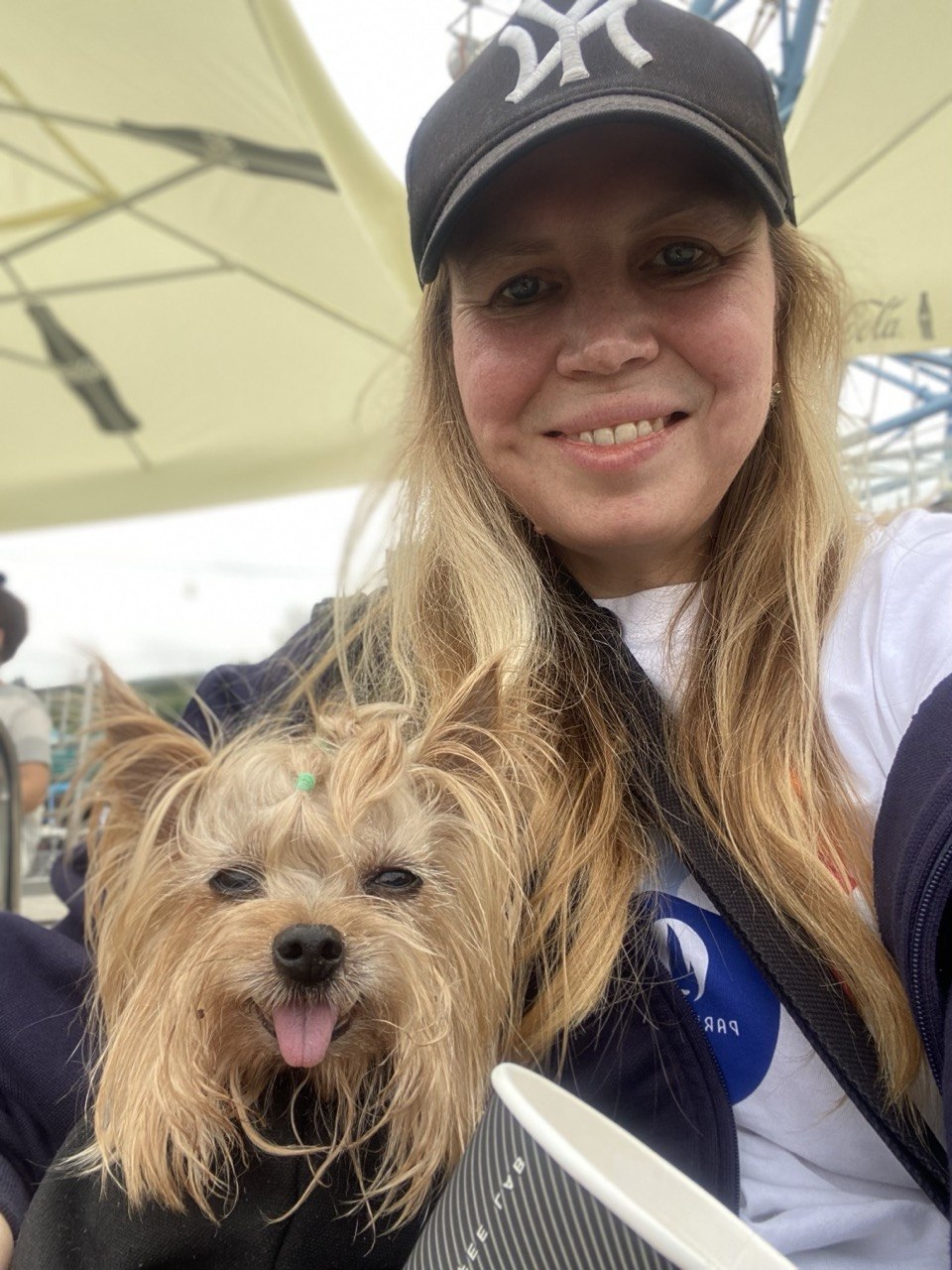
And then there was the setting: coffee under the Ferris wheel, with the whole city below and families with kids walking around. The festival was also dog-friendly. I carried Olfried between the stands, drank coffee and took photos, and he was perfectly comfortable.
Tips for the Tbilisi Coffee Festival
- Check the venue and dates first. Since 2025 the festival has been at Expo Georgia, not on Mtatsminda. The 2026 edition was in Pavilions 4 and 5, according to Georgia Today.
- Come hungry for coffee, and plan nothing after. There are a lot of tastings, and the caffeine adds up.
- Start at the Roasters Village. Go before the lines build, and leave the championship stage for the afternoon.
- Bring your dog if you travel with one. The 2024 festival was dog-friendly, but check the rules for the new venue before you go.
- Bring a bigger bag. Georgian merch and bags of coffee make good gifts.
Tbilisi Coffee Festival FAQ
It ran on September 20, 21 and 22, 2024, at the Underwheel Club in Mtatsminda Park, on the mountain above Tbilisi, under the Ferris wheel.
A day ticket cost 15 lari (GEL) and a pass for all three days cost 25 lari.
At Expo Georgia in Tbilisi. The festival moved there in 2025, when it ran on October 11 and 12. The fourth edition took place there on September 26 and 27, 2026, in Pavilions 4 and 5.
In 2024 the Roasters Village included the Georgian specialty roasters Coffee Lab, Shavi Coffee Roasters and Mamuli Roasters, plus the Italian roaster Le Piantagioni del Caffè. La Marzocco, Sisauri, illy and Tullamore D.E.W. also had stands.
The 2024 edition at the Underwheel Club was. The festival has since moved to Expo Georgia, so check the venue’s rules before bringing a dog.
Sources
- Georgia Starts Here, Festive autumn festivals you can easily fall for (September 16, 2024): 2024 dates, venue and program.
- Yolo.ge, Tbilisi Coffee Festival: 2025 dates at Expo Georgia.
- Georgia Today, Tbilisi Coffee Festival to return on September 26-27 (June 11, 2026): fourth edition, Expo Georgia Pavilions 4 and 5.
- Tbilisi Coffee Festival, official website.
- Stands, products and prices on the stands: seen in person by Sasha Pavlovich, September 2024.
How we work: how we test · editorial policy · research & sources.
Published


