
fbq('trackCustom', 'view_shop_coffee'); var trackEvent = 'shop_coffee'; Dark roasts have ruled the shelves for most of…

Ever get overwhelmed by the sheer variety of coffee beans available?
The range of brands, origins, roasts, and grinds can be confusing.
But how to make the right choice?
We don’t want you to drink bad coffee! We compiled this list to help you narrow down the best coffee beans specifically for you. But more importantly, we’re giving you information. Armed with knowledge, you can determine coffee truth from propaganda.
Here’s to a better cup of Joe!

Is it possible to objectively decide what the best coffee beans are in the world?
Certainly, we can agree on what bad coffee is. Inferior beans, mass roasting techniques, and long shelf life can all lead to terrible coffee.
When deciding which is the best coffee, obviously, personal taste is a factor.
In this section, we’ll break down some of these characteristics to help you define what you love in coffee.
Much of the aroma and taste of coffee comes from the volatile compounds and solubles in the beans. From the moment the coffee beans are roasted, they start losing these compounds through oxidation. After a few months, the coffee will taste flat and stale. Old beans are guaranteed to produce bad coffee.
How do you know it’s fresh? Look for a roast date.
Artisan roasters will put the date the beans were roasted so that you know exactly how long they’ve been sitting around. If you want to keep your coffee fresh, be sure to store it correctly. Moisture, light, heat, and air will destroy your coffee’s taste. Keep beans in an air-tight container away from light and heat.

When it comes to the taste in your cup, you’ll want to brew your coffee as soon after grinding as possible. That means buying whole bean coffee instead of pre-ground.
Ground coffee loses flavor in a matter of minutes and hours. That’s because the oxidation process speeds up dramatically when the bean is cracked open. Even grinding coffee the night before means you are losing flavor.
Important: We highly recommend buying whole bean coffee and grinding it fresh every time you brew. A high-quality burr coffee grinder is an essential tool to get a consistent, even grind. Additionally, most burr grinders allow you to finely tune your grind size.
We often use the words taste and flavor interchangeably, but they are not the same. Strictly speaking, taste is the sensation detected on the tongue. These are salty, sweet, sour (acidity), bitter, and savory. For coffee, sweet, sour, and bitter are the three primary tastes we talk about.
Important: The flavor is a much more complex process. Aroma, temperature, and mouthfeel, along with taste, all affect the coffee’s flavor. Variety, origin, growing conditions, and processing methods all affect the inherent taste and flavor of the coffee bean.
If you like naturally sweet coffee, look for ones that list fruity and floral flavor notes. African coffees, in general, are known for their sweetness.
You’ll also want to look for lighter roasts as the cooking process burns off the sugars. Typica, Bourbon, and Gesha varieties are all known for their sweetness. Honey-processed beans are also usually sweeter.
Here, we’re talking about the taste and not the pH. This kind of coffee dances on your tongue. It might be described as tangy, winy, or citrusy. The acidic taste in coffee tends to develop at higher elevations, so look for coffee grown above 5,000 feet above sea level. Coffees that undergo the fully-washed process also tend to be brighter
Coffee billed as low acid usually has a lower pH than your average cup. Naturally processed coffee tends to have lower acidity. You’ll also want to look for coffee grown at lower elevations, such as the Pacific Islands. These often have flavor notes such as nuts or chocolate. Darker roasts are also naturally lower in acid.
Earthy coffee triggers the savory senses, and this flavor is especially noticeable in wet-hulled coffee from Sumatra. Some like this characteristic, and others don’t.
Some like the slightly bitter taste of dark roast coffee. This bitterness blends especially well with milk. Overly bitter coffee, however, is a result of over-extraction.
Central and South American coffee is known for its balanced acidity and full body. It’s not bright, but it’s not bitter, either. You’ll often get a more balanced cup with blends.

You probably know that the brewing method can dramatically change the overall flavor of your coffee. Some coffees shine as pour-overs while others do best as an espresso. Here we’ll explain which types of coffee do best with particular brewing methods.

The French press allows you to experience the full range of a coffee’s flavor. You start with coarse-ground coffee. The longer extraction time and lack of a paper filter put more coffee compounds and fines in your cup. To circumvent bitterness, avoid the darkest roasts, and be sure not to let it steep for more than four to five minutes. Medium and light roasts do well with this brew method.

The pour-over method allows the true qualities of the coffee beans to shine forth. Traditionally, light roast single-origin coffees were always the recommendation. This brewing method works well for coffees with a complex flavor profile, which is preserved in light to medium roasts.
However, the best roast for this method is a purely personal choice. Whether you love a dark roast Sumatran, a bright and fruity light roast Ethiopian, or a medium roast Central and South American blend, this method can give you a satisfying cup.

AeroPress is one of the most versatile brewing methods. It can make everything from a concentrated espresso shot to a cold brew (when you use the inverted brew method).
If you’re new to AeroPress, you may want to choose a roast lighter than what you usually drink. That’s because AeroPress does tend to make a strong brew. In general, balanced coffee, typical of Central and South American coffees, is best.

Medium and dark roasts are best for the cold brew method. The acidic and fruity notes of the light roast are prized for, and are simply not extracted without heat being applied. Even if you avoid dark roasts because of the bitterness, you might enjoy a dark roast cold brew. The brewing method itself delivers a sweeter, less bitter, and less acidic cup.

A balanced medium roast is your best bet for an automatic drip coffee maker. This method does not extract the finer points of a light roast and is prone to over-extraction, which would make a dark roast even more bitter.

If you add steamed milk to your shot of espresso, then you’ll likely want dark roast coffee beans. The deeper flavor stands up well in a latte or cappuccino. However, medium roasts can also make a fine espresso. You can check our guide to espresso beans.
If you brew espresso, you might want to wait a week or two after the roast date before you brew.
The world of coffee is so vast. It almost seems unknowable. The good news is there’s a perfect coffee for nearly everyone. Here are some categories of coffee that are perfectly suited for niche markets.

Do you suffer from GERD or other digestive disorders? Have you given up coffee because of its effect on your stomach? Well, you may be able to renew your love affair with this mighty bean. Coffee processed to be gentler on the stomach is steadily gaining a foothold in the specialty coffee market. Our guide to low-acid coffee can help you find a bag to get your caffeine buzz back on.

Decaf coffee is not what it used to be. When it comes to fine coffee, some of us drink it just for the taste. These days, discerning roasters select the finest beans and use advanced decaffeinating techniques to produce a fine brew with little to no caffeine. Check out our guide to decaf coffee to find a coffee to relax with.
Additionally, read our in-house review of Savorista Coffee, they specialize in coffee with low caffeine.

Does nothing short of a nuclear blast get you going in the morning? Then you might want to try a coffee with a supercharge of caffeine. Our review of the strongest coffee brands can help you find a brew to make your hair stand on end. Also, might want to look into our Death Wish Coffee review.

“Instant coffee” used to be a bad word among coffee connoisseurs. Instant coffee manufacturers would choose low-quality beans, so the “coffee” tasted terrible. Freeze-dried coffee made with specialty beans can be just as satisfying as fresh-brewed. Our guide to instant coffee will lead you to some fantastic brands that will change your whole perception of this category.
Also, if you really like speed and convenience, Nespresso Vertuo Pods might be worth looking into.

Some prefer the unadulterated taste of coffee. Others like to bring more interest to their palates. Flavored coffee is one way to bring sweetness to your brew without adding calories. Hazelnut coffee is a popular flavor, and our guide to the best hazelnut coffees offers you a few brands to try.

CBD coffee is one of the newer trends in specialty coffee. It can help calm the jitters that sometimes come with too much coffee. CBD might offer other health benefits, including pain relief and anti-inflammatory properties. Our post on CBD coffee explains what it is, how it works, and suggests some brands to try.
We’re so used to buying everything at the touch of a button. Does that apply to coffee? Yes, but it may not always be the best choice. Here, we’ll look at the best place to buy coffee and where not to.
The best way to get freshly roasted coffee beans is directly from the roaster. Look around the area where you live to see which coffee shops roast their own coffee. Many cafes roast their own beans or buy from local roasting companies, so their coffee is always fresh.
Another benefit of buying from a local shop is that you can often try the coffee before you commit to a pound of it. You can also talk to the baristas to find out the characteristics of the coffees they sell. This is a great way to narrow down what coffee you want to try first.
You can also find freshly roasted coffee beans online. You’ll find a larger variety of beans to choose from. Higher-end online coffee companies roast to order, then immediately seal and send the coffee to your door. Because they roast to order, you might have to wait a few extra days to a week to receive your coffee beans, but it’s worth the wait.
Look for a company that puts the roast date on the bag. That way, you know exactly how old your coffee is.

A coffee subscription service is a great way to ensure you never run out of freshly roasted coffee. With some, you designate what coffee you want and how often. Our review of coffee subscription services can guide you to a plan that works for you.
If you want to experience a world of coffee, try a service like Atlas Coffee Club. Each month, they choose different coffee beans from one of the best coffee-growing regions and ship them to your door. In the box, you also get information about that region’s culture and the coffee’s characteristics on beautiful postcards.
One way to guarantee that your coffee will taste bad is to use old beans. You should take care as to where you buy your coffee beans. You have no idea how long they’ve been sitting around when you buy beans at places like the grocery store.
Don’t be fooled by “use by” or “best by” dates you see in some places. These tell you nothing about the coffee’s freshness and may give a false sense of security.
You may want to also be wary of mass online retailers like Amazon. They might store the coffee in warehouses before shipping it out. Carefully read the reviews to see if the coffee they deliver is fresh. When in doubt, buy directly from the roaster.

There are almost as many opinions about what the top coffee is as there are coffee drinkers. Here, we’ll break down the characteristics of several brands and their coffees to help you decide what coffee to try next.
![LifeBoost Coffee Medium Roast [Organic]](https://coffeehow.co/wp-content/uploads/2021/04/product-image-18.jpg "LifeBoost Coffee Medium Roast [Organic]")
$
View ProductStarting our list are LifeBoost’s Medium Roast coffee beans. This company was founded to deliver some of the cleanest and healthiest coffee beans possible to consumers.
Dr. Charles Livingston, the founder of LifeBoost Coffee, focused heavily on the issue of mold. He recognized that every stage of coffee processing, from tree to cup, can affect the presence of mold and other toxins in green coffee beans. To address this, LifeBoost uses third-party laboratories to certify that its coffee is free from pesticides, heavy metals, mycotoxins, and mold.
LifeBoost coffee is also low in acidity. The company states that many people who previously avoided coffee due to stomach sensitivity were able to enjoy it again without discomfort. If you have had to reduce or eliminate coffee because of digestive issues, this may be a good option to try.
All LifeBoost coffee beans are grown at high elevation and sourced from a single origin in Nicaragua. The coffee cherries are hand-picked, then washed and sun-dried. After processing, the beans go through a 30-day resting period, which helps develop a more balanced and refined flavor profile.
LifeBoost also places a strong emphasis on sustainability and ethical sourcing. The coffee is fairly traded, and farmers follow environmentally responsible growing practices that support both the land and the local communities.
This brand offers a wide range of roasts and flavor options. Our top recommendation is the medium roast. It delivers a rich and bold flavor profile typical of the region, with a full body and subtle earthy undertones. In the aroma, you may notice hints of caramel and wood. Across all their products, LifeBoost uses 100% specialty grade Arabica beans.
$
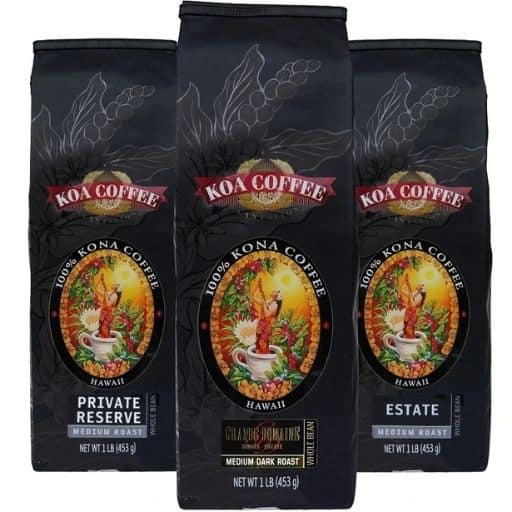
View ProductKoa Coffee was founded in 1997 and has earned multiple industry awards for quality over the years. Every batch is hand-picked, carefully processed, and roasted with precision. To maintain consistency, each roast is cupped before it is approved for sale. This is a key quality control step used by top specialty coffee producers.
By definition, Kona coffee comes exclusively from the slopes of the Hualalai and Mauna Loa volcanoes on the Big Island of Hawaii. This region’s unique climate and volcanic soil produce a coffee known for its exceptionally smooth body, clean finish, and balanced profile. In the cup, Kona coffee typically presents light, nuanced flavors with notes of fruit, mild spice, and subtle nuttiness.
All of Koa Coffee offerings are 100% Hawaiian grown beans, though not all are Kona. To legally be labeled as Kona coffee, the beans must come from a very specific region near Kailua Kona. In addition to Kona, the brand also sources coffee from other Hawaiian regions, including Oahu and Ka'u, offering a broader look at the islands’ terroir.
If you have only tried a Kona blend, you have not experienced true Kona coffee. Many commercial blends contain as little as 10% Kona beans, with the remainder sourced from lower-cost regions. Koa Coffee focuses exclusively on 100% Kona offerings, ensuring you get the authentic profile without dilution.
One of their standout coffees is the 100% Kona Peaberry. A peaberry occurs when a coffee cherry develops a single, round seed instead of the usual two flat-sided beans. This natural mutation is relatively rare and is often associated with a more concentrated flavor profile. In the cup, Kona peaberry tends to produce a smooth, full-bodied brew with enhanced sweetness and clarity.
Koa Coffee offers its 100% Kona Peaberry in both medium and dark roast options. The medium roast is typically the best choice if you want to experience the original Kona flavor characteristics, while the dark roast emphasizes body and deeper chocolate notes. Another option is the Grand Domaine 100% Kona coffee, available in a lighter roast for those who prefer a brighter, more delicate profile. If you are not sure where to start, Koa also offers sampler packs, allowing you to compare multiple Kona and Hawaiian coffees side by side before committing to a full bag.

$
View ProductFabula is a newer coffee roaster based in Miami, focused on producing clean, low-acid coffee designed to be easy on the stomach. Similar to Lifeboost, many customers choose Fabula for its smooth profile and digestive friendliness. For a deeper breakdown, see our Fabula Coffee Review.
Fabula sources primarily single-origin coffee from regions such as Mexico, Peru, and Colombia. The brand emphasizes transparency and consistency, with coffees that highlight approachable, well-balanced flavor profiles rather than extreme acidity. If you are looking to explore beyond their core lineup, Fabula offers a Coffee of the Month subscription. Each shipment features beans from different regions around the world, including less common origins such as the Democratic Republic of Congo, giving you a chance to try coffees you may not normally encounter.
The brand offers a full range of roast levels, including light, medium, dark, and espresso roasts. Coffee is roasted to order and shipped fresh, which helps preserve aroma and flavor. While whole beans are the best option for freshness and control over grind size, Fabula also offers pre-ground coffee and K-Cup formats for convenience. You can also choose from decaf and flavored options, making the lineup accessible to a wide range of preferences.
One of the standout options is their Peruvian coffee made with Caturra and Catuai varietals. It produces a smooth, full-bodied cup with a rich texture. In the flavor profile, expect notes of chocolate and molasses, followed by a clean and slightly sweet finish.
$
View ProductThe founders of Volcanica Coffee are originally from Costa Rica, where their family has been involved in coffee cultivation for generations. Their experience harvesting coffee cherries in high-altitude regions shaped their understanding of quality coffee. The idea for Volcanica Coffee came from their trips back to Costa Rica, where they consistently found rich, complex coffees that were difficult to find in the United States.
Volcanica Coffee focuses on ethical sourcing and long-term relationships with growers. The company works directly with farms and cooperatives to ensure fair compensation and transparency across the supply chain. All coffee is sustainably sourced, and the company donates 1% of its sales to charity: water, supporting access to clean drinking water in developing regions.
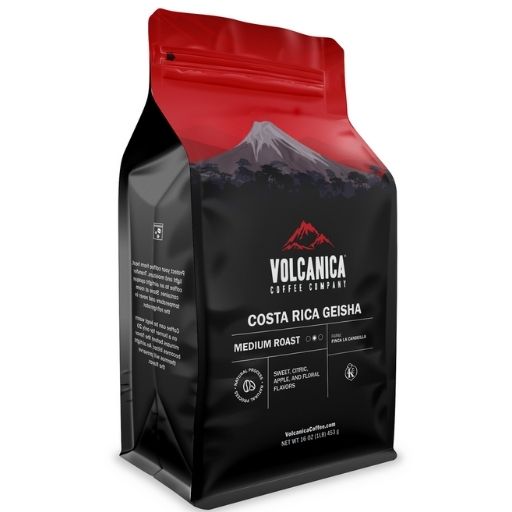
In addition to its sourcing practices, Volcanica is known for offering high-quality and often rare coffee varieties. One of the most notable is Geisha coffee, a highly regarded varietal that originated in Ethiopia. The name comes from the town of Gesha, and the variety is known for its distinctive flavor profile and lower caffeine content compared to typical Arabica coffee. When cultivated in Costa Rica, Geisha develops a sweet and refined profile with notes of apple and delicate floral characteristics.
These single-origin beans are typically produced in small micro-lots, which allows for better quality control and more consistent flavor. The coffee is often processed using the natural method, where the cherries are sun-dried and carefully handled throughout the drying process. This method enhances sweetness and contributes to a more expressive and aromatic cup.
In the cup, this Geisha coffee delivers a light, tea-like body with a complex aromatic profile. You may notice notes of floral elements such as lavender, along with cocoa, molasses, and subtle herbal tones. The result is a clean, elegant coffee that stands out for its clarity and balance. It is also certified Kosher. As with most specialty coffee, whole beans are recommended for the best experience, though this coffee is also available in multiple grind sizes for convenience.
$
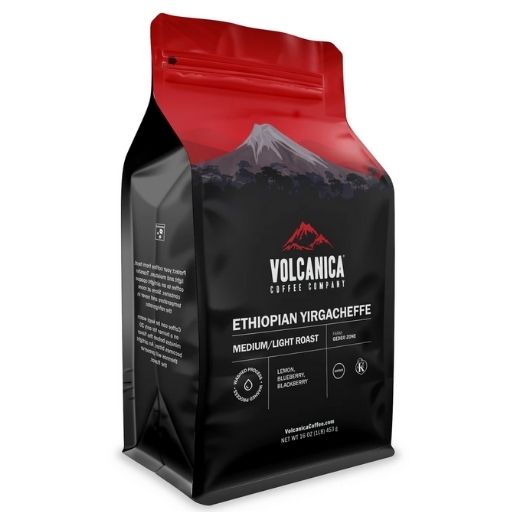
View ProductWe have already covered Volcanica Coffee sourcing and quality standards, so let’s focus on one of their standout coffees. The Ethiopian Yirgacheffe is a fair-trade, organically grown coffee that is also Kosher certified. Coffee from Ethiopia is widely considered among the best in the world due to its diversity of flavors and its role as the origin of Arabica coffee.
These Ethiopian coffee beans offer a distinctive and expressive profile. The Yirgacheffe region is known for producing high-quality Arabica that traces back to wild coffee varieties. In the cup, expect bright and layered flavors with pronounced fruity and floral characteristics. Common tasting notes include lemon, blueberry, and blackberry. A medium-light roast helps preserve these delicate and complex flavors.
This is a single-origin coffee processed using the washed method, followed by patio drying. The washed process enhances clarity and highlights the coffee’s natural brightness. Despite its vibrant flavor profile, the acidity is moderate, with a pH level around 5.1. The result is a clean, medium-bodied coffee that feels balanced and approachable.
Volcanica offers this coffee as whole beans as well as in multiple grind sizes, making it accessible whether you prefer to grind fresh or use a ready-to-brew option.

$
View ProductYou get much more than just coffee when you subscribe to Atlas Coffee Club. The experience is designed to go beyond the cup and introduce you to coffee cultures from around the world.
Each delivery includes a postcard with information about the country of origin, along with tasting notes and recommended brewing methods. Every shipment features 100% Arabica beans, carefully selected to highlight the characteristics of each region.
Atlas is a strong choice for anyone who enjoys variety and discovery. Past selections have included coffees from Costa Rica Tarrazu, Costa Rica Palmares, Ethiopia Sidamo, and Indonesia Sumatra. Because the company rotates its offerings monthly, you are often getting beans that are freshly harvested and recently roasted, which helps maintain quality and flavor clarity. It also makes this subscription a thoughtful gift for coffee enthusiasts.
The subscription is flexible and can be adjusted at any time. You can choose between whole bean and pre-ground coffee, with grind options ranging from cold brew to espresso. Atlas also offers coffee pods for added convenience. Roast preferences can be set from light to medium or medium to dark, depending on your taste. There is also a dedicated cold brew subscription, which includes coffees selected specifically for this brewing method along with filter bags for easy preparation.
$
View ProductHere is another standout option from Volcanica Coffee. Kenyan coffee is graded by bean size, with AA representing the largest and most desirable grade. These beans are typically associated with higher density and more complex flavor profiles compared to lower grades such as A or B.
Kenya has a well-established coffee system supported by the National Kenyan Coffee Board, which works closely with farmers to maintain quality standards. Coffee is sold through a weekly auction system, which helps reward producers who deliver higher-quality beans.
Coffee from Kenya is known for its bright acidity and distinctive wine-like aftertaste. Despite its intensity, it is rarely bitter. These beans are grown on the high plateaus surrounding Mount Kenya, where volcanic soil and elevations between 4900 and 6800 feet create ideal conditions for Arabica cultivation.
This particular offering is Rainforest Alliance Certified, reflecting a commitment to sustainable farming practices. Volcanica also follows fair trade principles to support farmers and producers. The coffee is Kosher certified and is a strong addition to any list of high-quality coffee beans.
These Kenya AA beans are single-origin and sourced from Nyeri Hill Estate. They are washed, processed, and sun-dried, which helps enhance clarity and brightness in the cup. The coffee is also shade-grown, contributing to slower cherry development and improved flavor complexity.
In the cup, expect vibrant notes of raspberry and cranberry, balanced by subtle hints of fresh-cut wood and floral tones similar to alyssum. A medium-light roast preserves these characteristics and highlights the region’s natural profile. As with most Volcanica offerings, this coffee is available as whole beans or in a range of grind sizes, including a decaf option.
$
View ProductKoffee Kult is a small roaster with a strong reputation for bold, high-quality coffee. The company started in 2010 when the founder began roasting coffee for personal use. As demand grew from friends and family, the operation expanded into a local business in Hollywood, Florida. By 2013, Koffee Kult had moved online and built a loyal customer base across the United States.
Koffee Kult places a strong emphasis on ethical sourcing and direct relationships with coffee producers. The company works closely with farms and regularly visits them to ensure sustainable practices and fair treatment of workers. This includes supporting equal pay for women, prohibiting child labor, and contributing to local communities through initiatives such as education support.
The brand sources beans from over 50 regions across Indonesia, Central and South America, and Africa. This particular dark roast is a blend of beans from Colombia, Guatemala, Brazil, and Sumatra. It is roasted to the second crack, which develops a more intense flavor profile. This blend is also used in Koffee Kult’s own cafes for espresso.
All beans in this blend are 100% specialty-grade Arabica. In the cup, expect a smooth, heavy body with a rich texture. Flavor notes include cinnamon, caramel, and chocolate, along with a bright edge that carries into a long finish. Koffee Kult offers this coffee exclusively as whole beans, making it a strong choice for those who prefer to grind fresh for maximum flavor.

$
View ProductStone Street Coffee is a Brooklyn-based roaster focused on delivering consistently well-developed, high-quality coffee. The team sources beans from established growing regions around the world, with an emphasis on balanced profiles that perform well across different brewing methods.
The brand offers both blends and single-origin coffees, along with a range of flavored options. Many of their coffees carry certifications such as Organic, Rainforest Alliance, Fair Trade, and Kosher. For added convenience, Stone Street also offers K-Cup pods, making it accessible for a wide range of brewing preferences.
Our pick from their lineup is the Cold Brew blend. This is a South American blend roasted on the darker side to bring out a bold and smooth flavor profile that works especially well for cold extraction. It is also Kosher certified.
The coffee is available as whole beans or pre-ground with a coarse grind specifically designed for cold brew. Cold brewing produces a smooth, low-acid cup because the extraction happens without heat. This method reduces bitterness and highlights natural sweetness in the coffee.
You do not need specialized equipment to make cold brew at home. A simple jar with a lid and a basic strainer is enough to get started. For a more convenient option, Stone Street also offers cold brew pitcher packs, which eliminate the need for additional filtering.
$
View ProductThe founders of Kicking Horse Coffee have been roasting coffee for over 25 years. The company is based in the Canadian Rockies, where it roasts all of its beans. Every product in the lineup is made from 100% Arabica beans and is both Organic and Fair Trade certified.
This signature blend includes beans sourced from Indonesia and South America. The brand describes it as sweet, smoky, and bold, which reflects both the flavor profile and the personality behind the company.
As a very dark roast, this coffee develops a rich and intense aroma with hints of vanilla and dark chocolate. In the cup, expect deep flavor notes of chocolate malt, molasses, and licorice, supported by an earthy and lingering finish.
This is a strong, full-bodied coffee that works well for methods like French press, where its weight and intensity can fully develop. Because of the dark roast level, the beans tend to have an oily surface, which may not be ideal for espresso machines. It is available as both whole beans and pre-ground coffee, depending on your brewing preference.
Coffee is a persnickety little plant. It doesn’t like to be too hot or too cold. It needs a lot of rain, but not too much. It only likes certain soils, and it must have good drainage.
As a result, there are defined regions where coffee grows. Here, we’ll go over these regions and the characteristics of coffee that grows there.
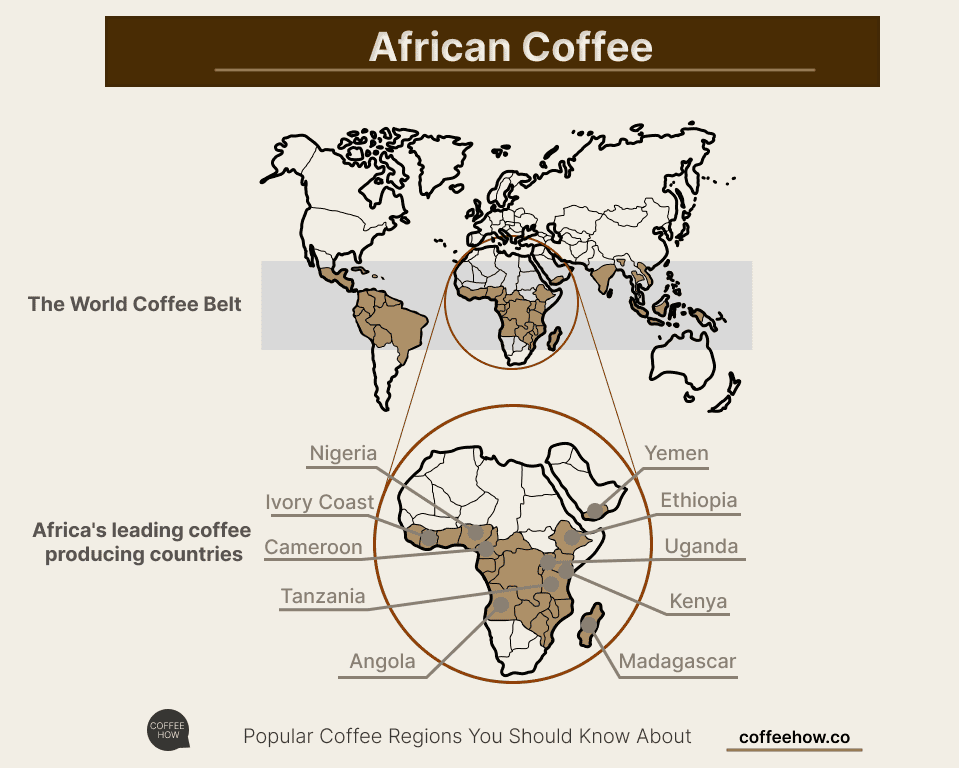
Coffee from Africa usually has a bright acidity with floral and fruity notes. Ethiopia, Kenya, and Rwanda are the three main specialty coffee-producing countries. You’ll also find Tanzania coffee, usually a peaberry. While Uganda is in the list of top 10 coffee-producing countries, they primarily grow robusta beans. Here, we’re more concerned with arabica beans used for specialty coffee.
Ethiopia is considered to be the origin of all coffee that we drink today. The genetic diversity of Ethiopian coffee beans is vast, and you’ll often find distinct differences between the sub-regions there. Known for its complex, fruity flavor, you’ll usually find Ethiopian coffee in lighter roasts. It tends to have a light to medium body.
The coffee industry in Kenya is highly regulated. The country has its own coffee rating system, with AA being the most sought-after. Like neighboring Ethiopia, it is also known for bright acidity and sweet fruitiness. It tends to have a fuller body than Ethiopian.
Like other African coffees, these beans are sweet and bright. This coffee is usually a little more tart and citrusy. The body is often described as smooth and silky.

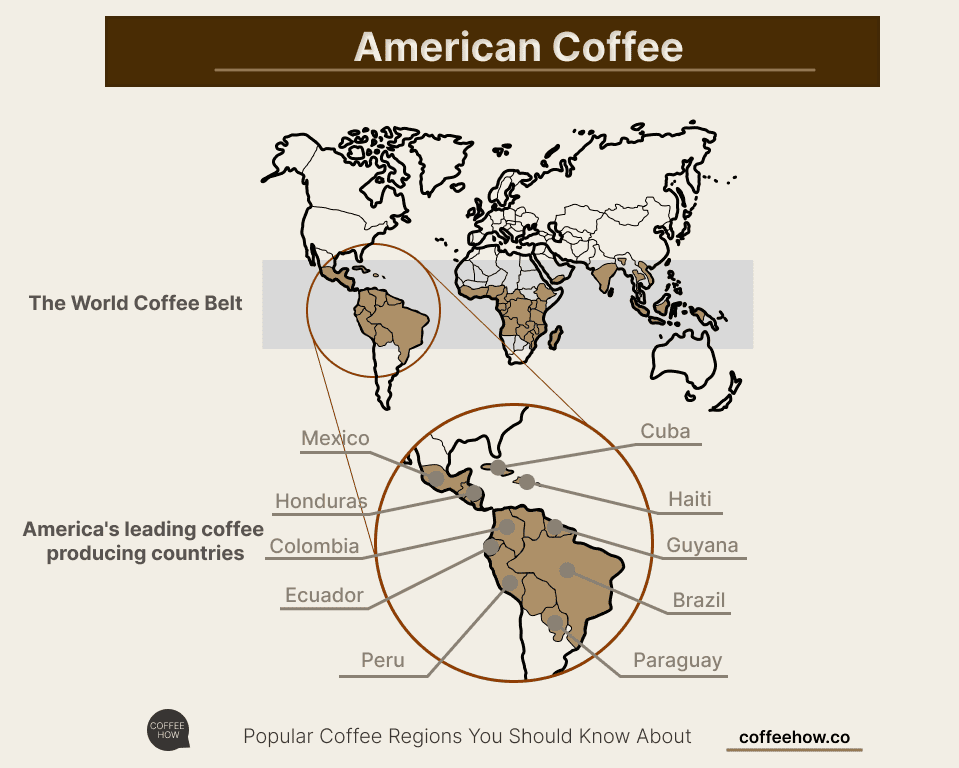
The mountainous regions in Mexico, Central America, and tropical South American countries are ideal for growing coffee. In general, these coffees have medium to low acidity. They are often well-balanced and medium-bodied.
At least 16 Latin American countries produce coffee. We’ll only cover a few of them. The top-producing countries are:
Brazil is the world’s largest coffee producer. Previously known for commercial production, recent years have seen a shift towards advancing technology to compete in the specialty coffee market. Brazilian coffee tends to excel in dark roasts and resists bitterness. Flavors tend toward chocolatey and nutty with rich medium to full bodies.
The most iconic figure in the world of coffee is trademarked by the Colombian Coffee Federation. It is the fictional Juan Valdez with his trusty donkey, Conchita. Colombia is the third top producer of coffee in the world. Coffee from this country is usually mild and balanced with a medium body.
Coffee from Costa Rica is gaining a reputation among specialty coffee enthusiasts. It shares characteristics of African coffee with its clean, sweet flavors and light body.
While not actually on the North American continent, we would be remiss not to mention Hawaiian coffee. Kona coffee is grown in a specific sub-region of the Big Island. 100% pure Kona coffee is rich and smooth with light fruity flavors.
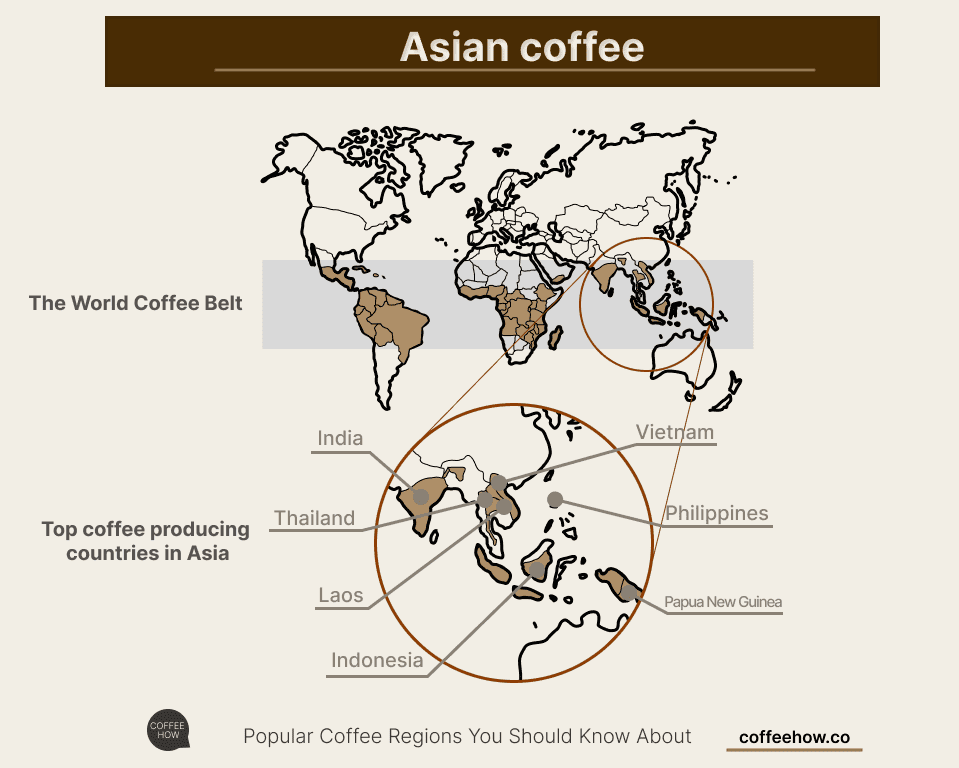
The qualities of Asian coffees are opposite to those of African coffees. In general, they have low acidity and a heavy body. India, Indonesia, and Papua New Guinea all produce specialty coffee.
Coffee from India features the full body Asian coffees are known for. They have low to mid acidity, and often have notes of spice such as cardamom and clove.
Indonesia ranks fourth among the world’s top coffee-producing countries. These coffees are often wet-hulled, giving them an earthy tone with deep chocolate notes. Sumatra and Java are two popular areas for coffee. These beans are often dark roasted.
Coffee in Papua New Guinea is grown high in the mountainous regions. Coffee from this region tends to have a cleaner, sweeter taste than other Asian coffees. The body is not as heavy as a typical Indonesian.
Our overall top pick for the best coffee brand goes to LifeBoost coffee. They closely monitor each step of the way from tree to cup. Their coffee is certified organic, and they freshly roast and deliver coffee as quickly as possible. The medium roast yields a rich and satisfying cup for any occasion.
While some people drink coffee just for the effect, we believe it should be savored and enjoyed. We hope this helps you weed out the hype and select a coffee that will be relished. There’s a whole world of coffee waiting for you to explore.
The best option is to buy coffee directly from a roaster. Local roasters are ideal because you can often taste the coffee before buying and get recommendations from experienced baristas. However, this limits your selection. Online specialty roasters solve this problem by offering a much wider variety and often roast to order, meaning your coffee is shipped shortly after roasting. Always look for a clearly labeled roast date, as it is the most reliable indicator of freshness.
Coffee is best consumed fresh, as exposure to air gradually reduces its flavor and aroma. For most people, it makes sense to buy enough coffee to last two to four weeks for optimal quality. It can still be enjoyable up to six to eight weeks if stored properly, but after that, the taste becomes noticeably flat. Buying smaller amounts more frequently is generally the best strategy if you want consistently good coffee.
Contrary to popular belief, espresso does not require the darkest roast available. Medium to medium-dark roasts often produce a more balanced and flavorful shot, with better clarity and sweetness. Very dark roasts tend to become oily, which can affect both flavor and machine performance. While espresso blends are designed to perform consistently, many single-origin coffees can also produce excellent results depending on your taste preferences.
Cold brew is less about the specific bean and more about how the coffee is extracted. A coarse grind and longer extraction time are key to getting good results. Medium and dark roasts typically work best because they extract more easily without heat, producing a smooth, sweet, and low-acid cup. Light roasts can be used, but they often result in a weaker and less developed flavor in cold brew.
Coffee should be stored in an airtight container and kept away from light, heat, and moisture. These elements quickly degrade flavor and aroma. It is best to keep coffee at room temperature rather than in the refrigerator or freezer, as condensation can introduce moisture and negatively affect taste. Proper storage helps maintain freshness and extends the life of your coffee.
The roast date is one of the most important indicators of coffee quality because coffee begins to lose its flavor immediately after roasting. Knowing the roast date allows you to understand how fresh the beans are when you buy them. Most coffee tastes best within a few weeks of roasting, with espresso often benefiting from a short resting period of about one to two weeks. Brands that include a roast date typically place a stronger emphasis on freshness.
For those looking to reduce caffeine or try something different, there are several alternatives to coffee. Mushroom coffee has gained popularity due to its lower caffeine content and potential functional benefits. Chicory-based drinks offer a naturally caffeine-free option with a roasted, slightly nutty flavor. Matcha is another alternative that provides a smoother caffeine experience with less of a crash. While these options differ from traditional coffee, they can be good substitutes depending on individual preferences.