Best Jamaican Blue Mountain Coffee Beans Reviews and Buying Guide
Guide to super-tasty Jamaican Blue Mountain Coffee. We cover in detail how to spot fakes to make sure you get the real thing

We may earn a commission when you buy through links on this page, at no extra cost to you. It never decides our picks. How we test · How we make money
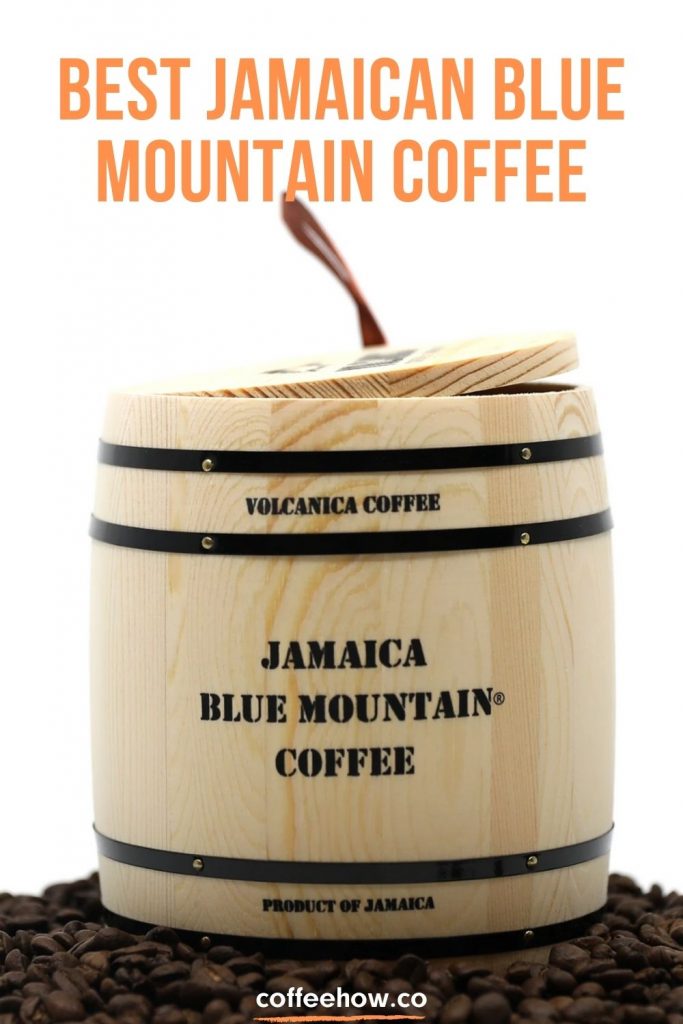
A gentle mist cloaks the soaring heights of the Blue Mountains. From a distance, the mist makes the tropical greenery look blue. Blue Mountain Peak is the highest mountain in Jamaica.
The 7,400-foot peak rises from the eastern end of Jamaica. The dense rainforest that clings to these steep slopes provides the perfect growing conditions for coffee.
- Authentic Jamaican Blue Mountain coffee comes from a small protected growing region in Jamaica and must meet strict certification standards.
- This coffee is prized for its smooth, balanced flavor, light floral sweetness, and almost complete lack of bitterness.
- High prices are driven by limited supply, hand harvesting, careful sorting, and strong worldwide demand.
- If you want the real experience, look for 100% Jamaican Blue Mountain coffee and check for an official certification seal.
Jamaican Blue Mountain coffee (JBM) is a legendary drink. Coffee fanatics often have this variety on their bucket list of world-class coffees to try. The mild brew has an almost complete lack of bitterness.
Our Top Picks
- Check price for Volcanica Jamaica Blue Mountain Peaberry Coffee (opens in a new tab)
- Check price for Green Coffee Traders Jamaican Blue Mountain Roasted Coffee (opens in a new tab)
- Check price for Volcanica Jamaica Blue Mountain - Blend (opens in a new tab)
- Check price for Island Blue Medium Roasted Ground Coffee (opens in a new tab)

About Coffee From Jamaica’s Blue Mountains
Like Kona coffee, authentic JBM Coffee comes from a small, designated geographical region. As you could guess, it grows in the Blue Mountains of Jamaica. To be called JBM coffee, it must be grown in the parishes of St. Andrew, Portland, or St. Thomas. The designation of Jamaican Blue Mountain coffee is an internationally protected trademark.
Coffee plants first came to Jamaica in 1728. They came via Hispaniola, now known as Haiti, and thrived in the St. Thomas parish. By 1800, Jamaica had over 650 coffee plantations. But that was only possible with slave labor. When slaves were emancipated in 1838, the coffee industry declined.
Since the interest in specialty coffee has grown, people will pay a premium price so that workers get paid and treated fairly. That has led to the resurgence of Jamaica’s coffee industry.
Today, the Coffee Industry Board (CIB) is the sole body that handles certification of Jamaican coffee. Also, like Kona coffee, Jamaican coffee has its own grading system. The top tier is No. 1. This has the largest beans with only 3% defects allowed. That is followed by No. 2 and No. 3. Generally, the largest beans have the biggest flavor. The exception is the peaberry. It is small but packs a big punch. These top four grades of Jamaican coffee are usually sold as green beans and shipped in barrels.
The lowest levels are triage, special triage, and fines. These levels allow more defects, and the flavor and aroma are inferior. A large part of these three grades is roasted in Jamaica. These levels are sold in bags instead of barrels.
Why Is Coffee From Jamaica’s Blue Mountains So Pricey?
It’s all about supply and demand. Jamaica has about 28,000 acres of land devoted to coffee. But only about 9,000 of these acres are in the official Blue Mountain area. And, like most other high-elevation coffee, you can only harvest the cherries on the steep terrain by hand.
Add to that the fact that this coffee takes about twice as long to ripen as other coffee. While this reduces the annual yield, the slower growth and maturation are part of what makes this coffee so flavorful.
Quality control is everything when dealing with JBM coffee. Every Jamaican coffee bean is hand-sorted. This slows down the production process and adds to the cost. The result is that the harvest of No. 1 beans is quite small. But if it gets the official seal, it’s going to be good.
On top of all that, it may surprise you that 85% of Jamaican coffee is exported to Japan. Only 5% comes to the US. So that doesn’t leave a whole hill of beans to fuel the U.S.’s demand for exceptional coffee.
We’ve established that supply is limited. But none of this would matter if the coffee wasn’t any good. Its clean taste and lack of bitterness make this coffee highly in demand. But we’ll go more into what it tastes like later in this article.

Review of 4 Coffees from Jamaica’s Blue Mountains
If you’re going to splurge on a high-end coffee, you’ll want to be careful where you get it from. Here are our top picks for Jamaican Blue Mountain coffee.
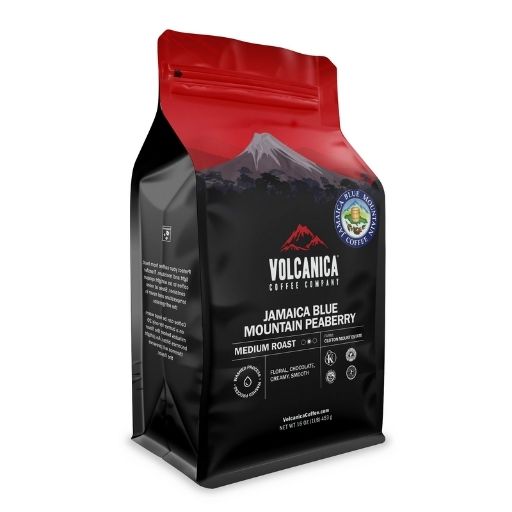
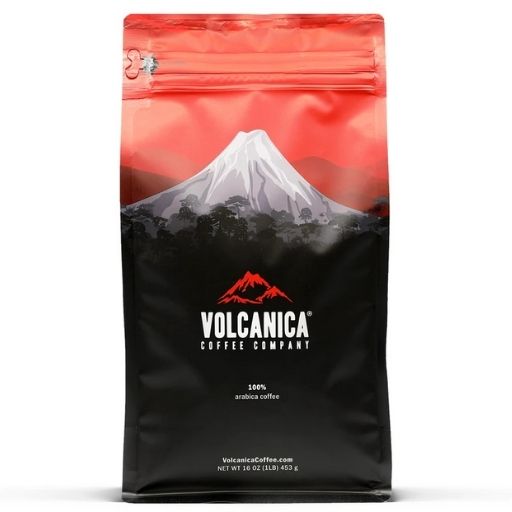
Volcanica Jamaica Blue Mountain Peaberry Coffee
Volcanica Coffee
It's no surprise that Volcanica has several entries on this list. Volcanica specializes in single-origin coffees grown at elevation in rich, volcanic soil. This family-owned business has deep roots in coffee culture, going back generations.
All of the coffees from Volcanica are sustainably sourced. The people at Volcanica strive to reduce their carbon footprint. The roasting process releases pollutants such as NOx, CO, and other harmful components. An Ovenpak 400 afterburner captures and disposes of these emissions.
Volcanica also believes in giving back. They donate 1% of online sales to charity: water. This non-profit organization works on a variety of clean water projects around the globe.
But what about the coffee? The peaberry is a natural mutation of the seeds inside the coffee cherry. In this mutation, only a single, oval seed is produced instead of the two seeds that usually face each other.
It's believed that the peaberry packs in more flavor than the standard duo seed. Coffee from the Blue Mountains is already rare, and the peaberry makes up just 5% of the coffee harvest.
This particular peaberry comes from the Clifton Mount Estate. This is one of the oldest plantations in Jamaica, dating back to the 1790s. The coffee is grown at 2,000 feet in elevation. It is washed processed and sun-dried on concrete slabs. The expert roasters at Volcanica bring it to a medium roast. You'll enjoy this brew with an intense aroma and a balanced taste.
Flavor notes include floral, cream, and smooth chocolate. This product is 100% Certified JBM by the Jamaican Department of Agriculture. It is also Direct Trade Certified, Kosher Certified, and Rainforest Alliance Certified. It's available as whole bean and in several grind sizes.
Green Coffee Traders Jamaican Blue Mountain Roasted Coffee
Green Coffee Traders
This company got its start in 1993. It focused on sourcing the best green coffees from around the world and bringing them to North America. Green Coffee Traders only deals in specialty arabica, Organic, and Fair Trade green coffees. The company has distribution centers in the U.S. and Canada.
In addition to selling green coffee, Green Coffee Traders also roast their own. For green coffee, the company offers a range of single-origin and microlot coffee. This includes coffee from Kona, Ethiopia, Nicaragua, and more. More recently, they got into the roasting business. They offer roasted No. 1 Jamaican Blue Mountain and Kona Extra Fancy coffees.
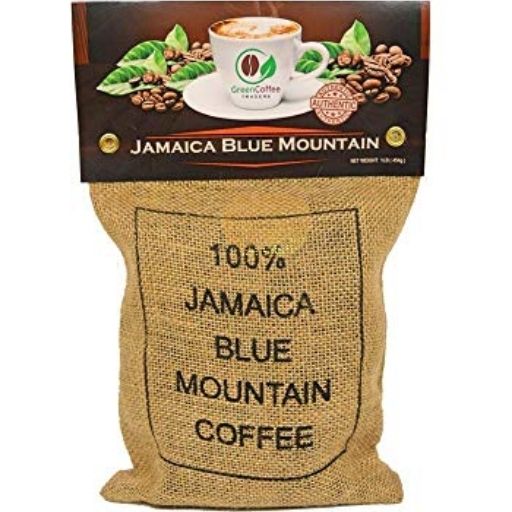
This JBM coffee is offered in a City Roast, which is a medium roast. It is roasted to order so is always fresh. It is 100% Jamaica Blue Mountain that was grown under the shelter of the rainforest. It arrives in a sealed bag with a one-way valve to preserve the aroma and taste. You will find the Jamaican Blue Coffee seal on the bag.
This coffee is surprisingly affordable. That is probably due to their no-frills, no middle-man approach. In this case, low price doesn't mean bad coffee. Most reviewers love this coffee. It has an exceptional aroma and a clean, pleasant aftertaste.
Volcanica Jamaica Blue Mountain - Blend
Volcanica Coffee
We've already covered some of the great things Volcanica does to preserve the earth and its people. Here is another offering from Volcanica. This one is a blend, so costs considerably less. But the experts at Volcanica created this blend to highlight all the great qualities of coffee from the Blue Mountains. In fact, it's the only blend that is approved by the Jamaican Coffee Board!
This blend contains 30% authentic Blue Mountain beans. Most blends contain between 1% and 10% authentic beans. You can see why this blend can rival 100% JBM. The beans for this blend all come from smallholder farms and were grown at altitude in volcanic soils.
Flavor notes include chocolate, orange, and lemon. The beans were washed processed and come in a medium roast. It's available in whole bean as well as drip, espresso, and French Press grinds. This blend is Kosher Certified.
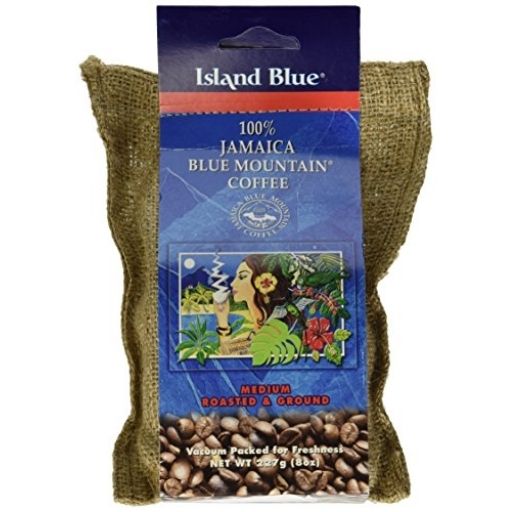
Island Blue Medium Roasted Ground Coffee
Island Blue
Island Blue's JBM is owned, produced, and packaged by Jamaica Standard Products Company, Limited (JSP). That's one of the oldest coffee companies in Jamaica. The Minott family has owned and operated JSP for over 68 years.
This coffee is the arabica Typica variety. Island Blue has its own nurseries where the plants grow for seven months before being planted. When ripe, the beans are hand-picked and processed. A harvester may go through an area up to seven times, only selecting the perfectly ripe cherries and leaving the rest to mature.
After air drying, the beans head to JSP's facility in Williamsfield, Jamaica. After sorting, the expert roasters perform their magic. The coffee comes in a vacuum-sealed bag that is inside a rustic burlap sack. It not only tastes good, but it looks cool too. You'll see the Jamaican Coffee Board's seal of authenticity proudly displayed on the packaging.
The medium roast brings all the smooth flavor you expect from a JBM coffee. Island Blue's coffee is mostly sold pre-ground. But you can sometimes find it as whole bean. It's one of the more affordable coffees from the Blue Mountains. If you don't want to make a huge commitment, you can buy an 8-ounce bag to try without breaking the bank.

What Does Coffee From Jamaica’s Blue Mountains Taste Like?
The fragrance of the beans and the aroma when it’s brewed are enough to captivate anyone. You may notice a floral or herbal scent. But what is it like to actually drink?
You’ll probably notice how smooth the coffee is. It has a pleasant richness and balanced body with floral and nutty flavors shining through. It almost always goes to a medium roast. This preserves the delicate acidity while bringing in the deeper, chocolatey notes.
Many describe this coffee as having a clean taste. There is virtually no bitterness. The creamy sweetness adds to the satisfaction of a cup of this brew.

Blue Mountain Coffee: Spotting Fakes
When a product commands a price as high as Jamaican Blue Mountain coffee, it inevitably attracts scammers. Luckily, there are several steps you can take to ensure you’re getting the real thing.
Blends
While the label of 100% JBM coffee is strictly protected, those restrictions don’t apply to blends. A product may boldly claim that it has coffee beans from the Jamaican Blue Mountains, but if it’s a blend, it might only have 1% authentic JBM beans. The rest could come from who knows where.
In general, we recommend you avoid blends altogether. But there is one notable exception to this. Volcanica produces an exceptional blend with 30% authentic JBM beans. Their blend has earned the approval of the Jamaican Coffee Industry Board.
Buying Guide
Here we’ll break down specifically what to look for when you want to experience real coffee from Jamaica’s Blue Mountains.
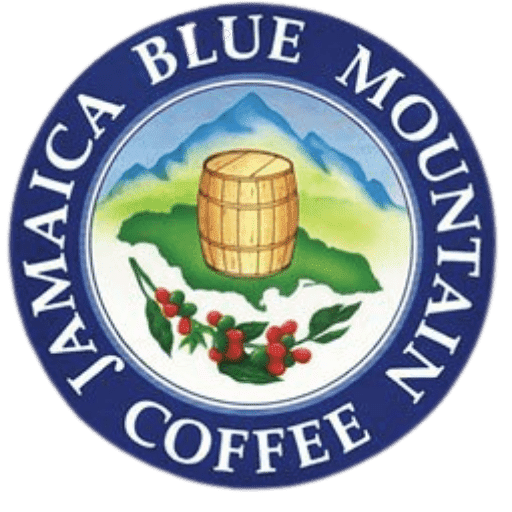
- Seal of Approval: The Coffee Industry Board of Jamaica is part of the Jamaica Agricultural Commodities Regulatory Authority. Their seal is a circle with a profile of the Blue Mountains, a coffee barrel, and a sprig with ripe coffee cherries. Around the outside of the circle, you’ll find the words “Jamaica Blue Mountain Coffee.”
- Paperwork: A paper trail follows every bag of real JBM coffee. Retailers should be able to show you a copy of the certification.
- Read the Packaging: A lot of the same rules apply here as for Kona. A company might put phrases like “100% Jamaican Coffee,” but that is not the same as 100% JBM coffee.
What About Roasting Location?
Many guides for JBM Coffee state that it must be grown, roasted, and packaged in Jamaica. But this isn’t true. The Jamaica Agricultural Commodities Regulatory Authority does export green coffee. To be authentic JBM coffee, it must be planted, cultivated, harvested, and packaged in Jamaica, but it can be roasted elsewhere.
You Have to Try This Coffee!
If you have decided to try the unique experience that is JBM coffee, we suggest you go with Volcanica’s Jamaica Blue Mountain Peaberry Coffee. The peaberry intensifies all the best qualities of this brew. It’s considered the cream of an already rich crop.
This single-estate coffee is meticulously cared for from the first planting to when the coffee arrives at your door. It is certified 100% JBM coffee by Jamaica’s Coffee Industry Board.
If you’d like to get a feel for this rarity without spending too much money, you might try Volcanica’s Blue Mountain blend. It has 30% authentic beans and gives you most of what this coffee region is known for.
If you love coffee and haven’t tried this variety yet, do yourself a favor and get some!
Frequently Asked Questions:
If you’re chasing a smooth, clean cup with almost no bitterness, then yes — it’s worth trying at least once. This is one of those coffees people put on their “must try” list. That said, you’re paying not just for taste, but for rarity and strict quality control.
Look for clear labeling that says 100% Jamaican Blue Mountain coffee and check for an official certification seal. Be careful with wording. “Jamaican coffee” or “Blue Mountain blend” doesn’t mean it’s the real thing.
Expect a very smooth, balanced cup with a clean finish. Flavor-wise, you’ll usually notice light floral notes, gentle sweetness, and hints of chocolate or nuts. The biggest standout is how little bitterness there is.
It comes down to supply and effort. The growing region is small, harvesting is done by hand, and production is limited. On top of that, strict grading and high global demand push the price even higher.
They can be, but manage expectations. Some blends contain only a tiny percentage of real Blue Mountain beans. If you want the full experience, go for 100% certified coffee. If you’re just curious, a well-made blend can be a more affordable entry point.
Most of the time, yes. Medium roast works best because it preserves the coffee’s delicate flavors and smooth profile. Dark roasts tend to overpower what makes this coffee special.
Yes, and that’s a common misconception. The coffee must be grown and certified in Jamaica, but it can be exported as green beans and roasted anywhere.
Go with methods that highlight clarity and balance, such as pour-over, Chemex, or French press. Keep it simple and avoid over-extracting. This is a coffee where subtlety matters.
Published