Fabula coffee review: smooth, organic and low-acid, with caveats
Fabula coffee review: how the low-acid organic coffee tastes, what it costs ($19.49–29.99 a bag), the refund catch, and how it compares with Lifeboost.

Written from hands-on coffee experience and checked against our editorial standards. Editorial policy · Research sources
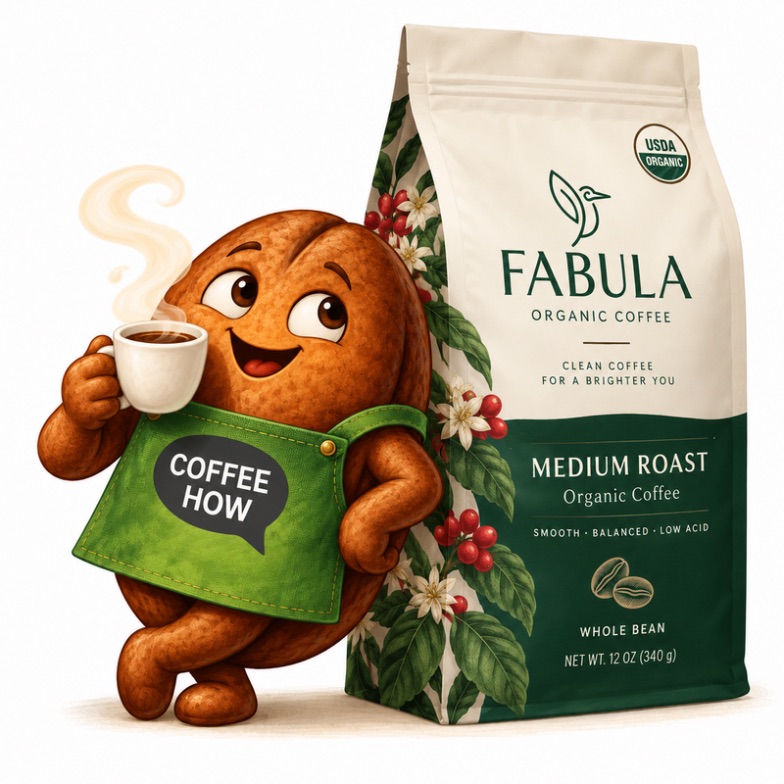
Fabula is a US online roaster that sells USDA-certified organic coffee marketed as low-acid and lab-tested for mold and other contaminants. Its core coffees come from Mexico, Peru and Colombia, and in our 2022 test the cup was smooth and mild rather than bright or complex. It suits drinkers who find coffee hard on the stomach and want a gentler everyday bag. Fabula is a decent choice if you value organic certification and a mild cup, but at this price our 2022 tasting left us wanting a more interesting, layered coffee.
Updated October 2026: rewritten with current prices, the refund terms, comparisons with Lifeboost and Purity, and a sourced section on acidity and mold. The earlier version said Fabula was “certified mycotoxin-free” and the “healthiest cup possible”; Fabula doesn’t publish the lab reports behind those claims, so we no longer repeat them.
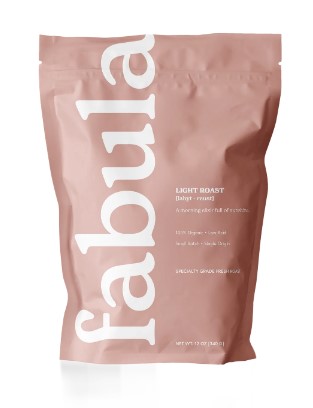
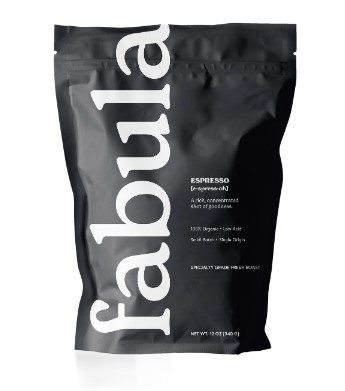
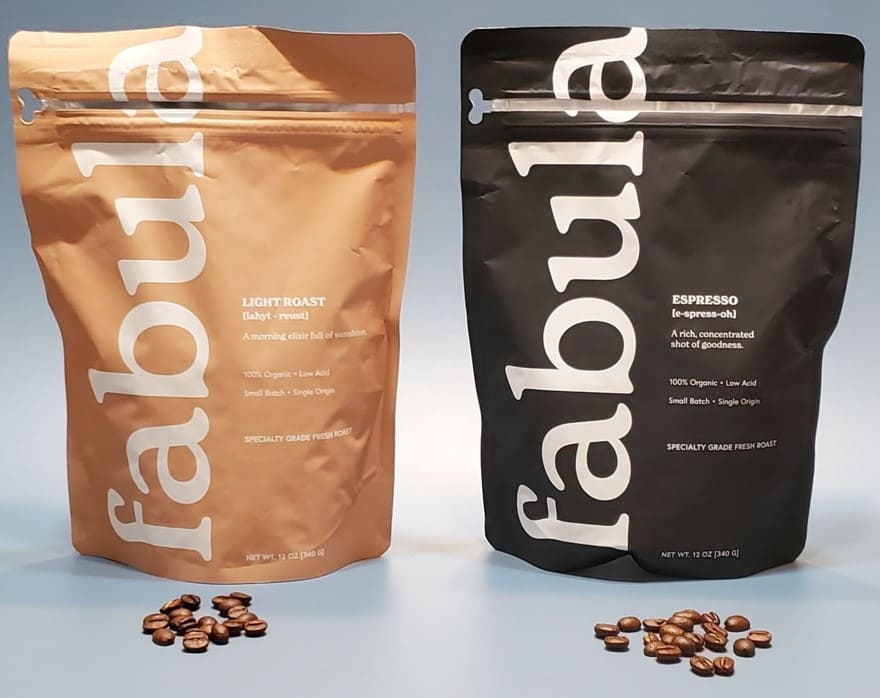
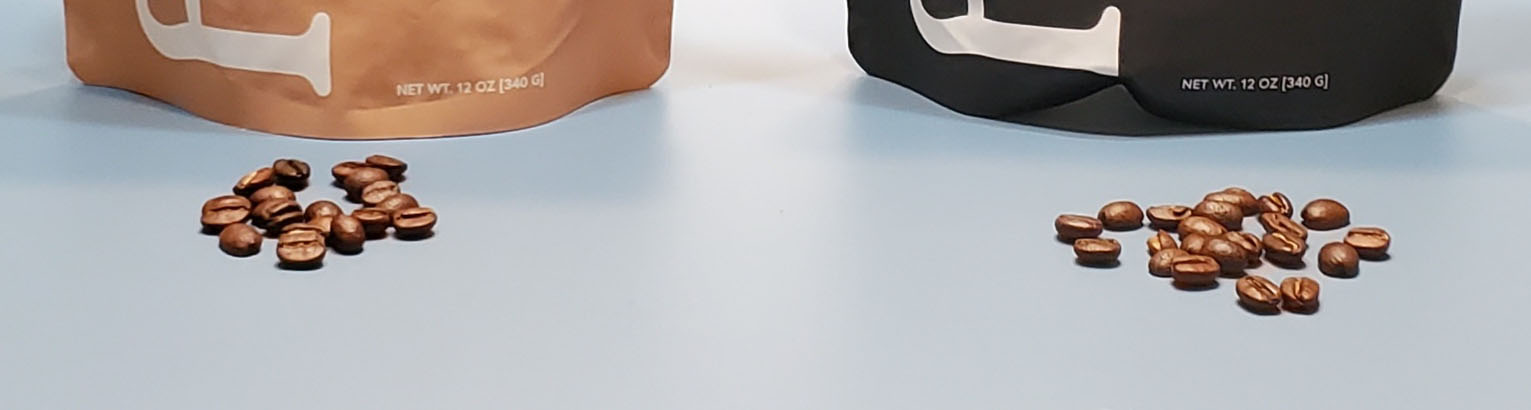
How this review was done: I brewed the Light and Espresso roasts in 2022, from bags Fabula sent for review. The photos of both bags are mine. The Medium, Dark and the rest of the range are judged from Fabula’s published information, not tasted.
- Verdict: smooth, mild organic coffee for sensitive stomachs; simple in the cup for the price.
- Price: $29.99 for a 340 g (12 oz) bag. On a subscription, $23.99 a bag for 3 bags or $19.49 for 6. That’s $0.65–1.00 a cup, by Fabula’s estimate of 25–35 cups a bag.
- Origins: Mexico (Light, Decaf), Peru (Medium, Dark), Colombia (Espresso), plus a rotating Sip of the Month.
- Low acid: Fabula’s claim. It publishes no pH figures, and the research on low-acid coffee and reflux is thin.
- Refund: 30 days after delivery, first order only, up to 3 bags or 2 boxes of pods.
Pros
- Smooth, mild flavor with barely noticeable acidity
- USDA-certified organic
- Whole bean, ground, pods, decaf and half-caff in the same range
- Sturdy resealable bag with a one-way valve
- Refund on your first order if you don’t like it
Cons
- No roast date on the bag, only a best-by date
- Faint aroma on the Light roast; simple flavor
- Almost all Latin American origins
- Lab testing claimed, reports not published
- $29.99 a bag unless you buy 3 or more
- Check price for Fabula Light Roast Coffee Beans (opens in a new tab)
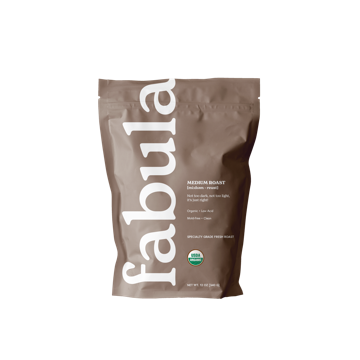
- Check price for Fabula Medium Roast Coffee Beans (opens in a new tab)
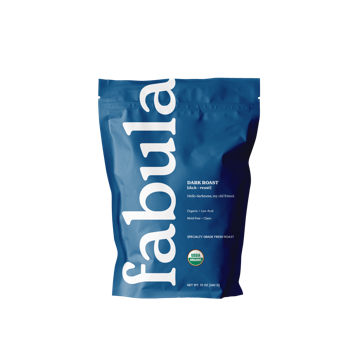
- Check price for Fabula Dark Roast Coffee Beans (opens in a new tab)
- Check price for Fabula Espresso Roast Coffee Beans (opens in a new tab)
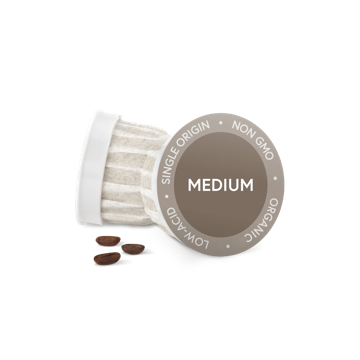
- Check price for Fabula Medium Roast Pods (opens in a new tab)
Who should buy Fabula, and who shouldn’t
Buy it if regular coffee bothers your stomach and you want to try a milder, darker-leaning cup before giving coffee up. It’s also an easy pick if you want organic coffee in pods, or one brand for a household that drinks regular, decaf and half-caff.
Skip it if you like bright, fruity coffee or want to taste where a coffee comes from. Fabula’s range is built for smoothness, not complexity. For the same $20–30 a bag, I’d choose a freshly roasted single-origin coffee from a specialty roaster that prints the roast date; our best coffee beans list has picks. Skip it too if you need coffee to fix a medical problem: see the section on acid first.
How I tested Fabula coffee
I brewed both coffees from whole beans, four ways at the ratios below. Ratios are coffee to water by weight.
- Pour over: 1:16 for both coffees, and 1:12 for a stronger Light roast.
- French press: 1:12 for both.
- Cold brew (Espresso roast): 1:8, steeped for 12 hours at room temperature, then diluted to 1:16 to drink.
- Espresso (Espresso roast): 1:2, as a straight shot and in a latte.
Our ratio calculator turns any of these into grams for your brewer.
Coffee at CoffeeHow is reviewed by brewing it: sourcing and roast date checked first, then brewed at a controlled ratio across suitable methods, several times, and scored on aroma, acidity, sweetness, body, balance and aftertaste. How we test has the details.
How Fabula coffee tastes
Smooth is the word. It was the main trait of both coffees: chocolate or cocoa notes, a clean finish, medium body, very little acidity. The two roasts differ most in aroma: faint on the Light, much stronger on the Espresso. Below, Fabula’s own tasting notes from when I tested them, then what I found.
Fabula Light Roast Coffee Beans
Fabula
Origin: Mexico
Fragrance (my notes): Mild, stone fruit
Aroma (per Fabula website): Brown sugar, sweet almonds, baked apple, sweet berries
Flavor notes (per Fabula website): Red Apple, Sugary Sweet, Mixed Nuts, Cocoa
Recommended brew method: Pour over
Upon opening the bag, I was not greeted with a strong fragrance. It had light, stone fruit notes along with a hint of chocolate. The brown sugar notes came forward in the aroma when brewed, but the scent was very light. The beans themselves were considerably darker than I expected.
Pour Over
Ratio: 1:16
This light roast worked well as a pour-over. The bloom was aggressive, with large bubbles and foam attesting to the coffee’s freshness. The flavor was mild but had a very pleasant taste with notes of cocoa and a slight sweetness. It had a noticeably clean aftertaste. It was an enjoyable, everyday type of coffee with a medium body.
Ratio: 1:12
This stronger brew brought out more of the cocoa notes and more sweetness at the end. Any ratio between the two can produce an enjoyable brew, depending on how strong you like your coffee.
French Press
Ratio: 1:12
Because it was a light roast, I used more coffee in the French press. It did very well with this brew method, which brought out more sweetness and more of the cocoa and nutty notes. The extra body that a French press gives gave it a pleasing mouthfeel.
Fabula Espresso Roast Coffee Beans
Fabula
Origin: Colombia
Fragrance (my notes): Chocolate, stone fruits, earthy
Aroma (per Fabula website): Raisin, dark fruits, plum, nuts, brown sugar
Flavor notes (per Fabula website): Prune, brown sugar, mild citrus tones, caramel and praline flavors, dark berries
Recommended brew method: Cold brew, espresso
The beans are medium-dark without any oiliness. These had considerably more fragrance than the light roast. When brewed, it had more aroma than the light. The single-most characteristic of all brew methods was smoothness.
Pour Over
Ratio: 1:16
These beans did not do well as a pour-over. The brew had a predominant dark chocolate taste but was not bitter. It lacked the complexity of flavor you look for in a pour-over coffee. With a bit of milk and chocolate added, it was enjoyable.
French Press
Ratio: 1:12
This espresso roast did very well in the French press. It was very smooth and had a pleasingly rich body. It had a nice roasty flavor, and the stone fruit and caramel notes came forward. It was a very satisfying cup of coffee.
Cold Brew
Ratio: 1:8 as brewed (12 hours on the countertop); diluted to 1:16 to drink
Cold brew is the way to go if you want the smoothest drink with very low acidity. The dark chocolate notes were prominent. This brew stood up very well to milk. It ended on a slightly sweet note with a clean aftertaste.
Espresso
Ratio: 1:2
As an espresso it was smooth and sweet, and it held its flavor in a latte.
What Fabula sells
Fabula’s range is wide for a small roaster: four roast levels, two decafs, a half-caff, coffees ground for French press, cold brew and Turkish coffee, flavored coffees, pods and instant. Every bag is 340 g (12 oz), whole bean or ground. The range below is from Fabula’s site in October 2026.
| Coffee | Origin | Roast | Tested by us |
|---|---|---|---|
| Light | Mexico | Light | Yes, 2022 |
| Medium | Peru | Medium | No |
| Dark | Peru | Dark | No |
| Espresso | Colombia | Dark | Yes, 2022 |
| Decaf (Medium or Dark) | Mexico | Medium or dark | No |
| Half-Caff | Peru and Mexico | Medium | No |
| French Press | Peru | Medium | No |
| Cold Brew | Mexico | Dark | No |
| Pods for Keurig-style machines | Varies by roast | Light to dark, decaf, flavored | No |
Fabula says its farms are small organic growers in Central and South America, the coffee is shade-grown, and it’s roasted in the US a few days before shipping. It doesn’t name the farms or cooperatives for its core coffees; the rotating Sip of the Month and Roaster’s Special do name a region or producer.
Price and value
At full price Fabula is expensive. The discount depends on how many bags you buy at once: the “save 35%” in Fabula’s menu only applies to a 6-bag subscription. Prices from Fabula’s product pages, October 2026:
| What you buy | Price | Per cup |
|---|---|---|
| 1 bag, one-time or subscription | $29.99 | About $1.00 |
| 3 bags, one-time (10% off) | $26.99 a bag | About $0.90 |
| 3 bags, subscription (20% off) | $23.99 a bag | About $0.80 |
| 6 bags, subscription (35% off) | $19.49 a bag | About $0.65 |
| First-order offer, 3 bags | $54 ($18 a bag) | About $0.60 |
| First-order offer, 6 bags | $90 ($15 a bag) | About $0.50 |
| 24 pods, one-time | $47.99 | $2.00 a pod |
| Pods on subscription, 24 / 48 / 96 a delivery | 5% / 15% / 20% off | $1.90 / $1.70 / $1.60 a pod |
Per-cup prices use Fabula’s own figure of 25–35 cups a bag, taken at 30. Brew stronger and you’ll get fewer: at a 1:16 ratio, 340 g makes about twenty-one 250 ml (8.5 oz) cups. Our coffee to water ratio calculator works out your own number.
Shipping: free in the US on orders over $49 and on every subscription; orders ship within 1–2 business days. A single one-time bag at $29.99 falls under the threshold, so you’ll pay shipping on it. The first-order offers above include free shipping.
Refunds: Fabula’s refund policy covers first-time customers only, for 30 days after delivery, and up to 3 bags or 2 boxes of pods. Sale items can’t be returned. If you’re trying it for the first time, start with a small order so the whole order is covered.
Fabula is worth the money if organic certification and a smooth cup with almost no acidity matter most to you. But after my tasting, I’d want more character and complexity for this price.
Packaging and freshness
The bag is the good part: sturdy, resealable, with a pull strip and a one-way valve that lets carbon dioxide from roasting out without letting air in. What’s missing is a roast date. Fabula prints a best-by date instead, so you can’t tell how long ago the coffee was roasted. Fabula itself says coffee peaks 6–7 days after roasting, which is exactly why a date on the bag would help.
The coffee I tested was fresh even so: the Light roast bloomed vigorously in the pour over, with big bubbles and foam.
Is Fabula really low-acid, and will it help your stomach?
Fabula calls its coffee low-acid but publishes no pH measurements, so there’s no number to compare. In the cup it tastes mild, and that’s what most drinkers mean by low-acid. Whether it helps your stomach is a separate question, and the evidence is thinner than the marketing. Our best low acid coffee guide covers other brands sold as low-acid.
- Coffee can trigger reflux. The US National Institute of Diabetes and Digestive and Kidney Diseases lists coffee and other sources of caffeine among foods and drinks that can make GERD symptoms worse for some people.
- But cutting coffee isn’t proven to help. A 2006 review of lifestyle advice for GERD in Archives of Internal Medicine (Kaltenbach, Crockett and Gerson) found evidence for weight loss and raising the head of the bed, but not for stopping coffee or other dietary changes.
- Darker roasts may be gentler. In a 2014 study by Rubach and colleagues in Molecular Nutrition & Food Research, a dark roast stimulated less stomach acid than a medium-roast market blend. The dark roast had three times as much N-methylpyridinium, a compound formed during roasting. It was a small study of nine healthy volunteers.
- Some drinkers switch to cold brew for the same reason, because it tastes less sharp. Our cold brew guide has the recipe.
For me as a barista, “low acidity” is first of all about taste: some people love a bright, tangy cup, others want a soft, calm one. But a cup that doesn’t taste acidic isn’t, by that fact alone, easier on your stomach.
If coffee gives you heartburn or reflux, ask your doctor before changing what you drink. Low-acid coffee may feel easier for some people, but it isn’t a treatment. See our health disclaimer.
Mold and lab testing: what Fabula claims
Fabula says every batch is tested for more than 550 chemical compounds, including pesticides and mycotoxins, and calls the coffee “100% mold-free”. It doesn’t name the lab or publish the reports on its site, so we can’t check either claim.
Mycotoxins are toxins made by molds; the one found most in coffee is ochratoxin A. Roasting removes much of it: in a 2001 paper in the Journal of Agricultural and Food Chemistry, van der Stegen and colleagues found that seven of nine studies reported a 69–96% drop. And what’s left is small. A 1997 screening of 633 coffee products sold in Europe, in Food Additives and Contaminants, found that four cups a day supply up to 2% of the tolerable weekly intake set by the FAO/WHO expert committee on food additives. Testing is a reasonable thing to pay for if it gives you peace of mind. It isn’t proof that ordinary coffee is unsafe.
What other buyers say
Fabula’s Trustpilot page is split. In October 2026 it scored 3.5 out of 5 from 66 reviews: 44% gave five stars and 21% gave one. Trustpilot notes that Fabula doesn’t invite customers to review, so the sample is small and self-selected.
The 2026 reviews that praise it describe what I found: smooth, low in acidity, no bitterness, with the dark roast a favorite. The complaints are about the same mildness from the other side: coffee that tastes weak or flat, and a high price. Single reviews mention bitterness, a weaker caffeine kick and pods that split open while brewing.
Fabula vs Lifeboost
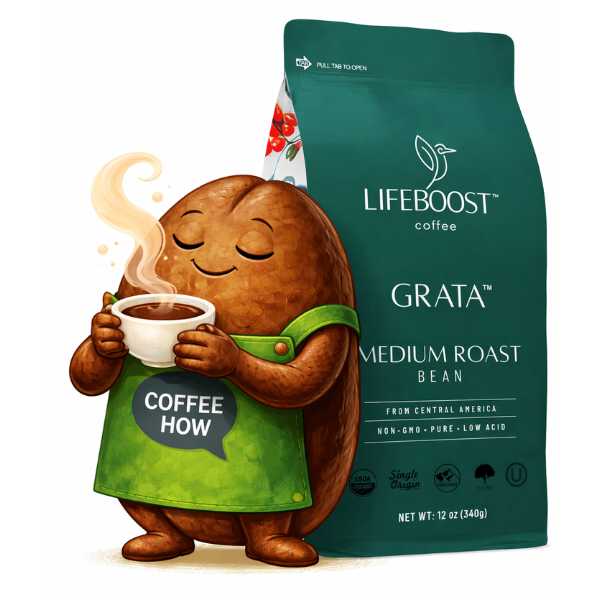
This comparison is from both brands’ published information, not a side-by-side tasting; our Lifeboost coffee review covers its coffees in detail. Lifeboost makes the same promise: organic, low-acid, single-origin coffee. It says its coffee is third-party tested for mycotoxins, heavy metals, acrylamide, pesticides and more than 400 other toxins. Neither brand publishes lab reports on its product pages. Both sell decaf, half-caff, flavored coffees and pods. Lifeboost’s Grata Medium Roast cost $28.99 for 340 g (12 oz) in October 2026, against $29.99 for Fabula. On paper they’re close to interchangeable. Fabula names the country behind each coffee, while Lifeboost’s medium roast page says only Central America, so choose Fabula if origin matters to you.
Fabula vs Purity
I haven’t tasted Purity either. Purity Coffee is the opposite bet. It doesn’t sell its coffee as low-acid: it chooses coffees high in chlorogenic acids, the antioxidants in coffee, and roasts to keep them, while pointing drinkers with sensitive stomachs to its darker EASE roast. Purity names the producer, process and altitude of its single origins, and says it’s moving to a lab that lets it publish test results. Its single-origin bags cost $32 for 340 g (12 oz). Choose Purity if you want to know exactly where your coffee comes from; choose Fabula if a mild, low-acid cup is the point.
Fabula coffee at a glance
| Roaster | Fabula Coffee, roasting in the US |
| Bag size | 340 g (12 oz), whole bean or ground |
| Price | $29.99 a bag; $19.49–23.99 on a subscription of 3–6 bags; pods $47.99 for 24 |
| Shipping | Free in the US over $49 and on subscriptions |
| Origins | Mexico, Peru, Colombia; rotating coffees from other regions |
| Certification | USDA Organic, non-GMO |
| Roast date on bag | No, best-by date only |
| Formats | Whole bean, ground, pods, instant |
| Lab testing | Claimed for 550+ compounds; reports not published |
| Refund | First order only, 30 days after delivery, up to 3 bags or 2 pod boxes |
| Where to buy | Online from Fabula |
FAQ
Fabula markets it as low-acid but publishes no pH measurements. It tastes mild and smooth, which is what most drinkers mean by low-acid. Whether that makes it easier on your stomach varies from person to person.
Fabula says every batch is tested for more than 550 compounds, including mycotoxins, and calls its coffee 100% mold-free. It doesn’t publish the lab reports, so the claim can’t be checked independently. A 1997 screening of 633 European coffee products found that four cups a day supply up to 2% of the tolerable weekly intake set by FAO/WHO experts.
It may feel gentler for some people, but no study has tested Fabula or low-acid coffee as a treatment for reflux. Coffee can trigger GERD symptoms, and a 2006 review found no evidence that stopping coffee improves GERD. Ask your doctor before changing what you drink.
Fabula’s core coffees come from Mexico (Light and Decaf), Peru (Medium and Dark) and Colombia (Espresso). It roasts in the United States. A rotating Sip of the Month adds other origins.
$29.99 for a 340 g (12 oz) bag in October 2026. A subscription brings it to $23.99 a bag for 3 bags or $19.49 for 6. First-time buyers get 3 bags for $54 or 6 for $90. Pods cost $47.99 for 24. Shipping is free over $49 and on subscriptions.
On your first order only. Fabula refunds up to 3 bags or 2 boxes of pods if you ask within 30 days of delivery. Sale items and later orders aren’t covered.
They make the same promise: organic, low-acid, lab-tested coffee. They cost about the same per bag. Both sell decaf, half-caff, flavored coffees and pods. Fabula names the country behind each coffee; Lifeboost’s medium roast page says only Central America.
Sources
- Fabula Coffee, Healthy low-acid coffee (testing, origins, first-order prices), Shipping & returns, Refund policy and product pages (Medium, pods), checked October 2026.
- Lifeboost, Grata Medium Roast, checked October 2026.
- Purity Coffee, Aponte Inga Medium Roast and Better Beans, Better Health, checked October 2026.
- National Institute of Diabetes and Digestive and Kidney Diseases, Eating, Diet, & Nutrition for GER & GERD.
- Kaltenbach T, Crockett S, Gerson LB, Are lifestyle measures effective in patients with gastroesophageal reflux disease? An evidence-based approach, Archives of Internal Medicine, 2006.
- Rubach M et al., A dark brown roast coffee blend is less effective at stimulating gastric acid secretion in healthy volunteers compared to a medium roast market blend, Molecular Nutrition & Food Research, 2014.
- van der Stegen GH, Essens PJ, van der Lijn J, Effect of roasting conditions on reduction of ochratoxin A in coffee, Journal of Agricultural and Food Chemistry, 2001.
- van der Stegen G et al., Screening of European coffee final products for occurrence of ochratoxin A (OTA), Food Additives and Contaminants, 1997.
- Trustpilot, Fabula Coffee reviews, checked October 2026.
How we work: how we test · editorial policy · research & sources.
Published · Last updated