Best Sumatra Coffee Beans: Flavor, Reviews, and Buyer’s Guide
Looking for the best Sumatra coffee beans? Explore reviews, flavor profiles, and how to choose high-quality Sumatran coffee.

We may earn a commission when you buy through links on this page, at no extra cost to you. It never decides our picks. How we test · How we make money
Do you love a dark, rich, fully flavored cup of coffee? If yes, you might want to try Sumatra coffee. The bonus is that it’s naturally low in acidity.
People either love or hate coffee from Sumatra. But what exactly is Sumatran coffee? Its flavor is as bold and distinctive as its origin. Sumatra is an island in Indonesia, the fourth-largest coffee-producing country in the world.
- Sumatra coffee is known for its full body, low acidity, and earthy, chocolate-forward flavor profile.
- Most high-quality Sumatra coffee comes from northern regions such as Mandheling, Lintong, and Gayo.
- The distinctive taste of Sumatran coffee is strongly shaped by the wet-hulling process, also called giling basah.
- Sumatra coffee is a strong choice for drinkers who want bold flavor, smooth body, and less brightness or acidity.
- Our Top Picks
- Best Sumatra Coffee Beans Reviews
- How Sumatra Coffees Came to Be
- Where Does Sumatra Coffee Come From?
- Sumatran Coffee: Is It Lower in Acid?
- Facts About Coffee From Sumatra
- Types of Sumatran Coffee
- Processing Coffee From Sumatra: What Is Wet-Hulling?
- Drink It Up!
- Frequently Asked Questions
Coffee from the island of Sumatra has a reputation for a unique, earthy flavor. It has a full body that holds up well to additives like cream and sugar. The taste comes in part from the unusual coffee processing technique called wet hulling. No one knows how the process developed. Sumatra is virtually the only place that processes the beans this way. We’ll talk more about the process later in the article.
A premium variety is Mandheling. This coffee has a distinctive flavor profile. In a study, three out of four blind tasters picked the Mandheling out of 42 samples!
Are you ready to walk on the wild side? Choose the best Sumatra coffee from our list below to expand your horizons.
Our Top Picks
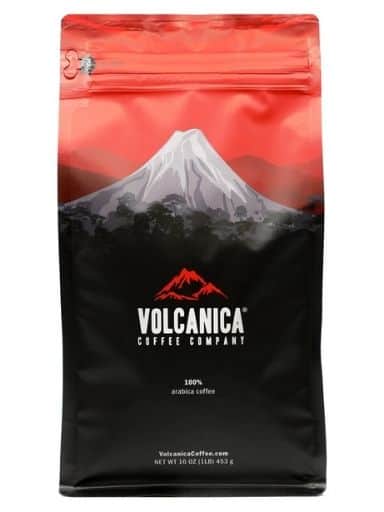
Volcanica Sumatra Mandheling Reserve Coffee
Our top recommendation must be the Sumatra Mandheling coffee from Volcanica. This coffee checks all the boxes for sustainable farming. It has the classic flavor profile you expect from a Sumatran. You know it will be fresh. They only roast to order.
- Check price for Fresh Roasted Coffee Organic Sumatra (opens in a new tab)
- Check price for Volcanica Sumatran Gayo Coffee (opens in a new tab)
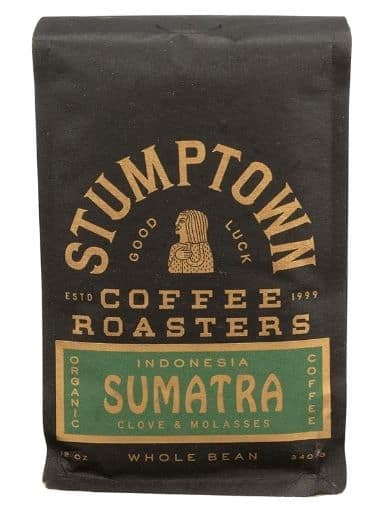
- Check price for Stumptown Indonesia Bies Penantan Coffee (opens in a new tab)
- Check price for Cooper’s Cask Coffee Uprising Sumatra Coffee (Single Malt Whiskey Barrel Aged) (opens in a new tab)
- Check price for Volcanica Sumatra Mandheling Decaf Coffee (opens in a new tab)
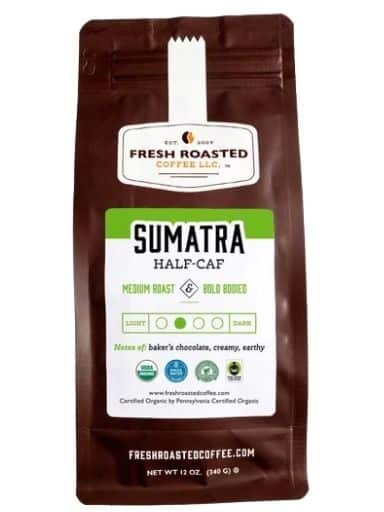
- Check price for Fresh Roasted Coffee Organic Sumatra Swiss Water Half Caf Coffee (opens in a new tab)
- Check price for Starbucks Dark Roast Sumatra Ground Coffee (opens in a new tab)



Best Sumatra Coffee Beans Reviews
For many decades, Starbucks has been importing Sumatra beans into the US. More recently, smaller specialty roasters have been getting in on the action. To help you decide which Sumatran to buy, we’ve rounded up the top contenders.
Volcanica Sumatra Mandheling Reserve Coffee
Volcanica Coffee
Volcanica is a well-established coffee brand. Several of their coffees appear on our list of best Sumatra coffee. They roast their coffee weekly in their Atlanta location. Besides their commitment to fine specialty coffee, they also give back. They donate 1% of sales to charity: water.
Volcanica roasts their Sumatra Mandheling to medium. This lighter roast allows the flavor notes of lemongrass and dried fruit to come forward. Yet it still has the earthy, chocolate flavors that coffee from Sumatra is known for. Toffee, brown sugar, and caramel complete the flavor profile.
These beans come from Sumatra Utara, the Indonesian word for north Sumatra. This coffee is undergoes the traditional wet hulling process Sumatra is known for. Sumatra Mandheling is Fair Trade Certified and Certified Kosher.
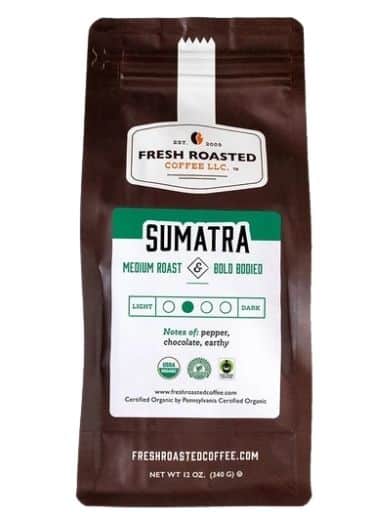
Fresh Roasted Coffee Organic Sumatra
Fresh Roasted Coffee
Fresh Roasted Coffee LLC is committed to protecting the environment. They carry USDA Organic, Fair Trade, Rainforest Alliance, and Smithsonian Migratory Bird Center Bird Friendly certification. They also offer Kosher products.
Beyond that, they use a smokeless roasting process. This helps eliminate their carbon footprint by 80%
But none of that matters if the coffee doesn’t taste good. And this organic Sumatra delivers. It hails from the Central Aceh region. The coffee beans are sources from a co-op with over 890 growers and members. They grow the coffee plants between 4,000- and 5,000-feet elevation. Varietals include Catimor, Bourbon, Typica, and Caturra.
They process the coffee with the traditional wet hulled, sun dried method. In addition to the earthy, chocolate profile, this coffee offers a peppery flavor. In this medium-roasted coffee, you might also detect slight vegetal notes. It is rich and full-bodied.
Volcanica Sumatran Gayo Coffee
Volcanica Coffee
As noted above, Volcanica is a brand you can trust to deliver fine coffee in an ethical manner. Their Sumatran Gayo is an Orang-Utan Conservation coffee. It’s described as being clean and spicy. It employs the wet hulled process.
This medium roast offers caramel, peach, wisteria, and chocolate flavor notes. The body is lighter than many other Sumatran coffees. Like all Volcanica coffees, the Sumatran Gayo is only roasted after you place your order.
Stumptown Indonesia Bies Penantan Coffee
Stumptown Coffee Roasters
The beans for Stumptown’s Bies Penantan coffee come from smallholder farmers in Sumatra’s Aceh province. The coffee is named for the community that produces it. It’s grown between 4,000 and 5,200 feet in elevation. It is wet hulled
This coffee comes exclusively from the Ketiara Cooperative. The co-op is female-led. It was founded in 2009. It seeks to build upon the empowerment to growers that fair trade coffee started.
Varietals include Bourbon, Typica, Caturra, and Catimor. The resulting brew is full bodied. This medium roast carries sweet notes of cedar and spice. Some tasters detect blackberry notes along with the typical earthy, chocolate flavor profile.
Cooper’s Cask Coffee Uprising Sumatra Coffee (Single Malt Whiskey Barrel Aged)
Cooper’s Cask Coffee
These beans come from the Lintong area of Sumatra. Lintong beans have a balanced flavor with a clean aftertaste.
A unique point of this coffee is that they age the beans in whiskey barrels from the Sons of Liberty distillery. This process lends a vanilla and caramel sweetness. Tasting notes include woody and earthy with a mild tobacco essence. The brew also carries a hint of ripe tropical fruits.
This is one of the few Sumatran coffees that are recommended for an espresso machine. You will also get an excellent beverage using a drip, pour-over, or French Press method.
This coffee carries the organic certification and has a Fairtrade Grade 1 rating. It is dark roasted. This is a good coffee to try for its unique aging process.
Volcanica Sumatra Mandheling Decaf Coffee
Volcanica Coffee
If you love Sumatra Mendheling but don’t want the caffeine, then try this coffee. You get all the rich, bold flavor of the original. It comes from the Utara area of Sumatra.
The Swiss Water Process removes caffeine without changing the taste. You are left with a rich cup of decaf coffee with a full body. You’ll enjoy the earthy flavor with a syrupy aftertaste. This will help you keep calm and coffee on.
Fresh Roasted Coffee Organic Sumatra Swiss Water Half Caf Coffee
Fresh Roasted Coffee
This coffee has all the certifications the environmentally conscious consumer looks for. It is USDA Organic, Fair Trade, Rainforest Alliance, and Kosher certified. The beans grow in the shade to protect the harvesters and bring the best flavor.
This brew has all the qualities of the Fresh Roasted Coffee Organic Sumatra listed above. But it has dramatically less caffeine. They use the Swiss Water Process method of removing the caffeine. This method leaves all the rich, bold flavor without the astringent taste you can get with some decaf coffees.
Cupping notes include earthy, creamy, and baker’s chocolate. This medium roast coffee has a bold body with loads of rich flavor.
Starbucks Dark Roast Sumatra Ground Coffee
Starbucks
Starbucks’ Dark Roast Sumatra is another dark roast on our list. The tasting notes are herbal and earthy. Starbucks is one of the primary buyers of southeast Asian coffees. It is the bass note of many of their blends, and you can also get it as a single-origin coffee.
This brew exhibits the typical rich chocolate notes and full body you expect in a Sumatran. The deep flavor pairs well with sweet breakfast treats. Starbucks Dark Roast Sumatra gives a smooth mouthfeel and is very low acid. If you’d like to try the exotic taste of Sumatran coffee without breaking the bank, this may be a good place to start.

How Sumatra Coffees Came to Be
Dutch colonialists first brought Arabica coffee beans to Indonesia in the late 1600s. Although the plant isn’t native, the tropical climate, heavy rains, and high volcanic mountains were a perfect fit. Coffee plants flourished and exporters began a vigorous trade.
Once established, Indonesia was the largest coffee producer in the world. Unfortunately, all the plants were the same variety. Coffee rust, a disease common to coffee, nearly wiped out all the plantations around the end of the 19th century. The lower elevations were especially devastated.
The Dutch colonial government decided to replant with the robusta coffee plant. It’s more resistant to disease, has more caffeine, but it doesn’t taste as good as arabica. Most of the coffee produced in Indonesia these days is robusta.
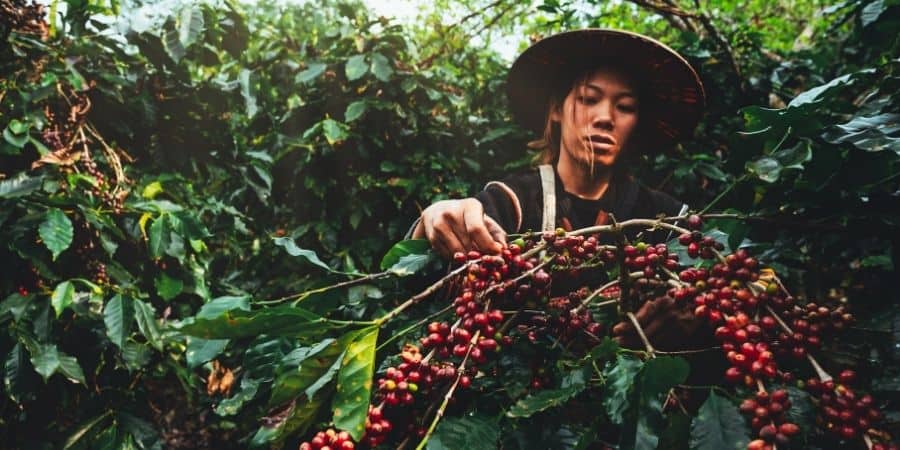
However, the plants in the highlands of Indonesia, such as in northern Sumatra, were not as affected by the coffee rust disease. Arabica plants grow well there, so they replanted with different Arabica varietals. Today, northern Sumatra primarily produces arabica beans.
In Sumatra, coffee is mostly grown on small farms. In fact, most landholders only have one or two acres to farm. These farms are banding together to form cooperatives. This not only helps the farmers, but it also ensures a better product. They can pool resources to upgrade their techniques.
History is interesting, but it’s all about taste. Sumatran has one of the most distinctive flavor profiles. It’s usually described as earthy and chocolatey. People who aren’t fans may call it mushroomy or funky. But you can’t deny its rich, smooth body. The wet hulling process that is used in Sumatra brings these properties.
Where Does Sumatra Coffee Come From?
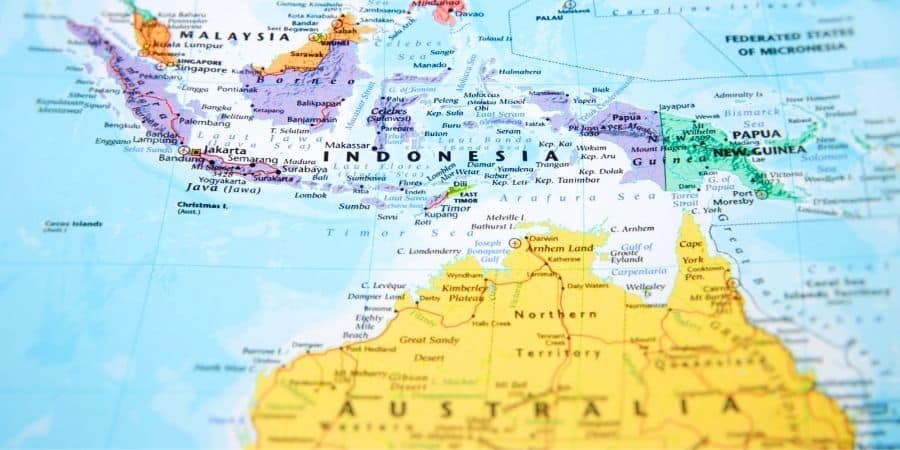
Sumatra is the westernmost island of Indonesia. It’s also the largest island that is entirely in Indonesia.
It doesn’t get more tropical than Sumatra. The equator passes through the middle of the island. As of 2014, over 50 million people live on the island. However, away from the cities, Sumatra offers expanses of untouched areas. Sumatra is also known for its rare orangutans.
The island can be divided into three main parts: north, south, and west. The northern part of the island is mainly high volcanic mountains. That’s where the rich coffee comes from. It’s also the most popular for tourists.
Coffee in this region is grown by small landholders. As with most coffee grown in mountainous regions, workers harvest the coffee cherries by hand. Many of these farms have gotten Fair Trade, Organic, Rainforest, and other environmentally friendly certifications. This helps ensure that the farms will continue for many generations to come.
Sumatran Coffee: Is It Lower in Acid?
Acidity in coffee can be a good or a bad thing. It’s what gives the cup a brightness or liveliness. But acidity in coffee can also cause stomach problems. For that reason, many people who have digestive issues look for a low-acid coffee.
Many things affect a coffee’s acidity. The roast level has a huge impact. In general, a darker roast has a lower acidity.
The brewing method also contributes to acidity. The brewing method for the lowest acidity is cold brewing. For a hot drink, the French Press is also a low-acid technique. On the opposite end, espresso machines produce coffee with the highest acidity.
But a coffee’s origin has maybe the biggest impact. Coffee from Sumatra is known to be low-acid. The low acidity is partly because of the growing conditions. But it may also be from the unique wet hulling process. If you’re looking for a low-acid coffee packed with flavor, Sumatra is a good place to start.

Facts About Coffee From Sumatra
- Women rule: Women make up about 80% of the labor force on coffee farms in Sumatra. Maybe more importantly, women are setting up female-led cooperatives in Southeast Asia. Organizations outside the country are helping with training and loans. Not only does that lead to more gender equality, but it also often leads to better coffee!
- Blue beans: The wet hulling technique used in Sumatra is called giling basah. Most Sumatran coffee undergoes this method, and it plays a major role in shaping its flavor profile. It also gives the beans their unusual bluish color before roasting.
- World’s most expensive coffee: For a while, Kopi luwak was considered the most expensive coffee in the world, but that was back when it was a rare, naturally occurring product. Wild civets would selectively eat the ripest coffee cherries, and the beans underwent a unique fermentation process inside their digestive tract. During this stage, enzymes break down proteins in the beans, which can reduce bitterness and create a smoother, rounder cup with muted acidity. That unusual fermentation is what originally gave Kopi luwak its distinctive flavor profile.
However, once it became commercialized, the story changed. Large-scale production, often involving unethical treatment of animals, led to a significant drop in quality. Today, its high price is driven more by novelty and marketing than by actual cup quality, which is why it does not align with specialty coffee standards.
In specialty coffee, we know the real “most expensive” coffees are defined by rarity, terroir, and exceptional quality. Just look at auction lots from Best of Panama, for example, the legendary Geisha from Hacienda La Esmeralda, where prices can exceed $1,000 per pound. That is not about gimmicks; that is about truly extraordinary coffee. - “Mandheling” is not a region: Mandheling refers to a tribe in northern Sumatra. In the early days of coffee exports, the tribe’s name was stamped on the bags. Importers mistook the name as the region where the coffee was from, and the name stuck.
- Caffeine: Coffee from Sumatra is an arabica bean. It has about the same amount of caffeine as most coffees, around 100-120 mg per 12-ounce mug.
- Coffee exported from Sumatra is almost exclusively Arabica. That contrasts with Indonesia as a whole, where robusta makes up about 80% of the total export.
Types of Sumatran Coffee
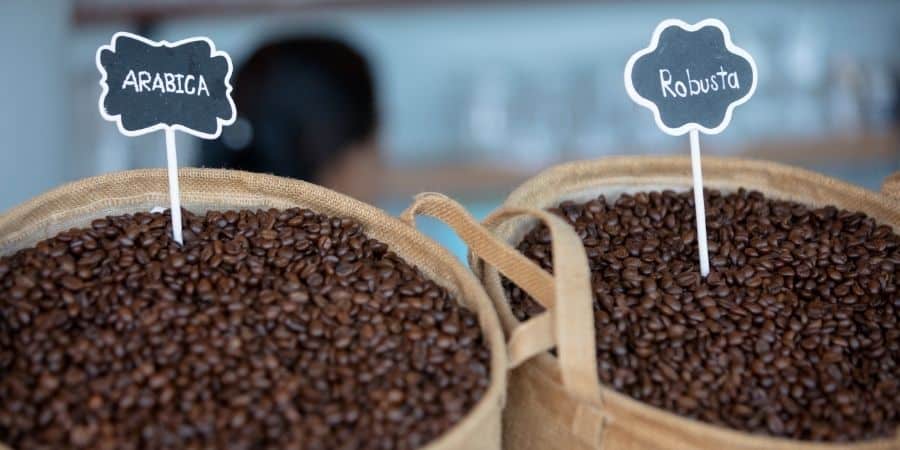
In the broadest sense, there are two types of coffee: arabica and robusta. You probably know that robusta is higher in caffeine but does not taste particularly good. Pretty much all specialty coffee is an arabica varietal.
Northern Sumatra grows arabica beans of a few different varietals. Originally, growers planted the Typica varietal. But much of that was wiped out by coffee leaf rust. However, you can find a mutated Typica Mandheling and Typica Lintong. Other common varietals on the island include Catimor, Bourbon, and Caturra.
When talking about sourcing for coffee, you’ll usually hear three different designations: Mandheling, Lintong, and Gayo. Mandheling is the most common. It comes from the North Sumatra province. It’s known for its earthy chocolate notes.
Lintong is also a growing region in North Sumatra. The coffee here is grown on a high plateau. It’s known for having a full flavor and clean aftertaste.
Gayo coffee comes from the Aceh province at the northern tip of Sumatra. Elevations for these coffees range from 4,500 to 6,000 feet. Most farmers employ shade-grown techniques. These beans are often more intensely flavored than those from other regions. In addition to the typical Sumatra profile, Gayo beans commonly have hints of cardamom, peach, and caramel.
Processing Coffee From Sumatra: What Is Wet-Hulling?
It’s wet in Sumatra. Really wet. Rainfall in Sumatra is around 200 inches a year. Other coffee-growing regions, such as Colombia, get less than half that. That’s why coffee growers in Sumatra had to develop a unique coffee processing. Almost every day would bring at least a little bit of rain.
As a result, it was nearly impossible for the small farmers to fully dry the coffee beans. They developed a unique hybrid process called wet hulling. It’s called giling basah in the local language.
To understand this process, it’s important to understand the parts of the coffee cherry. The innermost layer is the coffee bean, which is actually the seed. Surrounding that is the parchment, also called the hull. Around that is a thick, gluey layer called the mucilage. Then you have the fruit and skin.
Right after picking, the workers pulp the coffee cherries. They typically put the cherries in a hand-crank machine to remove the skin and the fruit. Then they put the beans into bags to ferment for a day or two. That helps break down the mucilage.
The next step is washing the beans to remove the mucilage. Now you’re left with the wet parchment coffee. They leave the beans for a few days to dry.
The problem in Sumatra is that things never get completely dry. In other regions, they can dry the beans for weeks to about 11% moisture. So, the Sumatran process removes the parchment while it’s still wet. Wet parchment is more difficult to crack than dry. They hull the beans by hand, sometimes with a crude machine made just for this purpose.
After hulling, the beans are dried again. Typically, they are laid out in the sun during the day, then bagged at night and kept under cover. This process allows the beans to continue fermenting. Once they reach about 12% moisture, they are ready for export.
Drink It Up!
We hope we’ve answered all your questions about what is Sumatra coffee. We’ve also given you several options for exploring the rich experience of this unique beverage. You can’t go wrong with any of these options. But which one will you try?
Our top recommendation must be the Sumatra Mandheling coffee from Volcanica. First, this coffee checks all the boxes for sustainable farming. They build relationships with the farmers and co-ops.
Second, it has the classic flavor profile you expect from a Sumatran. The bold and rich flavor with chocolate notes shines through. But the taste is not muddy. You also get a noticeable sweetness. The low acid and full body make for a satisfying cup of joe.
Third, you know it will be fresh. They only roast to order, so you will never get a bag that has been sitting around for weeks or months.
Still not sure that coffee from Sumatra is worth trying? This video from the Specialty Coffee Association might convince you.

Enjoy the delicious tastes of this South Pacific island paradise.
Frequently Asked Questions:
Sumatra coffee is known for its full body, low acidity, and earthy flavor profile. Common tasting notes include chocolate, spice, herbs, and sometimes a slightly smoky or woody finish.
Yes, Sumatran coffee is naturally low in acidity. This comes from both the growing conditions and the wet hulling (giling basah) processing method.
Giling basah, or wet hulling, is a unique processing method used in Sumatra. Beans are hulled while still wet, which contributes to their heavy body, muted acidity, and distinctive earthy flavors.
Most coffee exported from Sumatra is Arabica. This differs from Indonesia overall, where about 80% of coffee production is Robusta.
Sumatra coffee has a very distinct flavor profile. Some people enjoy its bold, earthy character, while others find it too heavy or “funky” compared to brighter coffees.
Mandheling refers to a well-known style of Sumatran coffee, not a region. It is typically full-bodied, low-acid, and rich with chocolate and earthy notes.
Kopi luwak was once considered the most expensive coffee when it was naturally produced. Today, its price is mostly driven by marketing, and it does not meet specialty coffee quality standards.
Sumatra coffee works well with brewing methods that highlight body, such as French Press, pour-over, and drip coffee for lighter roasts. It also performs well in espresso, especially in darker roasts. Moka pot and Turkish coffee are great choices for dark roasts, bringing out its rich, bold, and full-bodied character.
Published · Last updated