fbq('trackCustom', 'view_shop_coffee'); var trackEvent = 'shop_coffee'; A gentle mist cloaks the soaring heights of the…

All hail the mighty coffee bean! This humble little seed practically powers the world. How can you make it even more influential? Buy organic!
You might think that the organic label is all hype. But that’s simply not true. To be certified as USDA Organic, producers must meet strict standards… and certification isn’t cheap. Because of this, some coffees may be organic in practice but not officially certified. To be sure, look for the green and white USDA Organic label.
For this article, we searched for the best organic coffee and are sharing our results. For us, it’s about much more than simply being labeled organic. To make our list, coffee also has to taste good.
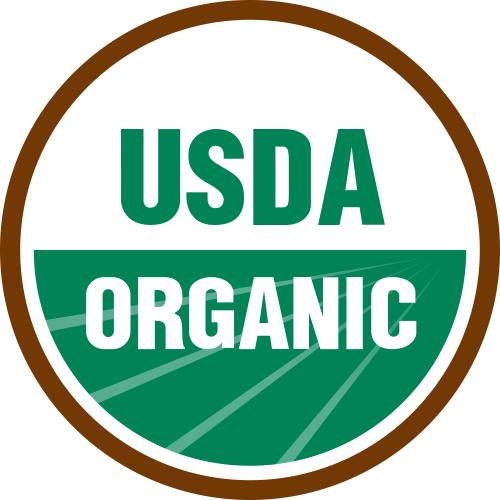
Organically-grown coffee is grown without chemical pesticides or synthetic fertilizers. More than that, to get the USDA Organic label, the farming practices must enrich the soil, improve water quality, and protect the land and wildlife around it.
The USDA has strict regulations that growers and importers must meet during the entire process: from tree seed to cup. But why is the organic label important? To understand, it may be helpful to look at conventional coffee.
A whole lot of chemicals are involved in standard coffee growing. Wide varieties are easy prey for diseases and pests. Unethical growers simply dump toxins on the plant. It’s worse when you consider that most coffee is produced outside of the U.S. While the U.S. has banned many harmful chemicals, many coffee-producing countries still allow them.
You might argue that there may be almost no residue by the time the coffee reaches your lips. But the harm has already been done. These toxic chemicals have devastating effects on the environment. Worse, they also harm the humans involved in growing, harvesting, and processing the coffee cherries.
But there’s more to the organic label than how the plants were grown. USDA Organic coffee must be handled separately from non-organic. This applies not only to the field, but also to the processing, transportation, and roasting of the beans. For instance, roasters must have a roaster that has never held non-organic coffee. So, when you see the organic label, you know that care has been taken in every aspect of the coffee bean’s journey.


Here we’ve compiled a list of what we consider the ten best organic coffee brands. We’ll give a brief overview of each company and the coffee. This can help you decide where you want your hard-earned dollars to go.
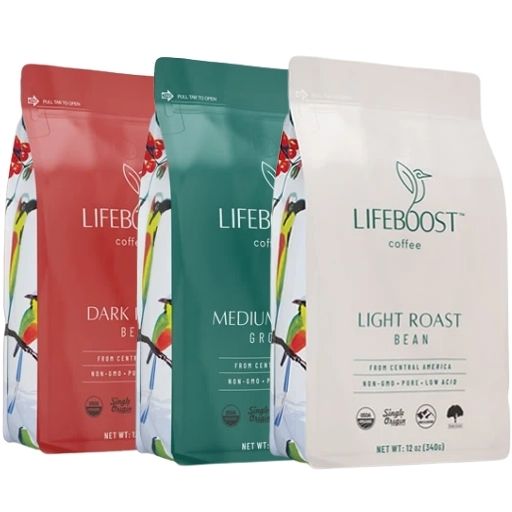
Lifeboost Coffee is positioned as a brand focused on producing cleaner, low-acid coffee. The company states that its coffee is tested by third-party labs for mycotoxins and contaminants. Additionally, it is described as free from pesticides, GMOs, and other synthetic inputs according to the brand.
If you've had to change your coffee habits due to stomach sensitivity, Lifeboost may be worth considering. It offers a low acid that is marketed as being easier on the stomach for some people.
You can choose from light, medium, dark, and espresso roasts, including organic decaf options. The flavor profile is similar to what you would expect from Central American coffees, with a smooth body, balanced acidity, and a clean finish.
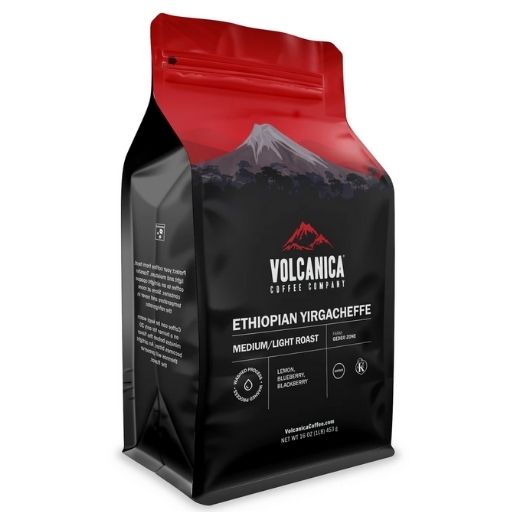
Coffee grown all over the world traces its origin back to Ethiopian wild coffee trees. This Organic Ethiopian Yirgacheffe coffee stays true to those roots with the signature floral and fruity tones the region is known for.
The people at Volcanica travel the world and visit the actual coffee farms where the coffee is grown. The family that owns this business has a long tradition of working with coffee, starting generations ago, harvesting coffee in the Costa Rican mountains. Maybe that's why they value relationships with the growers. And why they insist on fair trade and sustainable farming practices.
Volcanica is also a supporter of charity: water. This non-profit organization raises money to fund clean water projects around the world.
Volcanica offers over a dozen organic coffees. Our pick is this Ethiopian Yirgacheffe. The medium/light roast accentuates the fruity and winey tones. Flavor notes include lemon, blueberry, and blackberry. This coffee is Fairtrade and Kosher Certified.
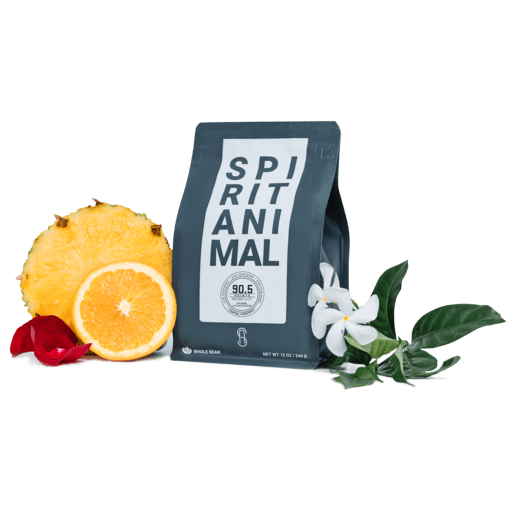
Spirit Animal is an up-and-coming coffee company that focuses on Honduran coffee. The people at this company care about raising the living conditions of the Honduran people. They not only pay a fair price for the coffee, but they also invest their profits into the farms. This helps create sustainable harvests and can also improve the quality of the coffee.
All of Spirit Animal's Coffee comes from micro-lots. Each micro-lot is identified by the grower's name, region, elevation, and processing method. As a result, coffee availability is constantly in flux. But you can be sure that it is always of the highest quality. The company reports that some of its coffees score above 90 points on the Specialty Coffee Association's scale.
Another unique feature of Spirit Animal's coffee is that it is roasted in Honduras and then air-shipped directly to the consumer. Most coffees spend a considerable amount of time in bags shipped by sea to roasters in the U.S. If you know anything about coffee, you know that freshness matters.
The best coffee beans from Spirit Animal are the Catuai and Bourbon. It's a medium to light roast, yet produces a deep, rich cup of coffee with a praline finish. Tasting notes include jasmine, tropical fruit, creamy chocolate, and hazelnut.
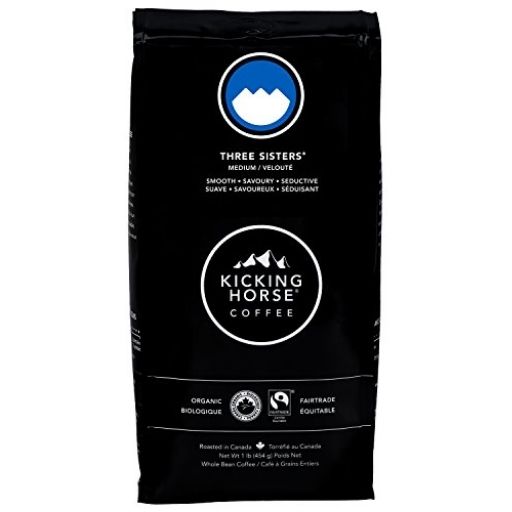
The folks at Kicking Horse started roasting coffee beans 25 years ago. Since then, they moved from a tiny garage to a dedicated facility with a growing staff. Nestled in the Canadian Rockies, Kicking Horse has been named the Best Place to Work in Canada.
As for their coffee, it's all organic, all the time. Kicking Horse Coffee is also 100% Fair Trade arabica beans. They specialize in creating blends that bring out the best in each type of bean.
The name of this coffee comes from a trio of peaks in the Canadian Rockies. The package description of Three Sisters is "Smooth, Savoury, Seductive". We love their sense of humor. As for spelling… as we said, they're Canadian.
In the cup, this is a medium roast. It's actually a blend of light, medium, and dark roasted beans. This brings out the bright nuances of the original bean and the deeper, chocolate tones you get with a dark roast. The beans are from Indonesia and Central and South America.
The sweet, fruity aroma also has hints of coconut and chocolate malt. This blend yields a complex taste with notes of sweet tobacco, stone fruit, and cocoa.
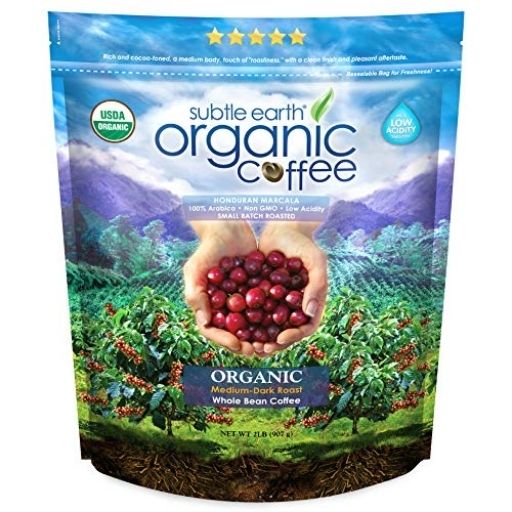
Subtle Earth is the organic line of Don Pablo Coffee Growers and Roasters. All of Don Pablo's coffee is 100% arabica beans shade-grown at high altitude. Don Pablo refined their roasting profiles to bring out the unique character of each batch of beans. The coffee is roasted to order. This guarantees that you receive the freshest coffee possible.
Don Pablo Coffee Growers and Roasters grows, picks, and processes its own coffee beans in Colombia. This company also manages coffee production in South and Central America through its Sharing Certified Program.
You'll find several varieties of organic coffees from this roaster, and we recommend the Medium-Dark Roast. It is Certified Organic by CCOF and is GMO-free.
These organic coffee beans come from the Marcala region of Honduras. The brew has a full, velvety body and bold taste. Flavor notes include milk chocolate, honey, caramel, and cocoa.
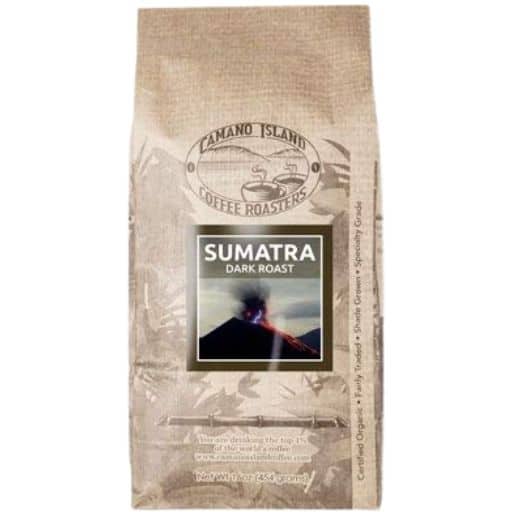
From a small island off the coast of Washington state comes a company that seeks to change the world.
Camano Island Roasters got its start in 2000. It began with the goal of offering the top 1% of coffee beans available. Another goal was to make sure that the people picking the coffee cherries also profited from the high price of specialty coffee. When the founder, Jeff Ericson, learned about Agros International, he saw a way to reach that goal.
For this company, ethically sourcing coffee beans was a priority. That means only purchasing organic beans that were shade-grown. It also means buying only Fairly Traded coffee. Camano Island Roasters' coffee also bears the Specialty Grade Top 1% Arabica seal.
Camano Island Roasters only sells organically grown coffee. Our top pick from this brand is their Sumatra Dark Roast. Sumatra is not known for organic-labeled coffee, so this is one of the few places you'll find it.
The full-bodied brew yields an aroma of dried fruits and nuts. Flavor notes include dried fruit and caramel. You'll also enjoy a lingering sweetness. It's naturally low in acid and has less caffeine than many other coffees.

If you're all about the caffeine, then you need to try Death Wish Coffee. It has about three times the amount of caffeine as regular coffee.
They not only claim to be the strongest coffee in the world but also the strongest coffee in the galaxy! In 2018, Death Wish sent their instant freeze-dried coffee to the Space Station.
Death Wish achieves its high-octane blend by including robusta beans. Rest assured, the Specialty Coffee Association has deemed Death Wish coffee as a specialty roast or gourmet blend. That means it tastes fantastic. The company uses a unique roasting process to achieve a bold coffee that retains its caffeine content.
All of Death Wish's coffee is Fair Trade, USDA Organic, Kosher, and all-natural. While this dark roast has a bold taste, it is not bitter. Flavor notes include cherry and chocolate.
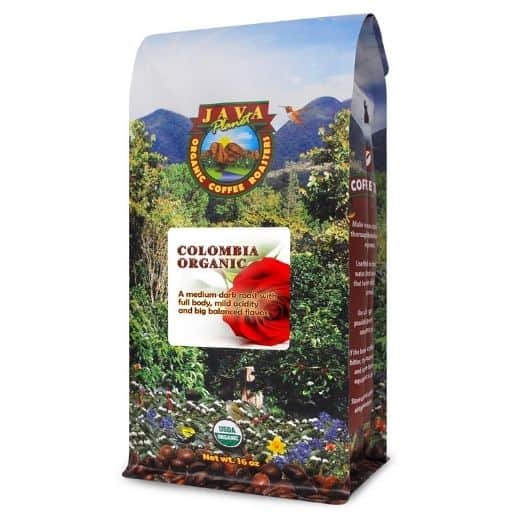
Java Planet Organic Coffee Roasters is a family business that started in 2009. Before that, the founders were hobby-roasters. They learned the trade through trial and error. All of the coffee from this Tampa-based company is organic.
They learned many things when they transitioned from home-roaster to a commercial company. They were surprised by how heavily most coffee crops were treated with chemicals. They realized that this practice was not only harmful to the planet, but it could also harm the people harvesting the crop. Add to that the fact that all these chemicals degrade the flavor of the coffee.
This made the founder's decision easy to only deal with organically grown coffee. They also decided to use 100% arabica beans. To further help the planet, they sought coffee crops that were Fair Trade, Bird Friendly, and/or Rain Forest Alliance certified.
This Colombian medium-dark roast coffee is USDA Organic and Rainforest Alliance certified. The brew boasts the rich flavor and smooth, full body that Colombian coffee is known for. Tasting notes include fruity tones.

Coffee comes from a plant that grows from the ground. Doesn’t that mean all coffee is organic?
The short answer is “no.” When talking about food, the term organic refers to the methods used to grow and process the food. It also refers to what is in the soil. Organic certification also includes looking at the source of the seed and the impact the farm has on the environment around it.
Here, we’ll break down some of the issues surrounding the label “organic” and why it makes a difference when buying coffee.
Standards for organic labeling vary from country to country. For example, the U.S., China, Europe, and Japan all have their own regulatory agencies with different rules. But there are several common factors.
In general, organic farms never use chemical pesticides or synthetic fertilizers. Other provisions include restricting antibiotics, a ban on genetically modified organisms (GMOs), and regular crop rotation.
For our purpose, we’re mainly talking about USDA certification. If you’re interested, the USDA has a detailed Organic 101 series. There’s a lot to it, but we’ll highlight some key points.
The USDA has a long list of allowed and prohibited substances. This doesn’t just apply to the current crop. The soil must be free of prohibited substances for at least three years before certification. Farmers must keep meticulous records, and farms are inspected annually to ensure compliance.
The USDA designates accredited agencies to do the actual certifications. They have about 80 accredited agencies. These agencies can certify farms anywhere in the world. That’s how coffee from places like Sumatra or Colombia can be USDA certified. The growers can choose to work with whichever agency they choose.
Growing organically is much more labor-intensive. And not only for the people in the field. Growers have to deal with a lot of paperwork and keep detailed records. The process of certification starts with the grower creating an organic system plan.
This plan covers tilling, grazing, harvesting, storage, and transportation of the crop. It also includes details about record-keeping, as well as how farmers handle fertilization and pest control. Growers must also have a plan for keeping non-organic products and substances away from organic crops and soil.
The process of organic certification comes with fees. And this is not a one-and-done project. The farm is inspected and re-certified annually. That’s not cheap either.
Of course, the labor in the field is intensive. Workers have to weed the crops, apply compost, and control insects. On top of that, when you’re not pumping chemical fertilizer in, the crops grow more slowly and often have a lower yield. The risk of loss is also higher. You can think of it like someone bulking up on steroids versus healthy eating and workouts.
Processing and transportation of organic crops also cost more. You have to constantly guard against cross-contamination. This includes little things like the containers used for harvesting the crop and sacks used to ship the product.
We could go on and on. In the end, we feel that organic products are worth the expense. Our opinion is that buying organic coffee brands is better for the earth, the growers, and your body.
Unfortunately, the organic label does not cover everything. For instance, it does not deal with wages or how workers are treated. While it does cover some sustainable practices, other certifications go much further.
We know you care about the ethical treatment of farmworkers and protection for the environment. Here are some certifications that have strict standards for coffee growers.
The Bird-Friendly certification from the Smithsonian goes a long way to conserving bird habitat through strict shade-grown standards. The Rainforest Alliance covers environmental protection, but also covers community relations and fair treatment of workers.
Other organizations also deal with the treatment and pay of laborers, as well as how the companies interact with the larger community. You can check out Fair Trade, Fairtrade, Direct Trade, and Equal Exchange certification.

Many people choose organic because they don’t want pesticides or other toxic chemicals in their food. Others choose it because it’s healthier for the planet. Regardless of what is most important to you, organically-grown coffee does offer benefits that conventionally grown and processed coffee does not.
Ever wonder what exactly you’re getting with that morning cup of coffee? In conventional farming, coffee is sometimes associated with the use of pesticides, though practices vary widely by region and producer. Research suggests that residue levels in brewed coffee are generally low. Still, some consumers choose organic coffee as a way to support certain farming practices and reduce potential exposure.
Heavy use of pesticides and other toxic chemicals on plants does harm to farmers and laborers. One study looked at the workers on a coffee plantation in the Dominican Republic. It showed that workers exposed to pesticides showed “impaired well-being” as well as a higher risk of cancer.
And those chemicals also affect the well-being of the environment and the community around the plantations. Choosing certified coffee may support better working conditions for farmers and their communities. For many buyers, that can be a meaningful benefit alongside the price difference.
You may know that drinking coffee can reduce the risk of certain cancers. It can also reduce the risk of diabetes and liver disease and protect against Parkinson’s disease. These benefits mainly come from flavonoids, a type of antioxidant. How do organic coffees compare in these benefits versus conventional?
Organically grown coffee has more of many antioxidants than conventionally grown coffee. This is not just speculation. A study published in 2019 showed that organically-grown coffee has a higher content of phenolic acids as well as flavonoids.
Some research suggests that organically grown coffee may contain higher levels of certain antioxidants, though overall health benefits depend on factors like roast, origin, and consumption habits.
We hope you understand a little more about what organic means when it comes to coffee. But there are still so many choices. Here, we’ll detail our favorites.
Our top pick for the best organic coffee is Lifeboost. If you’re buying organic with a focus on cleaner sourcing, Lifeboost is a strong option. The company conducts testing to check for contaminants and maintain quality standards.
We also decided to give a category to the best coffee beans from Ethiopia. That honor goes to Volcanica Organic Ethiopian Yirgacheffe Coffee. This coffee stays true to the coffee heritage. We also love how they treat people. They actually visit the growers and develop relationships with them. That helps them know that the earth, the workers, and the product are all treated right.
Finally, we wanted to give a shout-out to the best Honduran coffee. They may be new on the scene, but Spirit Animal is definitely worth a look. The company’s focus on helping the people of Honduras won us over. Also, they produce a tasty and satisfying cup of coffee. We bestow the honor of best Honduran coffee on their Catuai and Bourbon.
In the end, we stand behind all the coffees on this list. Everyone has their personal preference. If you love the deep, rich flavor of a Sumatran, then go with that. Regardless of which one you choose, rest easy knowing that you’re making a positive step towards a better you and a better world.
Organic coffee may contain fewer synthetic pesticide residues and, according to some studies, can have slightly higher levels of certain antioxidants. However, the overall health impact depends more on factors like coffee quality, roast level, and consumption habits.
Not necessarily. Organic certification relates to how coffee is grown, not how it tastes. Flavor depends on origin, processing, roast profile, and freshness. Many organic coffees are high quality, but certification alone does not guarantee better taste.
USDA Organic certification means the coffee was grown without synthetic pesticides, fertilizers, or GMOs, and that strict standards were followed during processing and handling. Farms are inspected regularly to maintain certification.
Organic coffee is grown without synthetic pesticides, but it may still involve natural pest control methods. While trace exposure in brewed coffee is generally considered low, some consumers prefer organic options to reduce potential exposure.
For many buyers, yes. Organic coffee often reflects more labor-intensive farming, certification costs, and lower yields. It may also support environmental practices and certain farming standards, which some consumers value.
Look beyond the organic label. Consider origin, roast date, processing method, and whether the coffee is specialty grade. Freshness and sourcing transparency usually matter more than certification alone.
Not always. Acidity depends mainly on origin and roast level, not certification. Some brands market low-acid organic coffee, but this is a product characteristic rather than a result of being organic.
The best place to buy organic coffee is directly from specialty coffee roasters or trusted coffee shops. Buying from roasters ensures better freshness, clear roast dates, and more transparency about sourcing and certifications. Specialty coffee shops and online retailers that focus on high-quality beans are also a good option, as they typically curate fresher and better-sourced coffees than most supermarkets.