
fbq('trackCustom', 'view_shop_coffee'); var trackEvent = 'shop_coffee'; figure.wp-block-image.size-full.is-mobile-50p { box-shadow: none!important; } .pros-cons { position:relative; float:left;…
The strongest coffee is typically made from robusta (canephora) beans, which naturally contain significantly more caffeine than arabica. However, high caffeine alone doesn’t guarantee a great experience — the best, strongest coffee combines power with balance, delivering energy without overwhelming bitterness.
In this guide, we review the strongest coffee brands available in the United States, explain what actually makes coffee strong, and help you choose the right option based on your taste and caffeine needs.
Well, well, well. So, you just ordered a double espresso. But wait, it doesn’t pick you up as you expected. You ask the barista: “Is this decaf? Can I have some very high caffeine coffee?”
Perhaps we’ve all been there, needing an extra dose of caffeine and wondering what went wrong with our usual morning, midday, or afternoon drink. The answer is simple: the variables. We need to take into consideration some other factors that determine the amount of caffeine that’s in your coffee. And yes, we’ll also crown the world’s strongest coffee.
One thing I can promise you, as we talk about high caffeine coffee, it’ll be “eye-opening”.
For this guide, we reviewed high-caffeine coffees available in the United States, ranging from specialty robusta and conilon-based beans to widely available strong blends and commercial options.
Each coffee was evaluated based on caffeine potential, bean composition, roasting approach, flavor balance, brewing performance, and real-world availability.
We regularly update this guide to reflect changes in availability, product quality, and emerging trends in high-caffeine coffee.
Instead of ranking coffees purely by personal preference, this guide focuses on reliable options across different use cases — whether you’re looking for a strong daily brew, a high-caffeine espresso, or a balanced but powerful cup that actually delivers the energy you expect.
Strong coffee means different things to different people. Some think of bold, bitter flavor, while others are looking for high caffeine. In this guide, we focused on both high caffeine and a balanced, drinkable taste.
We reviewed strong coffee options available on the market and selected those that actually deliver a noticeable energy boost while still being enjoyable to drink. Here’s what we looked at:
Everything starts with the bean. We prioritized coffees made from naturally high caffeine varieties, primarily canephora, including robusta and Brazilian conilon. These beans can contain significantly more caffeine than arabica, which is why they are commonly used in truly strong coffee.
At the same time, strong coffee is not always 100% robusta.
In many cases, it comes in the form of blends, where robusta provides the caffeine, and arabica adds balance and smoothness to the flavor. This approach allows producers to create coffee that feels strong but remains comfortable to drink on a daily basis.
That’s why in this guide you’ll see both pure robusta options and blends, depending on how each brand approaches strength and flavor.
Strong coffee doesn’t have to be harsh or unpleasant. We selected options that deliver intensity while still tasting smooth and well-balanced. Modern fine robusta and well-crafted blends show that strong coffee can also be clean, approachable, and even slightly sweet.
Roast level affects how strong coffee tastes, but not always how much caffeine it contains. We included a range of roast profiles and focused on coffees that combine perceived strength with actual caffeine impact in the cup.
Not all robusta is the same, and it makes a big difference. Lower-grade beans can taste rough and one-dimensional, while higher-quality robusta and conilon are processed with much more care. We prioritized coffees that produce a cleaner cup with better sweetness and less bitterness.
Not all strong coffee is the same. Some coffees are built for pure caffeine. Others try to balance strength with taste. The best option depends on what you actually want from your cup.
Let’s break it down.
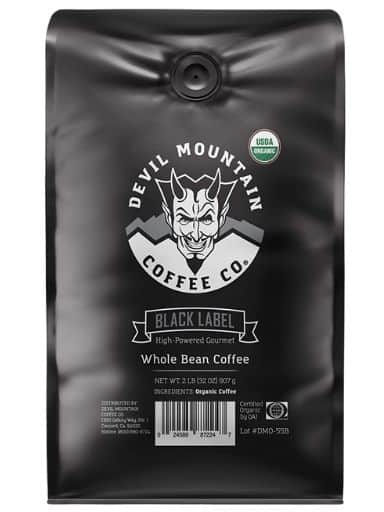
Black Label stands out for one reason: extremely high caffeine. Unlike many brands that claim to be the strongest, this one actually delivers, with caffeine levels far above average.
That said, this coffee is built for intensity, not complexity. The exact blend isn’t disclosed, but it is clearly designed to maximize caffeine rather than highlight origin or flavor clarity. The dark roast helps smooth out the profile, keeping it bold and relatively drinkable for its category.
If your goal is maximum energy, Black Label does the job. If you are looking for flavor, there are better options.
Congratulations!
If you want strong coffee that still tastes good, this is where you should start. These coffees usually combine arabica and robusta to deliver both caffeine and balance. Good options include:
If your goal is maximum caffeine, there’s no workaround. You need robusta. Unlike arabica, canephora (robusta) naturally contains much more caffeine, which makes it the foundation of truly strong coffee.
This is where strong coffee is starting to change. Brazilian conilon is a type of canephora that offers high caffeine, but with a smoother and more balanced taste than traditional robusta. It’s still an emerging category, but it’s one of the most interesting developments in strong coffee right now.
If you’re just looking for a strong caffeine boost without overthinking it, these coffees do the job.
If you’re trying to make your coffee stronger, the key difference doesn’t come from the roast or the brew method. It starts with the bean. Most coffee comes from two species: arabica and canephora.
The canephora group includes different varieties, such as robusta and Brazilian conilon. In everyday language, “robusta” is often used as a general term for the whole group, although technically it’s just one type. What really matters is this: canephora beans naturally contain significantly more caffeine than arabica, often close to twice as much. That’s why they’re used when you want truly strong coffee.
Robusta is the most widely grown type of canephora, especially in countries like Vietnam and India. It’s known for its high caffeine content, heavy body, and bold, intense flavor. For a long time, robusta was associated with harsh bitterness, and in many lower-quality coffees, that’s still true. But quality is improving, and with better processing, robusta can produce a much cleaner and more interesting cup than many people expect.
Conilon is the Brazilian variety of canephora, mainly grown in Espírito Santo. Compared to traditional robusta, it’s often smoother and more balanced, with less aggressive bitterness while still delivering strong caffeine levels. This makes it a good middle ground between strength and drinkability, which is why conilon is increasingly used in modern blends and espresso-focused coffees.
A newer generation of canephora is coming from Brazil’s Amazon region, especially Rondônia. Producers here are focusing on better processing, including controlled fermentation and more precise handling of the beans. The result is a cleaner, more refined cup with less harshness. Many of these coffees fall into the fine robusta category, where strength and flavor are developed together rather than competing with each other.
In many cases, roasters don’t use canephora on its own. Instead, they blend it with arabica to balance strength and flavor. Canephora brings caffeine, body, and intensity, while arabica adds sweetness, acidity, and more complex flavor notes. The result is a coffee that still delivers a strong kick but feels more balanced and enjoyable for everyday drinking.
With all that information, we are well-equipped to go in quest of the world’s strongest coffee. Don’t be surprised or afraid because of some of their names, such as Biohazard, Death Wish, Killer, or Shock. Let’s see if they live up to their hype or if we survive.
When I think read this label, the other popular “Black Label” comes to mind. Yet, the effects are totally different. 12 oz of Black Label contain 1,555 mg of caffeine. That’s insane! To put it in perspective, that’s almost the equivalent of 6 cups of 12 oz of regular everyday coffee.
They don’t say much about the source of the coffee. However, because they claim is high altitude, volcanic beans, it’s assumed they mean Arabica. Robusta grows in flat terrain below 3000 ft altitude. Another reason for its smoothness, despite the dangerously high caffeine content.
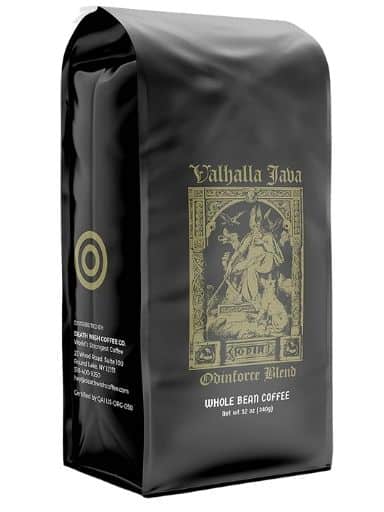
Another product by the Death Wish people. They blend Arabica and Robusta Fair Trade organic beans from Indonesia and South America. It’s a medium-dark roast with a nutty, chocolaty flavor. It’s not as potent as the super coffees, only 608 mg of caffeine per 12 oz cup of coffee. I can’t believe I said “only.”
Valhalla Java was created for rock’s guitarist Zakk Wylde. After going sober, he switched from beer to coffee. Just to paraphrase him, ‘he traded one addiction for another.’
A cup of this would have me blogging all day and night.
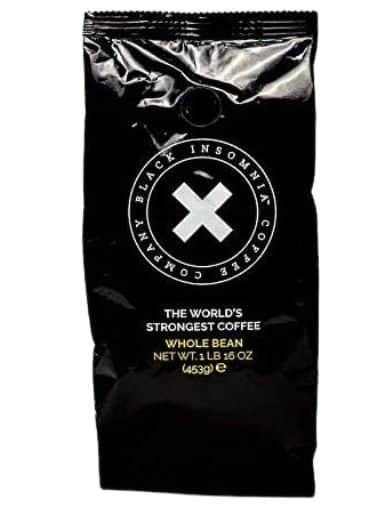
After having a cup of this coffee, I’m pretty sure you won’t sleep. At some point, Black Insomnia was the world’s strongest coffee. So far, they all have claimed the crown. Although not as strong as its predecessor, in this review, a 12 oz cup contains 1,105 mg. That’s enough to wake me up for 3 days. They blend their beans and source them specifically for their caffeine content and flavor. They achieve a distinct flavor and aroma.
One thing they claim to do good, is the roasting process. Roasting is key in preserving the correct amount of caffeine. Too hot and it cooks away.
If you’re still not jumping and running, after ingesting a cup of this, then just follow their recipe that calls for a 1:4 ratio. That’s 1 tsp per 4 oz of water.
You can also enjoy this blend in hazelnut, caramel and macadamia aromas.
Just be careful who you shake hands with. They might get a high instantly.
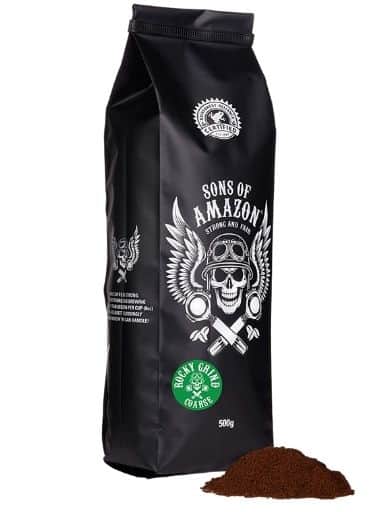
They warn you. “Don’t drink, if you want to sleep!” This blend of coffee is the UK’s strongest coffee. I guess the math changes here. An 8 oz cup of this coffee contains 440 mg of caffeine. 12 oz, equal 660 mg of caffeine. Quite the smack!
Most consumers praise its smooth taste. Although containing so much caffeine, it’s so smooth that it’s deceiving. One customer, drank a whole Thermos of this coffee and started to feel symptoms he confused with COVID-19. He took lightly the claim of it being “UK’s strongest coffee.” The silky and smooth crema doesn’t dance alone.
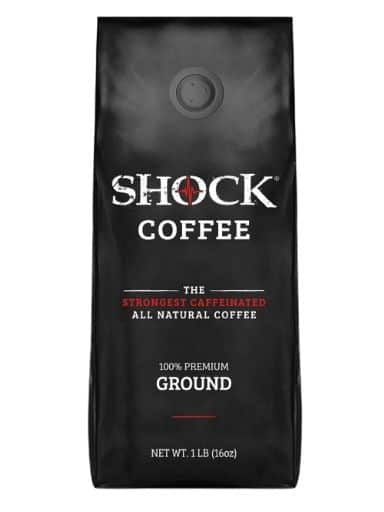
This is a favorite of soldiers around the world. A 12 oz cup of Shock Coffee will kick you 320 mg dose of caffeine. We’ve mentioned already some large numbers that 320 mg sound tiny. That amount is way above average. Maybe the balanced between the two varieties of beans plays into the popularity of this brand. Additionally, they use a modern method of roasting that retains more flavor and aroma. When you mix the right ratio of Arabica and Robusta, and the right color profile, you satisfy your mind and your taste buds. Add caffeine, and what else is there to desire?
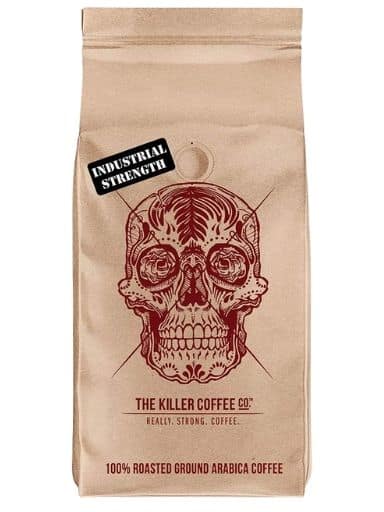
We keep encountering danger in our quest for seriously high caffeinated coffee. Killer Coffee, popular in Australia and New Zealand is 100 percent Arabica beans. This dark roast concentrates a dose of 53.2 mg for every fluid ounce. Using our 12 oz example, one cup this size packs a caffeine punch of 638.4 mg.
If you are like me, 3 cups is perhaps your minimum daily intake. Six cups could really kill you, no pun intended, all jokes aside.
(We’ll get to safety very soon.)
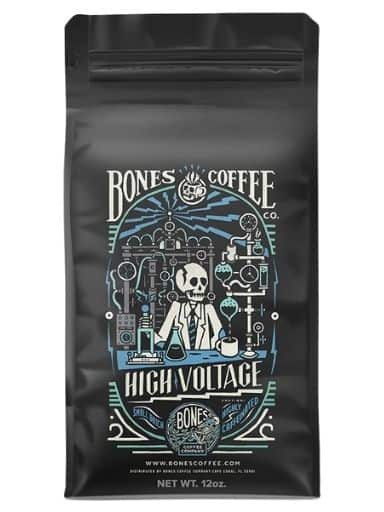
This coffee does not make any outrageous claim about its caffeine content. Twice as much any regular dark roast. They roast in small batches to ensure a good concentration ratio of flavor to caffeine. Available ground or in beans. Its smooth bold taste makes your morning a delight. Want an enhanced experience? Try the Maple bacon Coffee. Blended Arabica and Robusta with a twist.
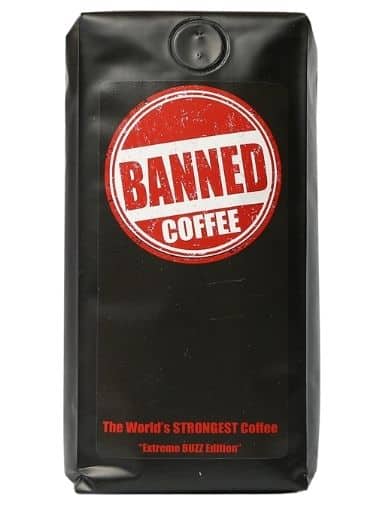
Our last coffee also claims to be the strongest coffee in the world. That’s probably in another unexplained sense. At 474 mg of caffeine per 12oz cup, it’s strong but that the strongest. Many people found it smooth, a bit on the bland side. It claims to be the source of natural vitamins and antioxidants, but that’s true of coffee in general. One thing I agree with, is their philosophy, that instead of drinking energy drinks, you should try their coffee. Try any naturally, caffeinated coffee, as a pick me up. Although not the strongest, this mild dark blend, will do just that. Believe me, someone out there won’t sleep.
Strong coffee isn’t just about “bitter and powerful” anymore. The whole category is evolving, and a big part of that comes from how we’re starting to look at canephora differently.
Rise of fine robusta
Fine robusta is changing the game. It naturally has more soluble compounds, which means a heavier body and a more насыщенный cup. Yes, it can get intense fast, but with the right extraction, it’s not about harshness. It’s about depth and balance.
Brazil Conilon
Brazilian conilon is a great example of this shift. It still delivers that strong kick, but in a cleaner and more controlled way. It’s not just “coffee for caffeine” anymore. It’s something you can actually choose for its profile, especially in espresso and blends.
Better processing and roasting
Canephora needs a different approach. The beans are denser and harder to heat through, and if the roast is off, the flavor doesn’t come through properly. But processing and roasting have improved a lot. Now we’re seeing cleaner, more defined cups from robusta.
What’s changing overall
Climate is quietly reshaping coffee. Arabica is becoming harder to grow in many regions, while canephora proves to be more resilient and easier to manage. This shift is already influencing what ends up in your cup.And here’s the key idea: robusta doesn’t need to taste like arabica. It’s not better or worse — it’s simply different.
Once you stop comparing them, strong coffee starts to feel different too. It’s no longer just something you drink for the effect, but something you can genuinely enjoy — both for its taste and for the energy it gives you.
When choosing strong coffee, it’s important to look beyond just bold taste. Strength can mean either intensity of flavor or caffeine content, and those are not always the same.
The key factor is the type of bean. Robusta (canephora) delivers more caffeine, while arabica–robusta blends offer a balance between strength and flavor. The right choice depends on your goal — maximum energy or a more balanced, enjoyable cup.
Roast level, grind size, and brew method also influence how strong the coffee feels in the cup.
The strongest coffee usually comes from canephora beans, such as robusta or Brazilian conilon. They naturally contain significantly more caffeine than arabica, which makes them the best choice for high-caffeine coffee.
Not in terms of caffeine. Dark roast tastes bolder and more intense, but lighter and medium roasts often retain slightly more caffeine. The difference is small, but noticeable.
If your goal is maximum caffeine, yes. However, many people prefer arabica–robusta blends because they offer a better balance between strength and flavor.
Bitterness usually comes from lower-quality beans or over-extraction during brewing. High-quality robusta and well-balanced blends can be strong without being harsh or unpleasant.
Espresso delivers the most concentrated experience per sip, but per cup, it usually contains less caffeine than other methods. Brewing methods like French press or strong drip coffee extract more caffeine due to longer contact with water and larger serving size.
Turkish coffee (cezve) is also very intense. Its extremely fine grind and full immersion without filtration create a dense, rich cup.
In general, the longer coffee interacts with water, the more caffeine is extracted into the cup. That’s why “strength” can mean either intensity of flavor or total caffeine content.
No. Modern processing methods, especially for fine robusta and conilon, allow strong coffee to be cleaner, smoother, and more balanced than traditional expectations.