
Decaf coffee is regular coffee made from beans that have had most of their caffeine removed. In the United States, decaf must have at least 97% of its caffeine removed to be labeled as decaffeinated. It still contains a small residual amount, usually around 2 to 15 mg per cup, but the taste and daily ritual remain familiar. With modern decaffeination methods, much of the original flavor can be preserved surprisingly well.
In the 2010s, decaf had a pretty strong stigma in parts of the coffee world. It was often treated as “second tier,” and some cafés even sold merch with slogans like “death before decaf.” That attitude still exists among a few coffee professionals today.
But my experience has been very different. Good decaf can taste genuinely excellent. In this guide, I’m sharing what I know about modern decaffeination, breaking down the main methods, and tasting several decaf coffees made using different processes to compare how they perform in the cup.
Welcome to the world of specialty decaf.
Most people drink coffee for two reasons: they like the taste, and they like the boost of energy they get from the caffeine kick in every cup. So intertwined are these reasons for buying, making, and drinking coffee that it fuels the entire industry. Not only does the idea of decaf coffee seem pointless, but it’s often downright degraded by a significant number of coffee-lovers.
Caffeine itself is simply a natural alkaloid. It’s found not only in coffee, but also in tea, cocoa, yerba mate, guarana, and kola nuts. In the plant world, caffeine acts as a built-in defense system. It helps deter insects that feed on leaves and can sometimes play a role in pollination.
For humans, caffeine is most famous for its effects on the central nervous system. It can increase alertness, improve focus, support mental clarity, and even lift your mood a little, which is exactly why coffee has become a daily ritual for so many people.
But more caffeine doesn’t automatically mean a better experience. For many adults, daily intake above about 400 mg, roughly three to four cups of coffee, can lead to unwanted side effects. These include elevated blood pressure, a racing heartbeat, headaches or migraines, and jittery hands. People who are sensitive to caffeine may notice these effects at much lower doses. The same is true for those with cardiovascular conditions, pregnant women, and children, for whom limiting or avoiding caffeine is often recommended.
That’s where decaf coffee makes perfect sense. There’s nothing “wrong” with drinking coffee without caffeine. In fact, for some coffee lovers, decaf is the only way to keep enjoying their favorite drink without paying the price afterward.
One of the most common reasons people choose decaf is health-related. Stimulants, including caffeine, can aggravate certain conditions. If you have heart issues, for example, you may need to be more cautious about how much caffeine you consume, even if you still love the taste and ritual of coffee.
Other people choose decaf for more everyday reasons. Many coffee drinkers enjoy the comfort and flavor of their usual cup later in the day. Decaf makes it possible to enjoy that familiar taste in the evening without disrupting sleep.
At the end of the day, coffee should be enjoyable, not stressful. If switching to decaf, either fully or partially, helps you feel better, sleep better, or simply enjoy coffee on your own terms, then it’s a smart move rather than a compromise.

When we talk about coffee without caffeine, it’s important to understand the differences in terminology. Not everything that “doesn’t give you a buzz” qualifies as decaf in the traditional sense. Here are the main categories:
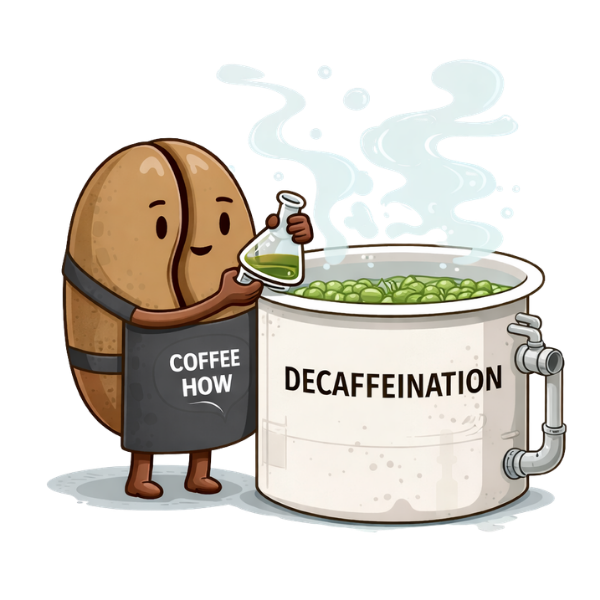
Decaffeination is the process of removing caffeine from green (unroasted) coffee beans. During this process, producers try to preserve the bean’s natural flavor and aroma as much as possible.
In the United States, for coffee to be officially labeled as decaffeinated, it must have at least 97% of its caffeine removed compared to the original green coffee bean content. This standard is recognized by the National Coffee Association and aligned with FDA regulations.
In the European Union, the standard is even stricter: decaf coffee must contain no more than 0.1% caffeine by weight in roasted coffee beans.
In real numbers, even after decaffeination, coffee still contains some residual caffeine, typically between 2 and 15 mg per 8-oz cup (240 ml), depending on the beans and the process used. For comparison, a regular cup of coffee contains about 80 to 120 mg of caffeine. So while decaf isn’t completely caffeine-free, the reduction is significant enough to make it a gentler choice for most people.
In the United States, caffeine content is typically measured in accredited food testing laboratories, university research facilities, and sometimes directly by large coffee producers. The most common method used is High-Performance Liquid Chromatography (HPLC), known for its accuracy and reliability. These tests are conducted for quality control, scientific research, or at the request of brands working with decaf or specialty coffee.
Lab results can show the exact amount of caffeine in a coffee sample, either per gram or per cup, helping producers and consumers better understand what they are drinking.
Coffee is decaffeinated while the beans are still green, before roasting. The goal is simple: remove most of the caffeine while keeping as much of the coffee’s original flavor as possible.
Today, several commercial decaffeination methods are used. Some rely on water and filtration, while others use carefully controlled solvents or advanced extraction techniques. All of them remove caffeine effectively, but they differ in cost, scale, and how they can influence the final cup.
The most common approaches include:
The ethyl acetate (EA) process is a classic solvent-based decaffeination method widely used in specialty coffee, particularly in Colombia. Because ethyl acetate can be derived from sugarcane byproducts such as molasses, it’s often referred to as the “sugarcane” process.
During processing, the beans are gently steamed to open their structure, then washed with ethyl acetate, which binds to caffeine and removes it while leaving most flavor compounds intact. The beans are then steamed again to remove any remaining solvent.
This method typically removes around 97% of caffeine while preserving much of the coffee’s original character, making it one of the most practical ways to produce high-quality decaf at scale.
In water-based decaffeination, caffeine is removed through controlled extraction rather than chemical solvents. The beans are soaked so soluble compounds dissolve into the water, and the caffeine is then removed from the liquid using carbon filtration. This caffeine-free extract, still rich in coffee solubles, is used to process fresh beans. Because the liquid is already saturated with flavor compounds, the main substance that continues to move out of the beans is caffeine, helping the coffee retain much of its original character.
The most widely known example of this approach is the Swiss Water Process. Despite the name, it’s carried out in Canada. The method can remove up to about 99.9% of caffeine without chemical solvents while preserving much of the coffee’s flavor structure, which is why it remains one of the most recognized solvent-free decaffeination methods in specialty coffee.
In the CO₂ method, caffeine is removed using pressurized carbon dioxide rather than water or chemical solvents. In its supercritical state, CO₂ can penetrate the beans efficiently and selectively dissolve caffeine while leaving most other compounds in place.
After extraction, the caffeine is separated, and the CO₂ is recycled for reuse. The method is known for effective caffeine removal with relatively low flavor impact, but its high equipment and operating costs mean it’s used less often in specialty coffee.
Below is a quick comparison of the main decaffeination methods.
Swipe → to see the full table on mobile
| Method | Solvent Used | Process Purity | Notes |
|---|---|---|---|
| Swiss Water | None | ★★★★☆ | Transparent, standardized process developed in Canada. Uses water and activated carbon filtration to remove caffeine. |
| Mountain Water | None | ★★★★☆ | Similar in principle to Swiss Water. Most commonly used by DESCAMEX in Mexico for specialty decaf coffees. |
| CO₂ (Supercritical) | None | ★★★★★ | Rare and expensive method used on an industrial scale. Processing facilities are located in Germany, the Netherlands, the USA, South Korea, and Japan. |
| EA / Sugarcane | Natural (Ethyl Acetate) | ★★★☆☆ | The most accessible and widely used decaffeination method. Common for espresso-style decaf and predominantly used in Colombia. |
Want to understand how decaf is actually made?
Read our deep dive into decaffeination methods.
When it comes to taste, coffee is subjective… right? For a long time, though, one opinion felt almost universal: early decaf simply didn’t taste as good as “regular” coffee. And that was true even when producers claimed the decaffeination process didn’t really change the flavor.
To be fair, some of that reputation may have been psychological. For many people, the pleasure of coffee is tied to the caffeine kick, so when the buzz is missing, the cup can feel less satisfying, even if the flavors are actually there.
But modern decaf has come a long way. Today’s best decaf combines safer, more precise processing with higher-quality green coffee, and the result can be surprisingly close to the real thing.
In fact, there are even examples where decaf was served blind and performed far better than most people would expect. A well-known story comes from the Golden Bean World Series in Hawaii, where a decaffeinated coffee was submitted without judges knowing it was decaf and still placed in the top 10 among more than 50 specialty entries.
And it’s not just one competition. In 2024, Weihong Zhang won the U.S. Brewers Cup using a decaffeinated coffee, showing just how far decaf quality has come in the specialty world.
So yes, decaf used to be the “sad version” of coffee. But today, it can be genuinely excellent. Sometimes, the biggest difference is simply what you expect to taste.
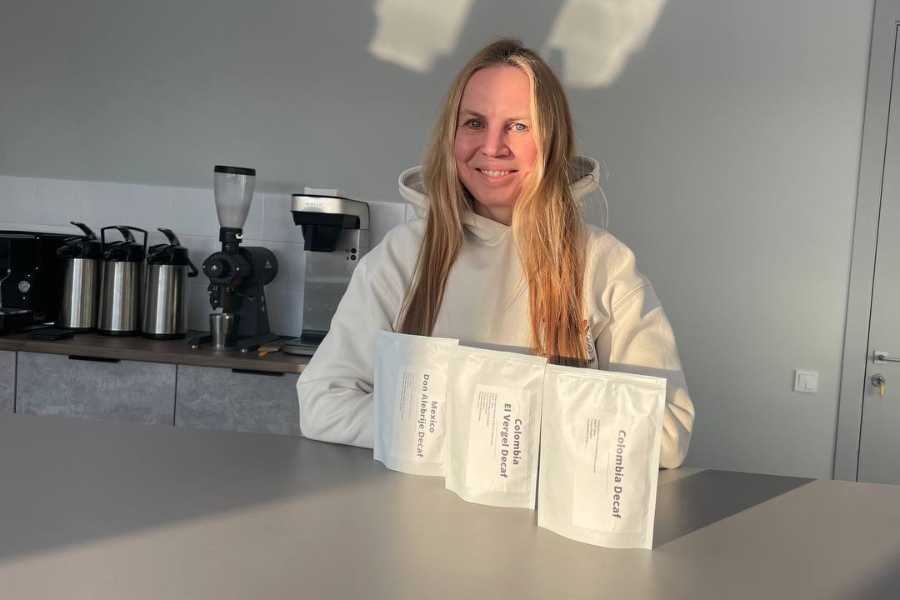
To understand how decaffeinated coffee actually performs in the cup, I conducted a focused tasting of several decaf lots brewed as both espresso and V60. The goal was not to find “the best” coffee, but to see how different origins and decaffeination methods show themselves in real brewing conditions.
The results were far more convincing than expected. Some coffees were clean and sweet, while others showed noticeable depth and complexity. One lot delivered a rich, layered cup with almost cognac-like notes, while another felt soft, balanced, and easy to enjoy even in the evening.
What stood out most was how different decaf coffees can be from one another, both compared to regular coffee and within the decaf category itself.
I documented the full tasting process, brewing methods, and detailed impressions in my full decaf tasting notes, where I compared different decaf coffees side by side.
Roast level does not “add” caffeine back into decaf, and it doesn’t turn decaf into regular coffee. The difference is mostly in taste and roast development, not in caffeine content.
That said, decaffeinated beans often behave differently in the roaster. Many decaf coffees are easier to overdevelop, and they can show surface oils sooner than regular beans. Because of that, decaf sometimes looks darker on the outside, even when the inside roast development is more moderate. If you grind regular coffee and decaf and compare them with precise color measurements, the difference is often smaller than it looks in whole-bean form.
When it comes to flavor, roast level matters. Lighter roasts rely more on the bean’s original chemistry, and since decaffeinated coffee isn’t chemically identical to the original green coffee, the cup can taste a bit different. Not worse, just different.
Darker roasts, on the other hand, build more of their flavor during roasting itself. That’s one reason many people find dark-roast decaf tastes closer to the classic “regular coffee” profile, and it often works especially well for decaf espresso.
The tricky part is execution. Decaf reacts differently under heat, and it’s easier to flatten the cup if the roast profile isn’t dialed in. That’s why the best decaf usually comes from roasters who understand how decaf behaves and roast it intentionally, not as an afterthought.
Bottom line: if you want decaf that still tastes like real coffee, choose a roaster who takes decaf roasting seriously and has consistent roast profiles for it.
Most decaf coffees on the market are blends, and that’s not a bad thing. Blends give roasters more control over balance, body, and sweetness, which can be especially helpful when working with decaffeinated beans.
Single-origin decafs do exist, too, but they can be a little more “transparent.” Since there’s only one origin and one flavor profile, any changes from the decaf process may be easier to notice, especially in lighter roasts.
If you prefer single-origin decaf, starting with a medium to dark roast can be a great choice. It usually brings out more caramelized sweetness and classic comfort notes, which often works really well in decaf.
Yes. Decaf is not caffeine-free. It simply contains much less caffeine than regular coffee, which is why it feels gentler for most people.
A typical 8 oz (240 ml) cup of decaf contains about 2 to 15 mg of caffeine. Regular coffee is usually around 80 to 120 mg per cup, depending on the beans and how it’s brewed.
It can, especially if you are very sensitive to caffeine or drink multiple cups. Even small amounts can affect sleep for some people, so it’s worth paying attention to your own response.
No. Modern decaf can taste genuinely great and surprisingly close to regular coffee. In real life, the flavor of decaf depends far more on green coffee quality and roasting than on the decaffeination method itself.
Most people prefer medium to dark roast decaf for espresso, because it tends to feel sweeter, fuller, and more “classic” in milk drinks. A well-roasted decaf blend is often the safest choice for consistent results.
Decaf is regular coffee that has gone through a process to remove most of its caffeine. Low-caf usually refers to naturally low-caffeine varieties, where the lower caffeine level is part of the plant genetics rather than the result of processing.
Swiss Water is a solvent-free method that uses water and carbon filtration, which some people prefer for peace of mind. But from a health perspective, the biggest difference for most drinkers is simply consuming less caffeine overall.
When it is used in regulated commercial decaffeination, the remaining trace residue is tightly limited and considered very low. If you prefer to avoid solvent-based methods entirely, Swiss Water or Mountain Water decaf can be an easy alternative.
Many people choose decaf during pregnancy to reduce caffeine intake. If you are pregnant or managing a medical condition, it’s best to follow your doctor’s guidance and treat decaf as low-caffeine, not caffeine-free.
It depends on the coffee and roast, not only the fact that it is decaf. Some people find decaf gentler, while others still get acidity symptoms. If acidity is an issue, trying darker roasts and lower-acid origins is usually a good starting point.
Explore our guides and research articles about decaf coffee.
