Naturally Low-Caffeine Coffee: Laurina, Aramosa and Other Rare Varieties
Low-caffeine coffee differs from decaf. Explore rare coffee varieties with naturally less caffeine and how they compare to decaffeinated coffee.

Written from hands-on coffee experience and checked against our editorial standards. Editorial policy · Research sources
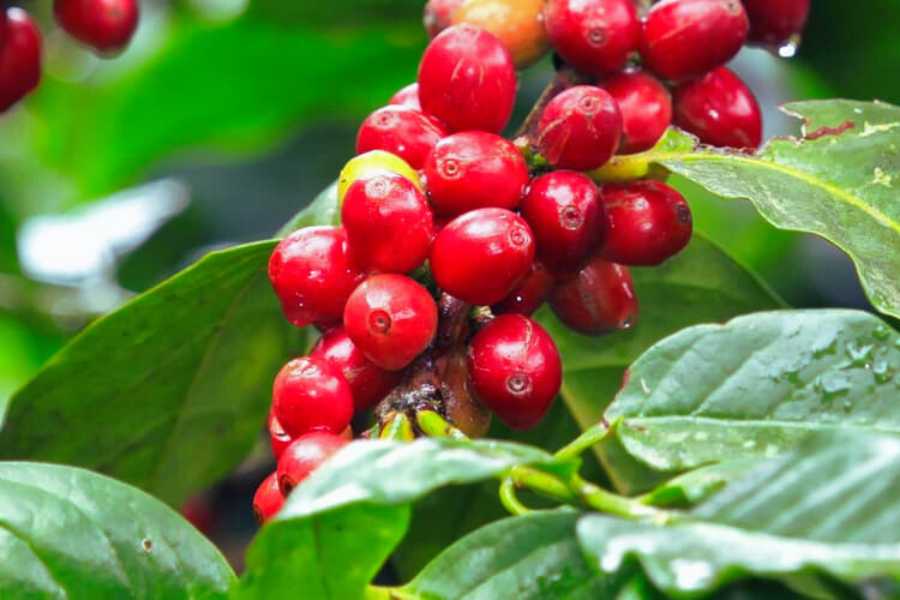
A closer look at coffee that’s low in caffeine by nature.
Naturally low-caffeine coffee refers to rare coffee varieties that contain significantly less caffeine due to their genetic characteristics, typically 0.3–0.8 percent caffeine compared with about 1.4–1.6 percent in standard Arabica coffee beans. Unlike decaffeinated coffee, these varieties are naturally low in caffeine and do not undergo post-harvest caffeine removal or chemical or water-based processing.
- Naturally low-caffeine coffee contains less caffeine due to genetics rather than post-harvest processing.
- Most naturally low-caffeine varieties contain about 0.3%–0.8% caffeine, compared with roughly 1.4%–1.6% in standard Arabica coffee.
- Rare varieties such as Laurina, Aramosa, Coffea eugenioides, and AC1 naturally produce less caffeine.
- Limited yields and cultivation challenges keep these coffees a niche alternative rather than a replacement for decaf.
Because caffeine helps protect coffee plants from pests, low-caffeine varieties are harder to grow and are produced in limited quantities. In the cup, they tend to highlight natural sweetness, gentle acidity, and low bitterness, offering a softer coffee experience with full flavor and minimal processing.
Swipe → to see the full table on mobile
| Coffee Variety | Typical Caffeine Level | Origin | Notes |
|---|---|---|---|
| Laurina (Bourbon Pointu) | 0.2–0.8% | Réunion Island | A natural mutation of the Bourbon variety known for its very low caffeine and delicate cup profile with floral sweetness. |
| Aramosa | 0.6–0.8% | Brazil | A hybrid of Arabica and Coffea racemosa developed in Brazil. Known for reduced caffeine levels and balanced acidity. |
| Coffea eugenioides | 0.4–0.8% | East Africa | A wild coffee species and one of the genetic ancestors of Arabica. Noted for its naturally low caffeine and exceptional sweetness. |
| AC1 | ~0.76 mg/g | Brazil | An experimental breeding line developed for naturally lower caffeine content while maintaining Arabica-like flavor characteristics. |

Laurina (Bourbon Pointu)
Laurina coffee, also known as Bourbon Pointu, is among the best-documented naturally low caffeine Arabica mutations. It was originally identified on Réunion Island and is considered a genetic mutation of Bourbon that influences caffeine synthesis in the coffee seed.
The reduced caffeine content of Laurina has been confirmed in scientific research comparing Laurina with standard Bourbon varieties. Reported caffeine levels typically range from 0.2 to 0.8 percent, significantly lower than standard Arabica, as documented in plant chemistry studies of Coffea arabica. This difference is linked to genetic characteristics affecting caffeine synthesis in the coffee seed rather than processing or post-harvest treatment, as shown in comparative studies measuring caffeine and chlorogenic acid content in Laurina and Bourbon seedlings.
In the cup, Laurina is often described as delicate and refined. It tends to show high natural sweetness, mild acidity, and very low bitterness. The overall experience is frequently compared to tea rather than traditional espresso-focused profiles, which makes it especially appealing to those sensitive to caffeine.
Interest in Laurina increased after its appearance in international coffee competitions. In 2018, a Laurina lot was used by Emi Fukahori, who won the World Brewers Cup. This performance helped bring wider attention to Laurina as a naturally low caffeine alternative that does not rely on decaffeination methods.
Today, Laurina is grown in limited quantities in countries such as Brazil, Colombia, Costa Rica, Nicaragua, and Guatemala. Production is mostly handled by specialty-focused farms. Due to low productivity and increased sensitivity to pests and growing conditions, Laurina remains a niche variety and is rarely available in commercial volumes.

Aramosa
Aramosa is a naturally low caffeine coffee variety whose reduced caffeine content is explained by its genetic background. It is a hybrid between Coffea arabica and Coffea racemosa, a wild coffee species known for its inherently low caffeine levels. Studies of Coffea racemosa show significantly lower caffeine content compared to Arabica, a characteristic that is partially inherited by Aramosa through hybridization.
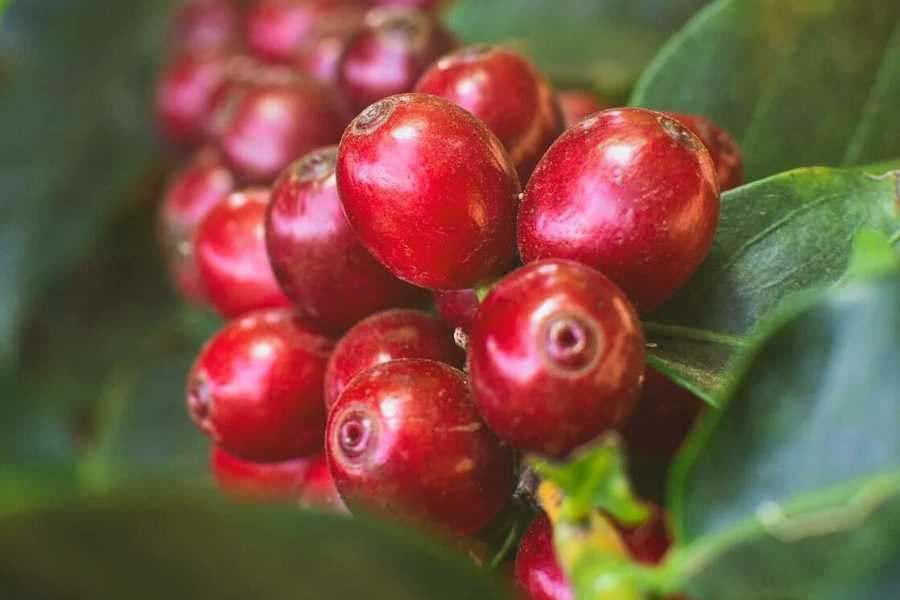
Agronomic and breeding research conducted in Brazil, including work associated with EMBRAPA, describes Aramosa as a naturally lower caffeine hybrid, typically measuring around 0.6 to 0.8 percent caffeine. These studies link the reduced caffeine level to genetic factors influencing caffeine biosynthesis rather than to any form of post-harvest processing.
Today, Aramosa is grown in very limited quantities, primarily in Brazil, and is most often associated with experimental or breeding-focused farms. Its significance within the coffee industry remains largely scientific and genetic.
Coffea Eugenioides
Coffea Eugenioides is an ancient coffee species native to East Africa and one of the genetic ancestors of modern Arabica. Compared to most coffee species, it naturally contains significantly less caffeine. Scientific analysis of caffeine accumulation shows that Coffea eugenioides seeds typically contain around 0.4 to 0.8 percent caffeine, which is roughly one-third of the levels commonly found in Coffea arabica, as documented in comparative biochemical studies.
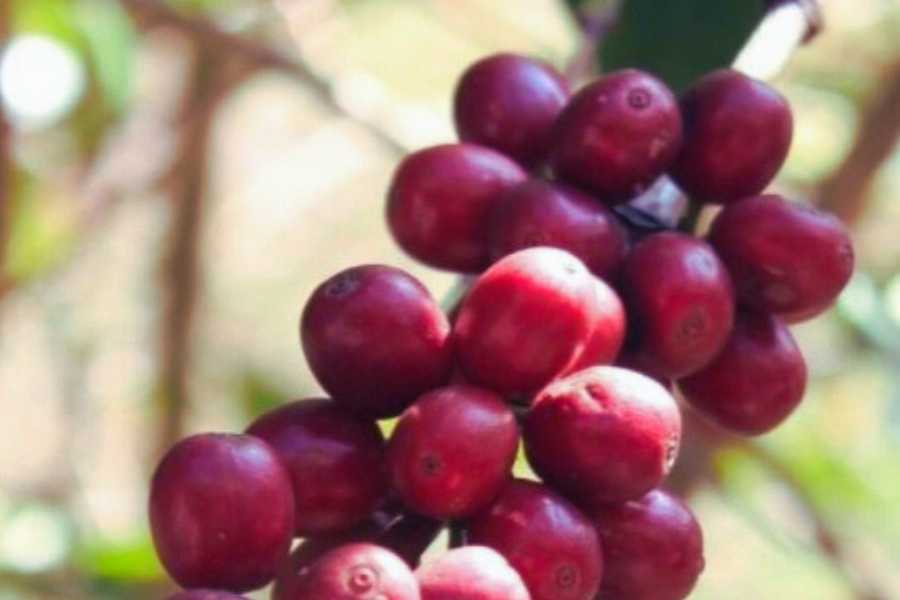
Additional botanical research supports these findings, indicating that the low caffeine content of Coffea eugenioides is linked to slower caffeine biosynthesis and faster degradation mechanisms compared to other coffee species.
Beyond its scientific importance, Coffea eugenioides gained wider attention within the specialty coffee community after appearing on the international competition stage. At the 2021 World Barista Championship in Milan, several finalists used Eugenioides in their routines, highlighting its pronounced sweetness and distinctive cup character. This exposure contributed to increased interest in the species among producers, roasters, and baristas working with rare and experimental coffees.
Modern Research into Naturally Low-Caffeine Coffee
In Brazil, research into naturally low-caffeine coffee has been underway for more than two decades, led by the Instituto Agronômico de Campinas (IAC). The programme focuses on identifying and developing Arabica lines that naturally produce little or no caffeine, using genetic material preserved in the institute’s germplasm collections.
Rather than relying on post-harvest decaffeination, this research is based on long-term breeding and field evaluation. Scientists at IAC have been selectively crossing low-caffeine Arabica accessions and monitoring their agronomic performance, plant health, and bean chemistry under real growing conditions. Several experimental lines are currently being evaluated in different Brazilian regions, with the goal of assessing their commercial viability once the plants reach productive maturity.
According to researchers involved in the programme, the work has now entered a decisive phase. Over the next few harvest cycles, these low-caffeine lines will be assessed not only for caffeine content, but also for yield stability, disease resistance, and cup quality. While large-scale production is not yet guaranteed, early results suggest that naturally low-caffeine coffee could become a realistic alternative to conventional decaf in the future.
AC1 Coffee Variety
Another naturally low-caffeine coffee variety is AC1. This variety was identified and described in Brazil through breeding and biochemical research conducted by the Instituto Agronômico de Campinas (IAC). AC1 is based on Arabica genetic material originating from Ethiopia, where the greatest genetic diversity of Coffea arabica is found, and preserved within international research germplasm collections.
Studies conducted by IAC have shown that AC1 exhibits unusually low caffeine content relative to standard Arabica varieties. Biochemical analysis indicates that caffeine levels in AC1 beans are approximately 0.76 mg per gram of dry matter, with the reduction linked to characteristics of caffeine biosynthesis rather than to post-harvest processing.
The development and study of AC1 form part of IAC’s long-term breeding work aimed at exploring and preserving Arabica genetic diversity while identifying traits with potential market relevance. This includes lines with reduced or near-zero caffeine content that could, in the future, serve as alternatives to conventionally decaffeinated coffee. At present, however, scaling AC1 production remains challenging due to agronomic limitations and relatively low yields.
Can naturally low-caffeine coffee replace decaf?
While naturally low-caffeine varieties offer a promising alternative to conventional decaffeinated coffee, they are unlikely to replace it in the near future. Even the lowest-caffeine varieties still contain measurable amounts of caffeine, which means they cannot meet regulatory standards for decaf coffee in many markets. In addition, these varieties tend to be more fragile, lower-yielding, and expensive to cultivate, which limits their availability and keeps prices high.
However, they may increasingly occupy a complementary role within specialty coffee. For consumers who want less caffeine but still value origin character, minimal processing, and full sensory complexity, naturally low-caffeine coffees provide a compelling option. Rather than replacing decaf entirely, they are more likely to expand the spectrum of lower-caffeine choices available to coffee drinkers.

Frequently Asked Questions:
Naturally Low Caffeine Coffee
Naturally low caffeine coffee refers to coffee varieties that contain less caffeine due to their genetic makeup rather than post-harvest processing. These coffees are not decaffeinated and retain their original bean structure and chemical composition.
Most naturally low caffeine coffee varieties contain approximately 0.3 to 0.8 percent caffeine, compared to 1.4 to 1.6 percent in standard Arabica. The exact amount depends on the variety and growing conditions.
No. Decaffeinated coffee undergoes a process to remove caffeine after harvest. Naturally low caffeine coffee contains less caffeine by nature and does not require chemical or water-based decaffeination.
Many naturally low caffeine coffees are perceived as sweeter and less bitter, with gentle acidity and a softer overall profile. This is partly due to the role caffeine plays in bitterness and flavor intensity.
No. Naturally low caffeine coffee still contains caffeine, just at significantly lower levels. It may not be suitable for those who need to avoid caffeine entirely.
Caffeine helps protect coffee plants from pests. Varieties with lower caffeine levels are more vulnerable, tend to produce lower yields, and are harder to grow, which limits their availability.
Some varieties, such as Laurina, are available in limited quantities through specialty producers. Others, including experimental lines like AC1, are still under evaluation and not widely available.
Naturally low-caffeine coffee is not necessarily healthier than regular coffee. The main difference is simply the reduced caffeine content. People who are sensitive to caffeine may find these varieties easier to drink while still experiencing the full flavor profile of coffee.
Published · Last updated


