
Decaf coffee has changed significantly in recent years. Advances in processing methods and roasting practices…

Are you missing the flavor of coffee but trying to avoid caffeine?
Decaffeinated coffee is a popular alternative to regular coffee for people who want to reduce caffeine intake while still enjoying the taste and ritual of coffee. Modern decaffeination methods retain much of the coffee’s original flavor, so decaf can still produce a rich, satisfying cup.
If you’re looking for a better cup of decaf coffee, making it yourself is the way to go. In this guide, I’ll show you how to brew great decaf coffee at home, including practical tips, common brewing adjustments, and simple recipes for pour-over and espresso.
Let’s get to the tips.
The first step to making a great cup of decaf coffee is choosing the right beans. If you’re not sure where to start, take a look at our guide to the best decaf coffee brands to see which options are widely recommended.
When shopping for decaf coffee, look for beans labeled decaffeinated and, ideally, with the decaffeination method clearly indicated. Common methods include Swiss Water Process, Sugar Cane (EA), or CO₂ processing.
Freshness is just as important with decaf as it is with regular coffee. Look for recently roasted beans and buy smaller amounts when possible to keep them fresh.
Coffee origin also plays a role in flavor. Different regions produce different profiles. Some coffees offer mild sweetness and chocolate notes, while others provide brighter acidity or fruit-like flavors.
Trying decaf coffees from several origins can help you find the flavor profile you enjoy most. In our decaf coffee tasting comparison, we brewed several decaf coffees side-by-side to see how origin and processing influence the final cup.
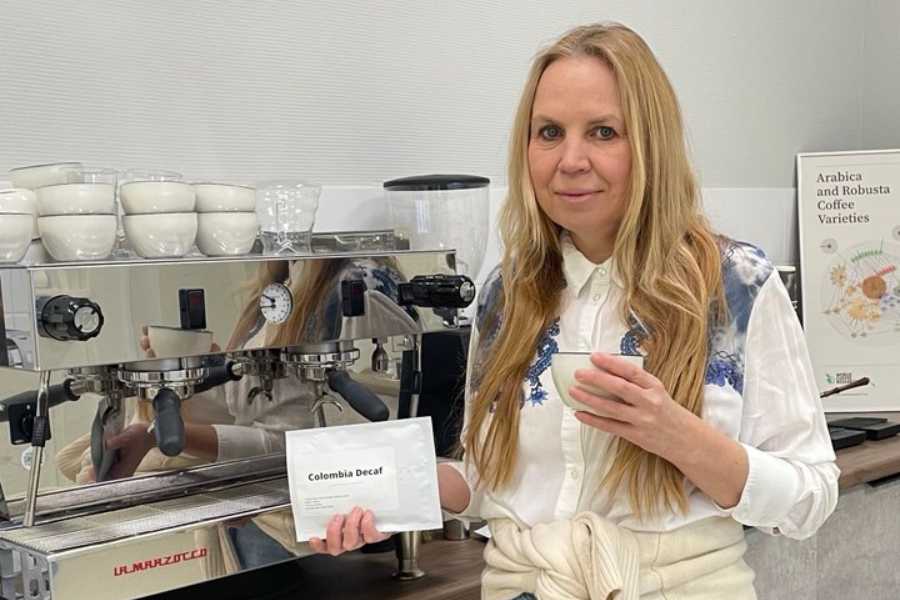
Once you’ve found the right beans, storing them properly helps preserve their flavor and aroma.
Coffee should be kept away from air, light, heat, and moisture, as these factors accelerate the loss of freshness.
You can store coffee either in an airtight container or directly in the original coffee bag, provided it has a resealable zip closure and a one-way degassing valve. Many specialty coffee bags are designed specifically for this purpose and work well for everyday storage.
Additional storage tips include:
If you purchased a larger quantity of coffee and plan to store it for a longer period, dividing the beans into smaller portions and freezing them can help preserve freshness.
Freezing slows down the aging process of coffee and can help maintain aroma for several weeks or even months.
The key rule is to remove only the portion you plan to use and avoid repeatedly freezing and thawing the same beans. Before opening a frozen bag, allow it to reach room temperature to prevent condensation from forming on the coffee.
A Note on Refrigerators
Freezing coffee and storing it in the refrigerator are not the same thing.
While freezing can help preserve coffee for longer storage, keeping coffee in the refrigerator is generally not recommended. Coffee beans are porous and can absorb moisture and odors from surrounding foods, which may negatively affect flavor.
For everyday storage, a cool, dry cupboard or pantry is usually the best place to keep your coffee.
Making a good cup of decaf coffee starts with having the right equipment.
To ensure your coffee brews properly, it helps to use a burr grinder, either manual or electric. Burr grinders produce a more consistent grind size than blade grinders, which helps extract flavor more evenly and results in a more balanced cup.
Decaf coffee can be brewed using many different methods. Popular options include pour-over brewers such as the V60, French press, espresso machines, moka pots, Aeropress, and drip coffee makers.
A few additional tools can also help improve consistency when brewing coffee at home. A scale allows you to measure coffee and water more accurately. A timer helps track brew time so that each cup is prepared consistently. Some brewers also use a thermometer to check that the water temperature is within the ideal range.
Water quality also plays an important role in brewing coffee. Using filtered water is often recommended, as it can noticeably improve the clarity and flavor of the final cup.
Decaf coffee can behave a little differently during brewing compared to regular coffee. This is mainly due to the decaffeination process, which alters the internal structure of the beans.
Decaffeination takes place while the coffee is still green, before roasting. The beans are typically soaked in water or exposed to steam to open their cellular structure. A water-based solution or a solvent such as ethyl acetate is then used to remove caffeine from the coffee.
Because this process can take several hours, it places noticeable stress on the bean structure.
As a result, roasted decaf coffee is often:
• more soluble, meaning flavor compounds extract more easily
• more brittle, meaning the beans can produce more fine particles during grinding
These characteristics can noticeably influence how decaf coffee behaves during brewing.
Decaf tends to extract more quickly, which means it can become over-extracted and bitter if brewed exactly like regular coffee. At the same time, the increased brittleness of the beans can produce more fines, which may slow down the brew and affect flow during methods such as pour-over or espresso.
Because of this, brewing decaf coffee often benefits from small adjustments such as slightly changing the grind size, increasing the dose a bit, or modifying the brew time.
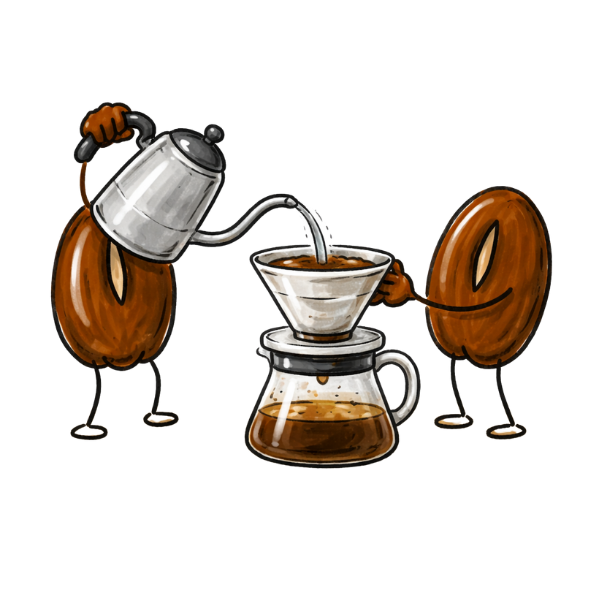
Decaf coffee can brew a little differently from regular coffee. After the decaffeination process, the beans contain fewer soluble compounds, which means standard filter recipes may produce a thin or under-extracted cup. Small adjustments to dose, grind size, and pouring technique usually help achieve a fuller and sweeter result.
4 min · 2 cup · easy


For a more detailed step-by-step explanation of pour-over brewing, grind size, and pouring technique, see the full guide: How to make Pour Over Coffee.
When brewing decaf, it often helps to:
These small adjustments help compensate for the structural changes that occur during decaffeination and can produce a sweeter, more balanced cup.
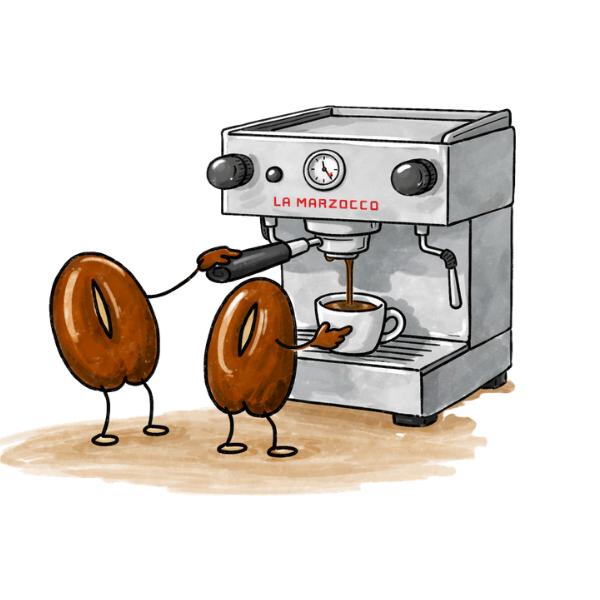
Pulling espresso with decaf coffee can feel tricky at first. The decaffeination process changes the structure of the beans, making them more soluble and more brittle than regular coffee. As a result, decaf espresso can be extracted very quickly and may become bitter if treated like a standard espresso shot.
23 sec · 1 cup · Easy


When dialing in decaf espresso, it often helps to:
Decaf espresso also often produces less crema and a lighter color than regular espresso. This is normal and does not necessarily reflect the taste of the shot.
With the right adjustments, decaf can produce an espresso that is just as sweet and enjoyable as regular coffee.
Grinding too coarse
A coarse grind can cause under-extraction and a weak cup. Decaf often works better with a slightly finer grind.
Using the same recipe as regular coffee
Decaf beans extract differently, so small adjustments to grind size, dose, or brew time may improve the result.
Using old coffee beans
Older beans lose aroma and can produce a flat, dull cup. Freshly roasted coffee usually tastes better.
Poor water quality
Water strongly affects flavor. Using clean, filtered water generally produces a better cup.
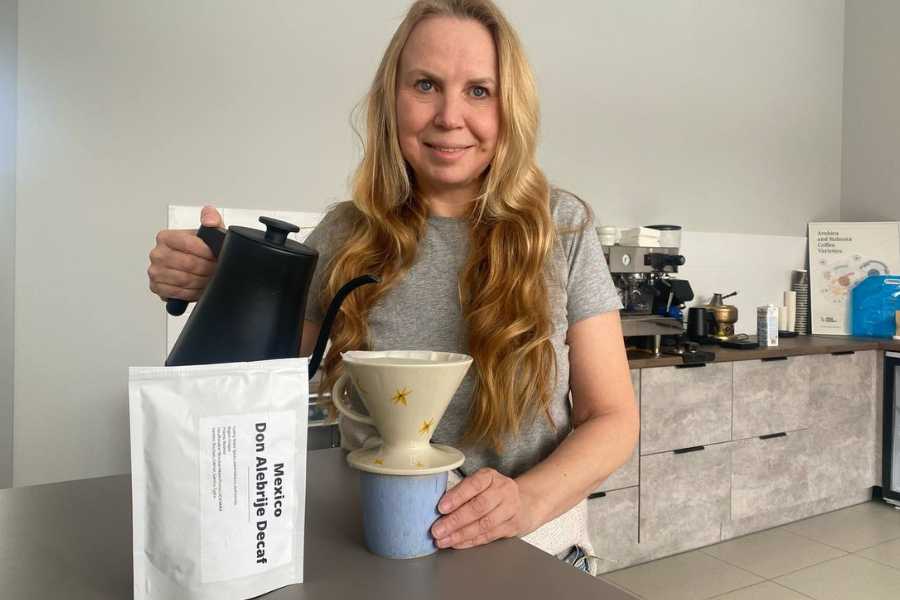
In this guide, I experimented with two common brewing methods: V60 pour-over and espresso. Both methods can produce excellent decaf coffee when small adjustments are made to account for the way decaf beans behave during extraction.
The key takeaway is that decaf coffee usually benefits from slightly different brewing parameters than regular coffee. Because the beans are more soluble and often more brittle after decaffeination, it can help to adjust grind size, dose, brew ratio, or brew time depending on the method you use.
V60 and espresso are only two examples. Decaf coffee can also work very well with other brewing methods such as French press, AeroPress, moka pot, or automatic drip coffee makers.
If you want to explore more brewing techniques, you can check our detailed Coffee Brewing
Guides.
Each brewing method highlights different aspects of decaf coffee, and experimenting with several methods is often the best way to find the style you enjoy most.
With fresh beans, proper storage, and a few small adjustments during brewing, decaf coffee can deliver a cup that is just as satisfying and flavorful as regular coffee.
Enjoy Your Coffee!
Yes. Decaf coffee often extracts faster because the decaffeination process changes the structure of the beans. This can make the coffee more soluble and sometimes more fragile during grinding. Small adjustments to grind size, brew ratio, or brew time usually help produce a better result.
In many cases, yes. Depending on the brewing method, decaf may benefit from either a slightly finer or slightly coarser grind compared with regular coffee. The goal is to maintain a balanced extraction without creating too many fine particles.
Decaf coffee often produces less crema because the decaffeination process affects the gases trapped inside the beans. This is normal and does not necessarily mean the espresso shot is of lower quality.
Decaf can work well with many brewing methods. Pour-over, espresso, French press, AeroPress, and drip coffee makers can all produce good results when the brewing parameters are adjusted appropriately.
Yes. Decaf coffee still contains a small amount of caffeine, typically 2–5 mg per cup, compared with 70–120 mg in regular coffee.